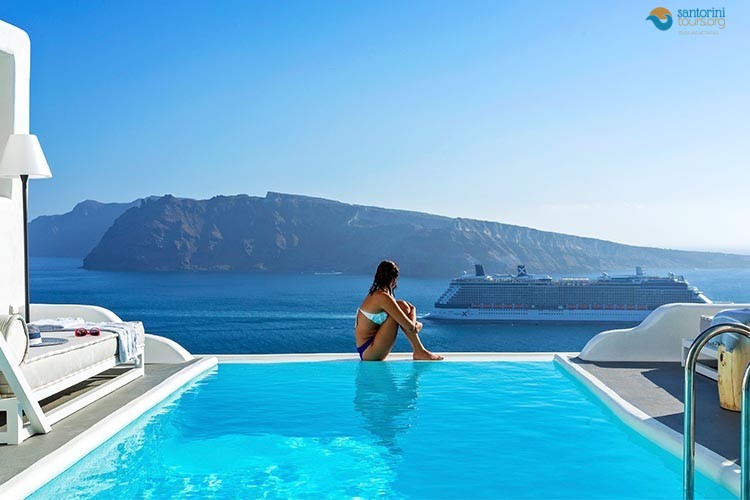
The santorini hot springs are an iron-rich bay on Palia Kameni in the middle of the caldera, warmed to 28-35 degrees, reachable only by boat and entered by swimming fifty to eighty metres from the anchorage. This page covers what they are, how to get there, what it costs and what to wear.

Six Things You Should Not Do In Santorini!
Santorini is not just the most beautiful island of Greece, it is the most beautiful of all the world! However, the most important is to have a great time, and that can be achieved without spending a fortune. Follow my tips!
In the following article I pinpoint the 6 most common mistakes, that you should try to avoid!
1. Do not go to the famous Santorini Sunset
All tourists are flocking to take a seat in the castle of Saint Nicholas, with their cameras in their hands, trying to capture every moment, losing however, the precious feeling of the sunset.
Relax! The main purpose is to have a romantic and peaceful time, under the gentle sunlight that sets, otherwise its meaningless!
There are so many places with magnificent and equally spectacular views of the Santorini sunset, apart from Oia. The chapel of Saint John, Pharos, the Baxedes area and the chapel of Saint Lia, in Finikia. Also in Imerovigli, Skaros and Fira, at the old mines, the view is dreamy!
So, do not push each other and ruin the magic of the sunset… Prefer a Santorini Tours and let the professionals schedule your best sunset evening. See our Santorini Sunset Private Tour.

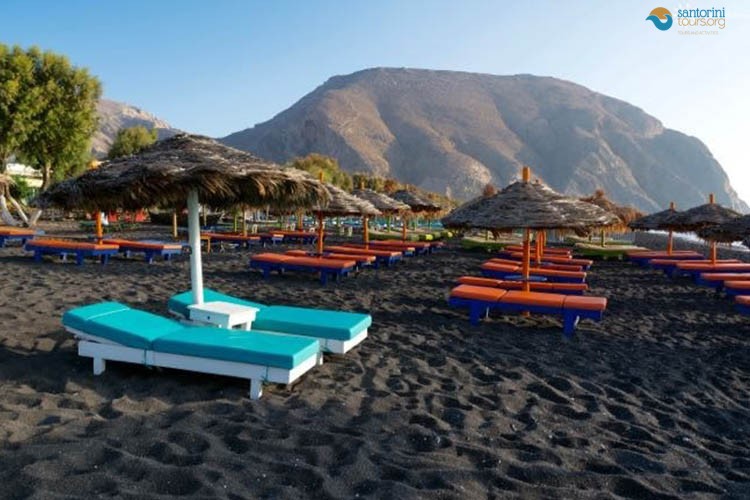
2. Do not go to the famous Santorini beach
The beach with black sand is not unjustified one of the best beaches of Santorini, but it is usually flooded with people and you cannot even cross it, or enjoy it.
Swimming is a moment of pleasure. You should prefer beaches with less people such as Kouloumbou beach or Vlychada, which have the same lunar landscape with black sands and black-red pebbles.
However, you could definitely choose tours of Santorini that offer sightseeing, combining visits to most of the well known beaches with access by the sea. See our Santorini Exclusive Shore Private Tour.
3. Do not try the most famous Santorini cuisine
The most famous local dishes of Santorini are the tomato balls, the fava, the garlic pasta and the fresh seafood!
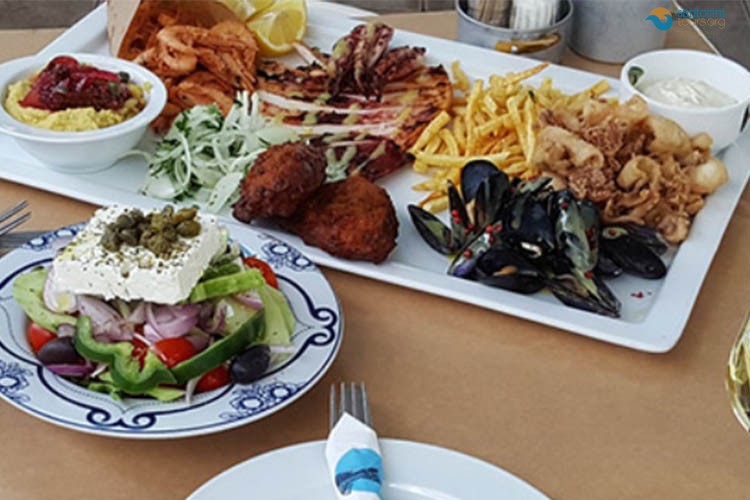
The island’s food can be for either economical standard, as long as you pay attention in which tavern you will have your meal or dinner. In many cases, people have been fooled of tourist traps and have eaten an indifferent dish, but paid a fortune. There are many taverns with traditional Santorini cuisine, at very economical prices.

You could also book a Santorini Tours and allow yourself to enjoy a wine tasting trip to the most enchanting Santorini cuisine. See our Santorini Private Tour And Food Experience.
4. Do not taste the most famous Santorini Wines
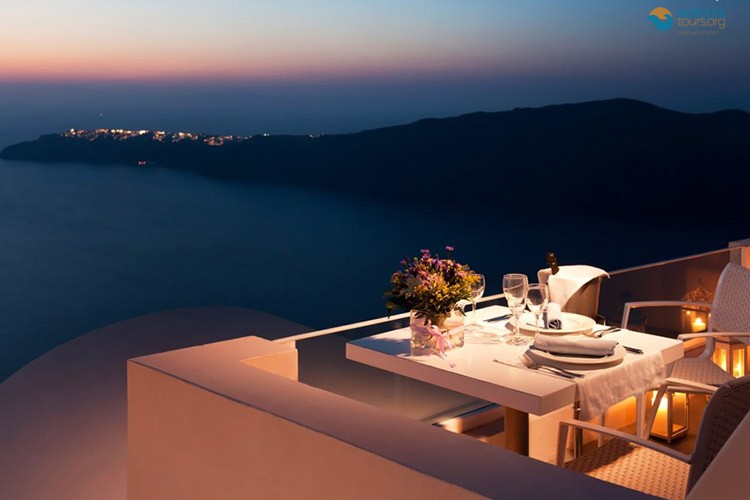
Santorini produces many famous wines, including the Boutari and Gavala vineyard. Of course prices on liquor stores are overpriced, so I would suggest you visit one of the wineries through a Santorini Tours to learn about the vineyards and of course to buy at a much better price the wines you prefer and you have already tried free of charge at the vineyard. See our Santorini South Part Private Tour.

The Wine Tourism Cooperative Union, SantoWines, is located at the centre of Santorini, on the edge of the caldera and offers a unique opportunity to visit and taste most of the fine wines while admiring the beautiful sunset under the imposing view of the volcano.

5. Do not go to the most famous Santorini destination
The truth is that all the islands of Greece, not only Santorini, cannot have just one favourite landscape. We certainly do not get to visit everything we want, but everything is worth it and every single place has its own beauty and peculiarity.
If you limit your visit only in Fira and Oia as they are said to be the most cosmopolitan places in Santorini, this will prevent you from enjoying the other villages and settlements of Santorini, which have their own beauty that fulfils this wonderful island.

You can rent a Santorini Taxi and visit as many places as you want. I would suggest beautiful places like Imerovigli, Megalochori, Pyrgos and Emporio, or you could even go for sightseeing to meet the ancient civilization of Santorini with a Santorini Tours. See our Santorini Historical Private Tour.


6. Do not hang out to the famous nightlife
Too many bars, and pubs for every taste! In every settlement you will hear about the most famous one and where most people gather. But, why not make the difference and visit a more chill out bar! Vacations, are a chance to escape from intense rhythms and have fun…
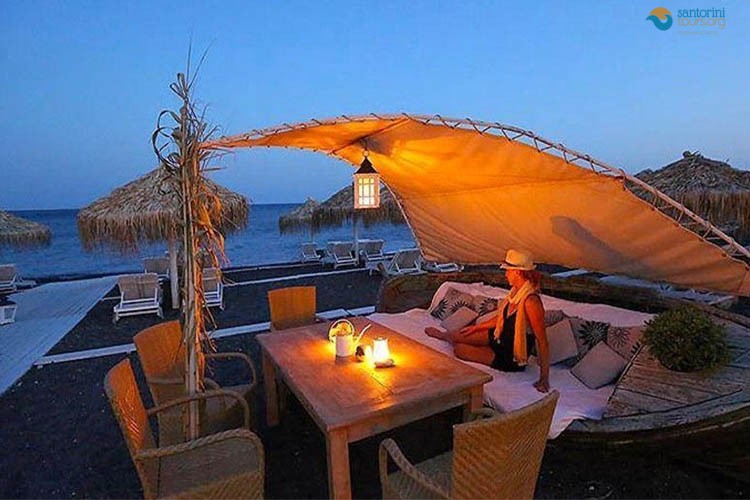
A more special suggestion is to go to a particularly beautiful cinema or just have a drink in Cine Camari‘s beautifully landscaped ground. This place is majestic! See our Santorini North Part Private Tour.


Nothing is missing out of the imposing beauty of Santorini. I hope you take into consideration my advice and have your best holiday ever, at an island which is regarded as a relatively expensive summer destination.
See more about Santorini island:
- Santorini Summer 2019
- Santorini Weather: Which is the perfect season to visit Santorini
- Five magical shades of Santorini Tours
Santorini Hot Springs: The Short Answer
The santorini hot springs are a small bay on Palia Kameni, the older of the two volcanic islets in the middle of the caldera, where iron-rich water seeps out of the seabed and warms the sea to somewhere between 28 and 35 degrees. There is no spa, no changing room, no jetty and no entrance gate. Boats anchor fifty to eighty metres out and you swim in, which is the single fact that surprises most people and the one that decides whether you enjoy it.
Where. Agios Nikolaos bay on Palia Kameni, roughly in the centre of the caldera, reachable only by boat.
Temperature. The santorini hot springs are warm rather than hot: 28 to 35 degrees at the seep, cooling fast as you move away from the shore. The open caldera around it sits at 18 to 25 depending on the month.
The colour. Ochre, rust and mustard where the iron and sulphur meet the sea, against dark red cliffs. It is one of the strangest-looking places in Greece.
How you get in. You swim. Every boat anchors offshore because the bay is too shallow and too narrow to enter, so the santorini hot springs require a fifty to eighty metre swim in open water.
How long. Fifteen to thirty minutes in the santorini hot springs on a standard volcano cruise.
Cost. Free in themselves. You are paying for the boat, which runs 25 to 45 euros on a shared volcano tour and 90 to 170 on a shared catamaran with food.
The warning everybody ignores. The iron stains swimwear permanently orange. Wear something you do not care about, and never white.
Is it worth it? As a curiosity attached to the volcano walk and a caldera cruise, yes. As a spa experience in its own right, no, and anybody expecting a thermal pool will be disappointed.
What the Santorini Hot Springs Actually Are
The geology here is the whole point, and it explains both why the water is warm and why it looks like nothing else in the Aegean. Around 1600 BC the volcano erupted and the magma chamber collapsed, leaving a flooded basin four hundred metres deep with the remains of the island around it. From about 197 BC onwards the volcano started rebuilding from the floor of that basin, and the two islets in the middle, Palia Kameni and Nea Kameni, are the result.
Palia Kameni. The older islet, first recorded emerging in 197 BC, with the santorini hot springs on its northern side at Agios Nikolaos bay. It is uninhabited apart from a tiny whitewashed chapel above the water.
Nea Kameni. The younger islet, formed from 1707 onwards, and the one you walk on. Its crater last erupted in 1950.
The mechanism. Groundwater heated by the magma system below rises through fractures in the rock and seeps out through the seabed of the bay. It mixes with cold seawater immediately, which is why the temperature drops within a few metres of the shore.
What is in the water. Iron and sulphur compounds, with dissolved manganese. The iron oxidises on contact with the air and precipitates as the ochre sediment that coats the bay floor and the rocks.
The smell. The santorini hot springs carry a faint sulphur note, closer to a struck match than to rotten eggs, and stronger on still days.
The colour gradient. You can see the boundary from the boat: deep blue water, then a hard line into orange. Swimming across that line is the moment people remember.
Are they medicinal? They are marketed that way and the claims are traditional rather than clinical. Iron-rich water is pleasant on the skin and there is no evidence it treats anything.
Is it dangerous? No. The santorini hot springs are not scalding, the volcano is monitored continuously, and the water temperature at the seep is comparable to a warm bath.
Getting to the Santorini Hot Springs
There is no road, no ferry line and no way to reach the santorini hot springs independently unless you charter something. Every visit is by boat from one of three ports, and which boat you choose changes the day far more than the springs themselves do.
The classic volcano cruise. Departs from the Old Port below Fira or from Athinios, five to six hours, and combines Nea Kameni’s crater walk, the santorini hot springs and usually Thirasia, with an optional Oia sunset finish. 25 to 45 euros a head, entrance to the volcano extra.
The half-day version. Volcano and springs only, three to four hours, 20 to 30 euros. The efficient choice if the caldera is the only thing you want.
Catamaran cruises. Five to eight hours from Vlychada or Ammoudi, taking in the Red and White beaches and the southern coast before entering the caldera. 90 to 170 a head shared, including a barbecue and drinks, or 1,200 to 3,000 for a private charter. Far more comfortable, and the santorini hot springs are one stop among several.
Traditional wooden boats. The cheapest route to the santorini hot springs and the most crowded, with a hundred or more passengers and a strict schedule.
Private charters. Your own timing, which matters here because the bay is empty at nine in the morning and holds fifteen boats at midday.
Getting to the Old Port. The cable car from Fira, six minutes and 6 euros each way, or the 588 steps, or a donkey, which is worth reconsidering. Queues for the cable car in August run to an hour, so allow for it.
Sailing time to the santorini hot springs. Fifteen to twenty-five minutes from the Old Port, around forty from Vlychada.
The timing that matters. Morning departures reach the springs before the fleet arrives. Afternoon and sunset cruises hit them at the busiest hour, when fifteen boats are anchored and several hundred people are in the same small bay.
What the Swim Is Actually Like
This is the part the photographs do not convey, and knowing it in advance is the difference between a good stop and a disappointing one. The boat drops anchor in deep blue water fifty to eighty metres outside the bay, a crew member lowers a ladder, and everyone swims in. There is no shallow entry, no standing depth on the way, and nothing to hold on to until you reach the sediment near the shore.
The cold first. The open caldera is 18 to 20 degrees in May and 24 to 25 in September. Nobody warns you about this, and the first thirty seconds off the ladder are the least pleasant part of the santorini hot springs.
Then the line. You swim through a visible boundary where the blue turns to ochre, and the temperature climbs noticeably over the last twenty metres.
The warm part. The santorini hot springs peak closest to the shore, where they reach 30 to 35 degrees, roughly bath temperature, in water about waist to chest deep with a soft muddy floor.
The bottom. Fine rust-coloured sediment that clouds instantly. People coat themselves in it, which is harmless and is most of the reason anyone photographs this place.
How long you get. Fifteen to thirty minutes, called by the crew. It is enough.
The swim back. Into cold water again, and this is the point where weaker swimmers struggle. Every operator carries floats or noodles; ask for one before you get in rather than halfway across.
Crowding. At midday in August the bay holds several hundred people and it stops being tranquil. At nine in the morning you may have the santorini hot springs almost to yourself.
The chapel. A small whitewashed church of Agios Nikolaos sits on the rock above the santorini hot springs, and it is the detail that makes the photographs work.
The honest verdict on the swim. It is strange, memorable and about twenty minutes long. It is not relaxing in the way a thermal pool is relaxing.
The Staining Problem, and What to Wear
More complaints about the santorini hot springs concern laundry than anything else, so this deserves its own section. The suspended iron oxide binds to fabric and does not come out. It is not a stain that fades; it is a permanent orange-brown discolouration, and it is worst on white, pale blue and anything synthetic and light.
Wear old swimwear. The single piece of advice everyone gives and half of visitors ignore. Bring something you would throw away.
Never white. White comes out apricot and stays apricot.
Dark colours survive best. Black, navy and dark green show almost nothing.
Rinse immediately. Most boats serving the santorini hot springs have a freshwater deck shower. Use it the moment you are back on board rather than after lunch.
Jewellery. Take off anything silver. Sulphur tarnishes it quickly.
Light-coloured hair. Blonde and grey hair can pick up a faint tint. Rinse it out on the boat.
Skin. Rinses off completely. There is no lasting effect and it is not irritating for most people.
Towels. Take a dark one, and expect the boat’s towel to end up marked if it is white.
The alternative. Some visitors stay on the boat and photograph the santorini hot springs rather than swimming, which is a perfectly reasonable choice on a cold morning or with a young child.
Nea Kameni: The Volcano Walk That Comes With It
Almost nobody visits the santorini hot springs on their own, because they are sold as half of a package with the crater walk on Nea Kameni, and the two together make a genuinely good half day.
The walk. Sold with the santorini hot springs, and twenty-five to thirty-five minutes up a broad gravel path from the landing at Erinia to the rim of the main crater, 130 metres above the sea.
The surface. Loose black lava gravel and sharp rock. Trainers or proper sandals, never flip-flops, and this is the most common mistake people make on the day.
The entrance fee. A few euros for the Nea Kameni site, usually not included in the boat ticket. Bring cash.
What you see. Steaming fumaroles, sulphur-yellow deposits, the 1950 crater, and the full ring of the caldera with Fira and Oia strung along the cliff opposite. It is the best view of Santorini that exists, because it is the only one from inside.
Shade. None whatsoever. In July and August the black rock radiates heat and the walk is genuinely demanding at midday.
Water. Bring a litre a person, because the santorini hot springs trip sells nothing on either islet.
The order. Most cruises do the volcano first and the santorini hot springs second, which is the right way round, because the swim is the reward for the climb.
Thirasia. Full-day cruises add the third island on the far rim, with a fishing harbour, a steep climb or a bus to the village above, and a lunch stop. Worth the extra hours.
Accessibility. The crater walk is not suitable for anyone with limited mobility, and the springs require a confident open-water swim. Both are honest limitations rather than things to work around.
Cost, and What You Are Actually Paying For
The santorini hot springs themselves are free and unmanaged. Every euro goes on the vessel that takes you there, and the spread between the cheapest and the most expensive way of doing it is wide enough to be worth thinking about.
Half-day volcano and santorini hot springs. 20 to 30 euros a head, three to four hours, on a large traditional boat from the Old Port. The cheapest route and the most crowded.
Full-day volcano, springs and Thirasia. 25 to 45 euros, five to six hours, frequently with an Oia sunset return leg for a few euros more.
Nea Kameni entrance. A few euros, paid on the islet, cash, and almost never included in the advertised price.
Shared catamaran. 90 to 170 a head for five to eight hours including a barbecue, drinks and snorkelling gear. A completely different quality of day, with the santorini hot springs as one stop among five or six.
Private catamaran. 1,200 to 3,000 for the vessel. For a group of eight or more this is competitive per head and it buys the one thing that matters here, which is arriving before the fleet.
The cable car. 6 euros each way down to the Old Port for the santorini hot springs boats, plus a queue that can run to an hour in August.
Transfers. Getting to Vlychada or Athinios costs whatever a vehicle costs, priced per vehicle rather than per person on this island.
What is rarely included. Towels on the cheaper boats, the volcano entrance, and lunch on the half-day trips.
Where the money is well spent. A smaller boat and an earlier departure. Both buy you the santorini hot springs without three hundred other people in the same bay.
When to Go
April. Boats to the santorini hot springs start running mid-month. The caldera water is around 17 degrees, which makes the swim out genuinely cold even though the seep itself is warm. Few people, low prices.
May. The sea around the santorini hot springs reaches 18 to 20. Comfortable for confident swimmers, bracing for everyone else, and the bay is quiet.
June. 21 to 23 degrees in the caldera, long days, and the fleet not yet at full strength. One of the two best months for the santorini hot springs.
July. 24 degrees, every boat running, and the bay busy from eleven onwards. The meltemi can cancel the smaller vessels.
August. The warmest air, the biggest crowds and the longest cable car queue of the year. Go on the first departure or not at all.
September. The warmest sea of the year at 24 to 25 degrees and a thinning crowd after the first week. The best month overall to visit the santorini hot springs.
October. 22 to 23 degrees into the third week, cheap, quiet, and the boats wind down towards the end of the month.
November to March. No scheduled boats. The santorini hot springs are effectively closed for the winter.
Time of day. More important than the month. The first departure of the morning finds the bay almost empty; anything between eleven and four finds it at its worst.
The wind. The meltemi blows hard from June to September and is the usual reason a trip is cancelled or rerouted. The caldera is sheltered compared with the open sea, so cancellations are less frequent here than on the south coast runs.
Who Should Skip the Santorini Hot Springs
This is not a page that will tell you everything is wonderful. The santorini hot springs are a good stop for most people and a bad one for several specific groups, and it is cheaper to know that before you buy a ticket.
Weak swimmers. The fifty to eighty metre swim in open water, twice, with no standing depth, is the whole obstacle. Floats help; nerves do not.
Anyone expecting a spa. The santorini hot springs have no pool, no attendant, no changing room and no hot tub. The water is warm, muddy and shallow at the edge of a bay.
People with limited mobility. Boat ladders, a gravel crater path and an open-water swim. Neither half of the day is adapted.
Very young children. Fine on the boat, difficult in the water.
Anyone with new or pale swimwear. Covered above, and it is a real cost.
People prone to seasickness. The caldera is sheltered, but the older wooden boats roll and there is no way off for five hours.
Who should absolutely go. Anyone interested in geology, anyone who wants the one view of Santorini taken from inside the caldera, and anyone who likes swimming somewhere genuinely strange.
The alternative if you skip the swim. Stay aboard. The bay is worth seeing from the deck, and the crater walk is the better half of the day anyway.
How They Compare With Greece’s Other Thermal Sites
Greece has a long list of hot springs, most of them on land, most of them developed, and several of them considerably hotter. Setting the santorini hot springs against them makes it clear what you are actually going for, which is the setting rather than the water.
Loutraki, near Corinth. A proper spa town with developed thermal baths and treatment facilities. Hotter water, no volcano, no swim.
Edipsos on Evia. The best-known thermal destination in the country, with hot water running down to the sea and hotels built around it. Around 40 degrees at source, and open all year.
Methana. A volcanic peninsula two hours from Athens with sulphur springs and a strong smell. Similar geology, no caldera.
Kythnos. Warm water running across the beach at Loutra, walk-in, free and open all year. Closer to the santorini hot springs in spirit than anywhere else, and reachable on foot.
Nisyros. The other active volcano in the Aegean, with a crater you can walk into. Comparable geology and a fraction of the visitors.
Milos. Warm seeps at Paleochori beach where the sand is hot underfoot, and no boat required.
What Santorini has that none of them do. The caldera. You are swimming inside a collapsed volcano four hundred metres deep, with the villages strung along the cliff above and a chapel on the rock beside you. The santorini hot springs are not the warmest water in Greece and the setting is not close.
The practical difference. Every other site on this list is reachable on foot. Only Santorini requires a boat, a swim and a change of clothes, which is why it is an excursion rather than an afternoon.
What to Bring, and the Mistakes People Make
Old dark swimwear. Worn under your clothes to the santorini hot springs, because changing on a crowded boat is unpleasant and several of them have no cabin.
Trainers or closed sandals. For the crater, where the surface is loose sharp lava gravel. Flip-flops are the most common mistake of the day.
A litre of water each. Nothing is sold on either islet, and the black rock is punishing in July.
Sun protection. No shade on Nea Kameni, none in the water, and a sea breeze that removes any sensation of burning.
A hat and sunglasses. The glare off the water inside the caldera is severe.
Cash. For the volcano entrance, which is not on the boat ticket.
A dark towel. The santorini hot springs will mark a white one. Cheaper boats do not supply one at all.
A dry bag or a plastic bag. For the wet, orange things afterwards.
Seasickness tablets. Taken before boarding rather than after.
The mistakes, briefly. Booking the midday departure, wearing white, bringing flip-flops, expecting a spa, and assuming the santorini hot springs are hot. All five are avoidable and all five are extremely common.
Santorini Hot Springs: Frequently Asked Questions
How hot are the santorini hot springs? 28 to 35 degrees right at the seep near the shore, cooling within a few metres. Warm bath temperature at best, not thermal-pool hot.
Where are they? Agios Nikolaos bay on Palia Kameni, one of the two volcanic islets in the middle of the caldera, reachable only by boat.
Can you drive or walk there? No. There is no road and no land connection. Every visit is by boat.
Do you have to swim? Yes. Boats anchor fifty to eighty metres out because the bay is too shallow to enter, so you swim in and back.
How much does it cost? The springs are free. The boat is 20 to 45 euros on a volcano cruise, or 90 to 170 a head on a shared catamaran including food and drink.
How long do you spend there? Fifteen to thirty minutes in the water.
Will the water stain my swimsuit? Yes, permanently. The iron oxide binds to fabric. Wear something old and dark.
Are the santorini hot springs safe? Yes. The water is warm rather than scalding, the volcano is continuously monitored, and the only real risk is the open-water swim.
Are they good for children? Fine on the boat, difficult in the water. The swim is the limiting factor.
What is the best time of day? The first morning departure. Between eleven and four the bay holds a dozen boats.
What is the best month? September for the warmest sea, then June. April and October are quiet but cold on the swim out.
Do they run in winter? No. Scheduled boats stop from about November to April.
Are the santorini hot springs worth it? As part of a volcano cruise, yes, comfortably. As a destination in themselves, no.
What else is on the same trip? The crater walk on Nea Kameni, and on full-day cruises the island of Thirasia and an Oia sunset return.
Are the Santorini Hot Springs Worth It? The Verdict
Yes, with conditions, and the conditions are what most pages leave out.
Worth it as part of the caldera day. The volcano crater, the santorini hot springs and Thirasia together make the best half day on the island for anybody interested in why Santorini looks the way it does. Nothing else explains the place as directly.
Not worth it as a spa. If the words hot springs make you picture a thermal pool with steam rising off it, adjust the expectation now. This is a warm, muddy, ochre bay you swim into from a boat.
Worth paying more for a smaller boat. The difference between the santorini hot springs at nine in the morning and at one in the afternoon is the difference between a quiet bay and a swimming pool with three hundred strangers in it.
Worth it for the photographs. The orange water against the dark red cliffs and the white chapel is genuinely unlike anything else in Greece.
Skip it if you cannot swim confidently. There is no adapted route in.
Do it once. Almost nobody goes twice, and almost nobody regrets going once.
We Get You to the Boat and Back
We are a local operator on Santorini with our own vehicles and our own drivers. The boats leave from the Old Port below Fira, from Athinios and from Vlychada, and none of those three is straightforward to reach on a schedule with luggage or a group.
Tell us your departure time and where you are staying, and we will get you to the right port with time to spare and collect you afterwards, including the late return if you take the Oia sunset leg.
Prices are per vehicle rather than per person, hotel pickup anywhere on the island is included, we guide in twelve languages, and an 80 EUR deposit confirms a date.
See the personalised tour, the private transfers, or contact us.
Every Village and Site on the Island
Any of these can be built into a private day. Each has its own page with what to see and how long to allow.
Caldera villages: Fira · Firostefani · Imerovigli · Oia · Finikia · Baxedes
Inland villages: Pyrgos · Megalochori · Emporio · Mesaria · Karterados · Vothonas · Vourvoulos · Exo Gonia · Mesa Gonia · Pigadia
Beaches: Perissa · Perivolos · Kamari · Vlychada · Monolithos · Red Beach · White Beach · Agios Georgios · Agia Paraskevi
Sites and landmarks: Akrotiri · Ancient Thira · Akrotiri Lighthouse · Nea Kameni · Palia Kameni · Thirasia · Athinios Port
All our tours: All Santorini tours · Full day tour · Sightseeing tour · Personalised tour · North part tour · Horse riding · South part tour · Sunset tour · Shore excursion · Caldera tour · Food experience · Wine tour · Historical tour · Small group tour
Planning and services: Famous sights tour · Private transfers · Transfers to Oia and Finikia · Transfers to other villages · Villages of Santorini · History of Santorini · Tours near you · Languages we guide in · Food and fun tours · Gay friendly tours · Our tour buses · Daily tours · Day tours · FAQ · Gallery · Tour photo gallery · About us · Contact · Blog