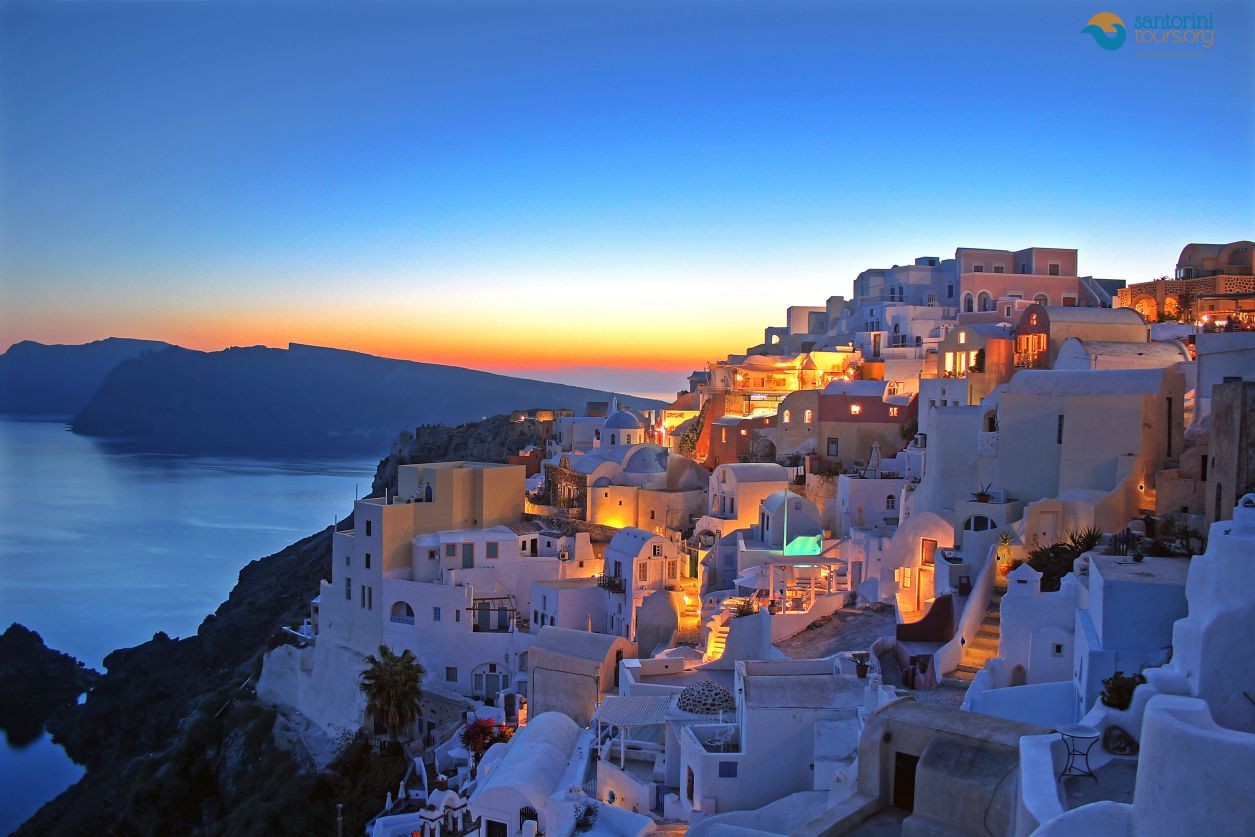

With Santorini Private Tours you can explore Santorini and experience the magic of the island. Famous for its magnificent caldera, volcano and romantic sunset, Santorini is considered one of the top places to visit in the world. Built on the edge of steep cliffs, the picturesque villages of Santorini offer wonderful views of the Aegean Sea and the sunken volcano.
Sights in Santorini
The star of Santorini, the beautiful village of Oia, is the ultimate sight of Santorini, full of white houses and vaulted churches that fall above the edge of the caldera. It is one of the most enchanting places on Earth, with the renovated white houses on the edge of the crater and the impressive sunsets. Santorini sunset is probably the most famous in the world. The sunset is beautiful from every part of the island, but the sunset in Oia is the best. Book a sunset tour and enjoy your stay in Santorini.
Do not miss the opporunity to visit Akrotiri, perhaps the most important archeological site of the Cyclades. This city was one of the most important cities in the Aegean Sea until a volcanic eruption destroyed it in the 17th century BC. Volcanic material saved the buildings and their contents.
The island of Nea Kameni in the middle of the flooded caldera, is one of the most dangerous volcanoes on the planet. It is also one of the suggested cities as the lost city of Atlantis. The eruption that destroyed most of Santorini 3,600 years ago created a tsunami that reached as far as Turkey and probably wiped out the Minoan Civilization. The Museum of Prehistoric Thira is located in Fira and has findings from prehistoric times that have been excavated from Akrotiri, Ancient Thira and other areas of Santorini.
Beaches in Santorini
The beaches of Santorini are very different from other beaches in Greece due to their special features of the ground. Red and black volcanic pebbles fill the shores of Santorini and the steep cliffs offer a picturesque atmosphere. Red beach is one of the most beautiful and famous beaches of Santorini. It has black and red volcanic pebbles and hot water.
The seaside resort of Kamari is located on the south side of the island, next to Perissa, with a huge rock called Mesa Vouno between them. Perissa is a tourist resort that hosts a lot of people in the summer. Impressive and well organized, the beach of Perissa has black sand. The ruins of Ancient Thira are very close to Perissa. Agios Georgios is a popular beach, just 3 km from Perissa, in the southern part of Santorini. Agios Georgios is one of the most touristic beaches of Santorini, while it has black pebbles and is organized.
Perivolos is the largest black sand beach of Santorini. and an organized tourist resort with many hotels, taverns and beach bars. The bay right next to the beach of Erythra is known as the white beach. It is similar to Kokkini beach, with black pebbles on the shore, but the surrounding slopes are white. Book a private personalized tour and explore all the beaches in Santorini!
Food in Santorini
In the traditional cuisine of Santorini we can distinguish the following dishes and products. Fava is an old traditional dish that can be served in many different ways, depending on the season. What makes Santorini Fava special is the taste of the fava beans produced on the island. Dried capers are products of the island that are often used in salads.
The tomato balls are very fragrant and tasty. This delicious Santorini dish is made with herbs, tomatoes and butter and it is suitable for vegans, because it doesn’t contain meat. It really is the special dish of the island, along with the fava. Also. Santorini cheese is a fresh cheese produced by the women of Santorini and it is not easy to find anymore.
Wine tasting in Santorini
Santorini has the best wine in Grrece. According to pivot wine is one of the drinks that can get you to fall in love. Assyrtiko, which is about 80% of the island’s production, is widely cultivated throughout Greece. High acidity and freshness are the characteristics of wines produced with this variety. The white variety Athiri is mainly used for mixing with assyrtiko and produces wine with high alcohol percentage. Aidani, with its intense aroma, is used together with the assyrtiko to give extra flavor to Vinsanto.
Vinsanto is a wine with a rich golden color and excellent flavor, which is achieved thanks to the many years of maturation and aging with the bottle and the ripe and dried from the sun white grapes from which it is made. Mavrotragano is a red variety that is native to the Cyclades, while it is rich in phenols.
Fun activities for you and your friends
In addition to museums, galleries and cultural events, Fira is the commercial center of the island while offering endless options in food, nightlife and entertainment. Fira is also the center of the island’s nightlife, with many bars and clubs, for endless fun over the volcano. And of course there is a huge selection of restaurants and taverns where you can enjoy your dinner accompanied by the wonderful local wine, Vinsanto. You can take a tour of Santorini!
The options for entertainment in Santorini are plenty and the night is long. Most of the bars and nightclubs of Santorini are located in the capital of the island, Fira and in the most beautiful area of the island, Oia. Also, there are many clubs and pubs in Kamari and Perissa. The nightlife in Santorini does not end even at 5 in the morning, that is, when the bars and clubs close, as at that time the people gather in the central square for a souvlaki.
Planning Your Summer in Santorini
The sights, beaches, food, wine and nightlife described above are the heart of the island. This section adds the practical layer: what the weather does, which month suits you, how to avoid the heat and the crowds and how to plan your days, so your summer in Santorini feels relaxed from the first morning.
The weather. Summer is hot, dry and sunny. Average highs are around 26°C in June and close to 30°C in July and August, with warm nights and almost no rain.
The sea. The water warms from around 21–22°C in early June to 24–25°C by August, perfect for long swims on the black-sand beaches described above.
The wind. In July and August, the meltemi often blows from the north for several days. It cools the air but can make the sea choppy on exposed coasts.
The light. Days are long. The sun sets after 20:30 in June and July and shortly before 20:00 at the end of August.
Summer in Santorini in one sentence. Warm sea, long evenings, every business open and the island at its liveliest.
June, July or August?
Each month gives a slightly different summer in Santorini.
June. The longest days of the year, warm but not scorching, and a sea that is pleasant by mid-month. The villages are busy but calmer than in August.
July. Full season: every beach bar, boat trip and restaurant is open, the nights are lively and the meltemi brings relief from the heat.
August. The peak, with the warmest sea, the busiest lanes and the highest prices. On 15 August, churches and villages across the island celebrate the feast of the Dormition of the Virgin.
Early September. Still summery, with warm water and fewer visitors once the school holidays end.
Summer in Santorini for couples. June and early September bring long golden evenings and quieter caldera lanes.
Summer in Santorini for families. July and August suit beach days in Kamari, Perissa or Monolithos, with early mornings and afternoon rest.
Summer in Santorini for nightlife. July and August are the liveliest months in Fira, Kamari and Perissa, as the article above describes.
More Sights for Your Summer in Santorini
The article above highlights Oia, Akrotiri, Nea Kameni and the Museum of Prehistoric Thira. A few more places deserve a place in your summer in Santorini.
Fira. The capital on the caldera rim, with lanes full of shops and cafés, the cathedrals, the museums and the cable car down to the Old Port.
Firostefani and Imerovigli. Two quieter villages along the caldera path north of Fira, with wide views over the volcano and, below Imerovigli, the great rock of Skaros.
Pyrgos and Emporio. Inland villages built around castles, with narrow lanes, churches and views over the vineyards.
Megalochori. A traditional village of whitewashed lanes, bell towers and old wineries.
Ancient Thera. The ruins of the ancient city on the ridge above Kamari and Perissa, best visited early in the morning in summer.
The Akrotiri lighthouse. A wild headland at the south-western tip, perfect for a calm sunset.
Summer in Santorini beyond the caldera. Mixing the famous villages with these quieter places is the best way to enjoy the island in high season.
These places round out a summer in Santorini beautifully.
More Beaches for the Summer
The article above covers the Red Beach, Kamari, Perissa, Agios Georgios, Perivolos and the White Beach. Here are more places to swim during your summer in Santorini.
Vlychada. On the south coast, below tall cliffs of pale volcanic ash shaped by the wind, with a small marina and fish tavernas nearby.
Monolithos. Near the airport, with shallow water, fine sand, shade trees and a playground, ideal for families.
Baxedes. A wild beach of dark sand on the north coast near Oia, beautiful on calm days.
Kambia and Mesa Pigadia. Two pebbly coves near Akrotiri, quieter than the Red Beach, each with a taverna nearby.
Exomytis. A natural stretch of dark sand between Agios Georgios and Vlychada.
Summer in Santorini on windy days. When the meltemi blows from the north, the south coast beaches are usually the calmest.
Summer in Santorini on the sand. Dark sand gets very hot by midday, so bring beach shoes or rent a sunbed with an umbrella.
A different beach each day is one of the joys of a summer in Santorini.
Boat Trips and the Caldera
As the article above says, Nea Kameni sits in the middle of the flooded caldera. Getting out on the water is one of the highlights of any summer in Santorini.
The volcano. A marked path climbs over black lava to the craters of Nea Kameni, where steam and sulphur rise from the ground. The walk takes about an hour there and back, so choose a morning trip in summer.
The hot springs. At Palea Kameni, warm iron-rich water turns a small bay orange. Swimmers reach it from the boat.
Thirasia. The quiet island opposite Oia, with a small harbour, fish tavernas and a village on the rim.
Catamaran cruises. Day and sunset cruises sail the south coast and the caldera, with swimming stops at the Red Beach and the White Beach and a meal on board.
Summer in Santorini at sunset. A sunset cruise is one of the calmest ways to enjoy the famous sunset, far from the crowds in Oia.
Summer in Santorini and the wind. On very windy days, boat trips change route or are cancelled, so keep a flexible day in your plans.
No summer in Santorini is complete without a day on the water.
Beating the Heat and the Crowds
Summer is the busiest season on the island. A few habits make your summer in Santorini far more relaxing.
Start early. Walk the lanes of Oia and Fira before 9:00, when the light is soft and the streets are almost empty.
Watch the cruise days. When several cruise ships anchor in the caldera, Fira and Oia fill up from mid-morning. Spend those hours in the south, the inland villages or on a beach.
Rest at midday. Between 13:00 and 17:00 the sun is strongest. Swim, rest by a pool or take a long lunch in the shade.
Choose shaded sights. The archaeological site of Akrotiri is covered by a large roof, and the museums of Fira are cool refuges.
Summer in Santorini at sunset. Oia is the most famous spot, but Imerovigli, Firostefani, Pyrgos and the lighthouse offer superb sunsets with far fewer people.
Summer in Santorini: what to carry. Water, sunscreen, a hat, sunglasses and shoes with a good grip for the steps.
Good timing is the difference between a hectic and a relaxed summer in Santorini.
Where to Stay
Your base shapes the whole trip. Here is how to choose it for a summer in Santorini.
The caldera villages. Fira, Firostefani, Imerovigli and Oia offer the famous views, cave suites and infinity pools. They are the most expensive, and many hotels are reached only by steps.
The beach resorts. Kamari, Perissa and Perivolos have flat streets, lower prices and the sea on your doorstep, ideal for families and swimmers.
The inland villages. Pyrgos, Megalochori, Messaria and Karterados are quieter and better value, close to the wineries and central for the whole island.
Summer in Santorini: when to book. The best rooms, especially those with caldera views, are reserved months in advance for July and August.
Summer in Santorini: what to check. Air conditioning, the number of steps from the road, parking and luggage help all matter in the summer heat.
Your base sets the tone for the whole summer in Santorini.
Getting Around
The island is small, but summer traffic and parking can slow you down. Choosing the right transport saves hours of your summer in Santorini.
Buses. The public buses start from the central station in Fira and serve Oia, Kamari, Perissa, Akrotiri, Pyrgos and the ports. They are cheap and frequent in summer, but crowded at peak times.
Car rental. A car gives freedom, but roads are narrow and busy, and parking in Fira and Oia is hard in the evening. Book early for July and August.
Taxis and transfers. Taxis are few, so reserve airport and port transfers in advance.
Private tours. As the article above suggests with its private and personalized tours, a driver who knows the island saves time and avoids the busiest hours.
On foot. The caldera path from Fira to Oia is around 10 kilometres and takes three to four hours. In summer, walk it at dawn and carry plenty of water.
Summer in Santorini without a car. Buses, one or two transfers and a private tour cover the whole island comfortably.
Smart transport choices give you more hours to enjoy your summer in Santorini.
Summer Flavours and Wine
The article above describes fava, tomato balls, local cheese, Assyrtiko, Athiri, Aidani, Vinsanto and Mavrotragano. Summer is when the island’s produce is at its best.
Tomato season. The small Santorini tomato ripens in summer, giving tomatokeftedes their intense flavour.
White eggplant and capers. The sweet local eggplant and wild capers appear in salads and starters through the summer.
Seafood. Grilled octopus, calamari and fish of the day at the harbour tavernas of Ammoudi, Vlychada and the Old Port.
The harvest. The island’s grapes are picked early, usually in August, so late-summer visitors may see the vineyards busy with pickers.
Summer in Santorini with a wine tour. A private wine tour visits several wineries, with tastings of Assyrtiko and Vinsanto and no need to drive.
Summer in Santorini at the table. Book caldera restaurants for sunset days in advance, and keep village tavernas for relaxed, better-value dinners.
Local flavours are half the pleasure of a summer in Santorini.
Evenings Beyond the Bars
The article above describes the nightlife of Fira, Oia, Kamari and Perissa. Summer evenings offer more than bars and clubs.
Dinner with a view. Restaurants on the caldera edge serve dinner as the sky changes colour. Reserve a table for sunset in July and August.
Seaside tavernas. Ammoudi, below Oia, has tavernas at the water’s edge, perfect for fresh fish after sunset.
Open-air cinema. In Kamari, a summer open-air cinema shows films under the stars.
Village squares. Pyrgos, Megalochori and Emporio have small squares and tavernas with a local atmosphere.
Stargazing. Away from the village lights, the summer sky is full of stars, and in mid-August the Perseid meteor shower peaks.
Summer in Santorini after dark. A late walk from Firostefani to Imerovigli, with the villages glowing along the cliffs, is one of the most romantic moments of the trip.
Long, warm evenings are what many visitors remember most from a summer in Santorini.
A Five-Day Summer Plan
This plan links the island’s highlights in a logical order, keeping the hottest hours for the sea and the shade.
Day 1: Fira and the caldera. Explore Fira, visit the Museum of Prehistoric Thira, then walk to Firostefani and Imerovigli for sunset.
Day 2: the volcano. Morning boat to Nea Kameni, the hot springs and Thirasia, afternoon on the beach.
Day 3: the south. Akrotiri at opening time, the Red Beach from the viewpoint, a swim at Vlychada and sunset at the lighthouse.
Day 4: villages and wine. Pyrgos, Megalochori and a private wine tour in the afternoon.
Day 5: Oia. The lanes at dawn, lunch at Ammoudi and a sunset cruise to finish.
Summer in Santorini in three days. Combine days 1, 2 and 5, and add the south if you have a free afternoon.
Summer in Santorini in a week. Add Ancient Thera, more beaches, a cooking class and a slower pace.
Follow this plan and your summer in Santorini will feel unhurried from start to finish.
What to Pack
Packing well makes a summer in Santorini easier from the first day.
Light clothes. Cotton and linen for hot days, plus something smarter for dinner on the caldera.
Swimwear. At least two sets, so one is always dry.
Beach shoes. The dark sand and pebbles get very hot, and some entries are rocky.
Walking shoes. Lanes, steps and paths are uneven; the volcano path is rough lava.
Sun protection. Hat, sunglasses and high-factor sunscreen.
A light layer. Evenings on the caldera edge can be breezy, even in August.
Modest clothing. Cover shoulders and knees when visiting churches and monasteries.
Summer in Santorini with hand luggage. Pack light: the steps in the caldera villages are hard work with heavy bags.
Quick Answers for Your Summer
Summer in Santorini for couples
A summer in Santorini as a couple means sunsets in Imerovigli, dinners on the caldera edge and a private boat along the south coast.
Summer in Santorini with children
Plan a summer in Santorini with children around the shallow beaches of Monolithos and Kamari, the volcano walk and early evenings.
Summer in Santorini on a budget
Stay in Kamari, Perissa or an inland village, use the buses and eat in village tavernas.
Summer in Santorini for a short break
Three days are enough for Fira, Oia, a beach and a boat trip.
Summer in Santorini without the crowds
Choose June or early September, start your days at dawn and explore the south and the inland villages at midday.
Summer in Santorini in a heatwave
Keep to the sea, the shade and air-conditioned museums between 13:00 and 17:00, and drink water all day.
Frequently Asked Questions
When is the best time for a summer in Santorini?
June and early September offer warm sea and long days with fewer crowds than July and August.
How hot is a summer in Santorini?
Expect highs of around 26°C in June and close to 30°C in July and August, with strong sunshine and the cooling meltemi wind on many days.
Is a summer in Santorini too crowded?
The famous villages are busy, especially on cruise days. Early mornings, the inland villages and the south of the island stay much calmer.
How many days do I need?
Three days cover the highlights; five allow beaches, a boat trip and a slower pace.
What should I book in advance?
Rooms, rental cars, transfers, sunset cruises, wine tastings and caldera restaurant tables.
Spend your summer in Santorini with Santorini Tours. Our private tours take you to the villages, the beaches, the wineries and the best sunset spots, timed to avoid the heat and the crowds. Contact us to plan your summer on the island.