Santorini breakfast is the meal the island gets least right and the one visitors complain about most. Hotel buffets on the caldera rim are expensive and international, while the island morning food that is actually worth eating sits in the bakeries at two euros a go. We run tours and transfers here and we are asked about this every week, so this page covers what a Greek breakfast really is, what to order, what it costs, where to eat it village by village, and how to time it around a boat or a tour.

Santorini’s white traditional houses, stunning sunsets and turquoise waters of the Aegean attract millions of travelers every year and autumn is the best time to visit Santorini Tours.
Santorini combines antiquity, stunning nature and the purity of the Aegean landscape, making it a real highlight for any traveler.
Santorini is not only one of the most famous Romantic Greek Islands, but also a dream destination for couples from all over the world. The volcanic landscape, the whitewashed houses hanging from the cliffs and the famous sunset of Oia, create an atmosphere of unparalleled beauty and romance.
Whether you are celebrating your honeymoon or just want to enjoy magical moments with your partner, Santorini is the ultimate island for couples in autumn 2025.
When is it worth going in Santorini in 2025?
The best time to visit is May to June and September to October, as the heat and humidity are at low levels, the attendance of the world is smaller, and the prices are lower.
The heart of the island beats in Fira, the city and capital of the island. An urban center with all the familiar amenities of the city that combines the Cycladic tradition with the modern history of the island. Restaurants, cafes, nightclubs, luxury accommodations, guesthouses, and camping cover the needs of every type of traveler.
Santorini Villages
Santorini is known for its beautiful villages, which are unique jewels in the volcanic landscape of the island. Two of the most famous villages are Oia and Fira.
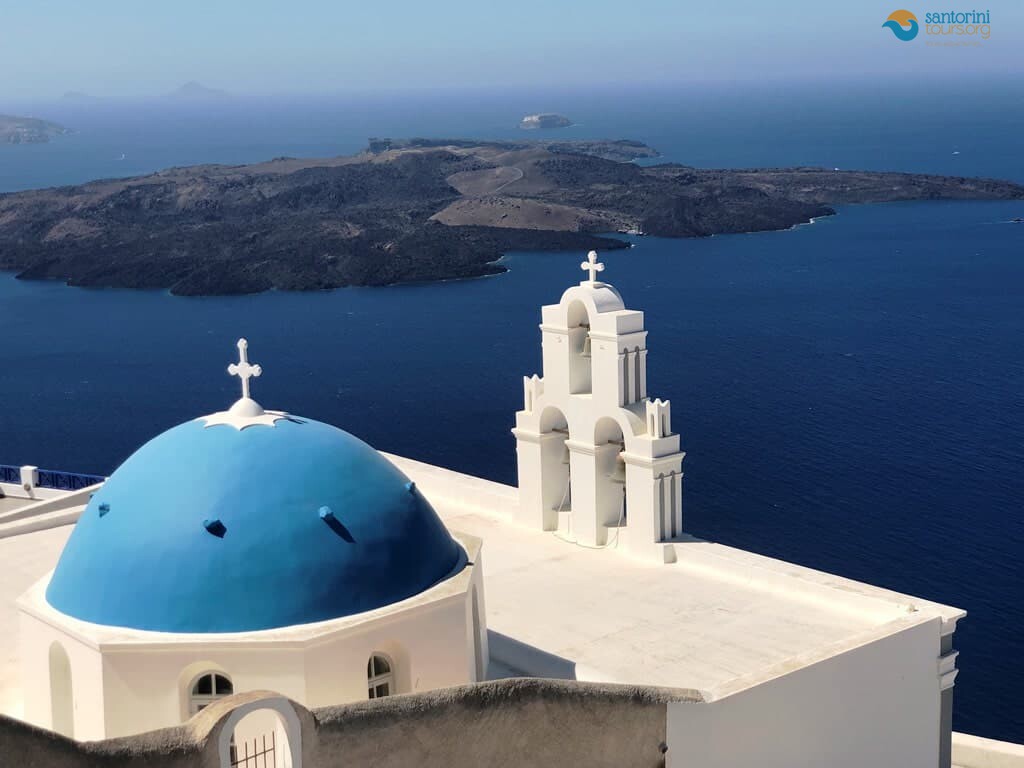
Fira is the central village and capital of Santorini. It is known for its white Cycladic houses, which were built on cobblestone streets, offering stunning views of the caldera and the volcano. The alleys of Fira are narrow and picturesque, while the numerous taverns, bars, and cafes offer a rich gastronomic and nightlife.
The square in Fira is the epicenter of activity, while you can also visit the archaeological museum of the town to learn more about the history of the island. Fira is a very popular destination in Santorini and is a point of reference for visitors wishing to enjoy the beauty and culture of the island.
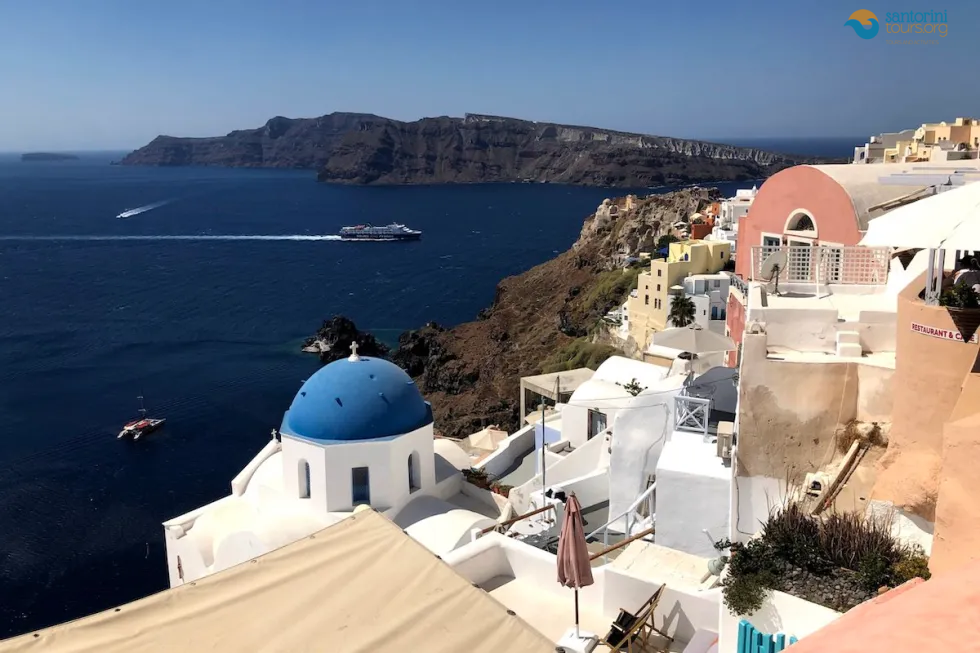
Oia is one of the most picturesque locations that every visitor should see. You will walk along the marble path full of souvenir shops, traditional and modern art, and much more. You will eat at one of the city’s well-known restaurants with gastronomic cuisine and a wonderful view. And of course you will see the famous Santorini sunset at the edge of the city, the northernmost point of the island, a spectacle of a “lifetime experience”.
Arrive at the sunset viewing point early or with an early reservation at one of the restaurants or bars with a view, to avoid crowds at peak times. You can also consider taking a private Santorini wine tour.
Beaches of Santorini
The beaches of Santorini are a unique experience, thanks to the uniqueness of the volcanic landscape of the island. Two of the most famous beaches are the Red Beach and the Perivolos Beach.
The Red Beach is perhaps the most famous in Santorini. Its name comes from the impressive red rock that surrounds the beach. The red sand creates a unique aesthetic, and the water is crystal clear.
Perivolos Beach is a truly beautiful beach in Santorini. This beach has a mix of sand and pebbles, making it ideal for those seeking sun and sea.
Guests can enjoy the sun and sea by relaxing on the sun loungers or on the comfortable sand. The blue of the Aegean Sea is crystal clear and offers excellent coolness during the summer months.
Perivolos beach is also known for its easy access and the many taverns and cafes nearby, offering delicious dishes and drinks. It is a wonderful destination to enjoy the sea and sunbathing during your holidays in Santorini.
Kamari Beach is a large and beautiful beach in Santorini, located near the village of Kamari. This beach is known for its magical combination of the black pebble beach and the blue of the Aegean Sea.
The black pebbles that cover the beach create an extremely interesting aesthetic and are the characteristic feature of the beaches of Santorini. Visitors can enjoy the sun and the sea, relaxing on sun loungers or in taverns located nearby.
Kamari Beach also offers various services and activities for visitors, such as water sports, umbrella and sunbed rental, and restaurants serving local and international cuisine. This beautiful landscape and the tranquility of Kamari Beach make it ideal for those who wish to relax and enjoy their time in Santorini.
Santorini Landscapes
Santorini impresses with its volcanic landscape, which is one of the most impressive geological creations in the world. The crater of the volcano, also known as the Caldera, is the main geographical feature of the island. It is a huge crater about 400 meters deep, which was created after the powerful volcano erupted thousands of years ago. Watching this volcanic activity gives the island a special geological value and develops the curiosity of visitors.
The view that Santorini offers is truly unique. The sunsets over the Caldera are simply unforgettable, as the sun sinks into the Aegean Sea, coloring the sky with shades of orange and pink. Furthermore, the view from the highest areas of the island towards the Caldera and the volcano is stunning, while the geological diversity of the landscape creates a fascinating sense of communion with nature.
In short, Santorini is a destination that combines incredible natural beauty with many activities for all tastes. Its uniqueness, with its volcanic landscape, beautiful beaches, and interesting adventures, makes it a destination not to be missed. It invites everyone to visit it and discover its magic in autumn 2025.
You can explore the island by taking a tour of Santorini this summer.
Read more about Santorini Tours:
- Santorini Sightseeing Private Tour
- Exclusive Shore Santorini Private Tour
- Impressive Caldera Santorini Private Tour
- South Part Santorini Private Tour
- North Part Santorini Private Tour
- Santorini Historical Private Tour
- Santorini Sunset Private Tour
Santorini Breakfast: The Short Answer
Breakfast is the meal Santorini gets least right and the one visitors complain about most. Hotel buffets on the caldera rim are expensive and international. The island’s own morning food is in the bakeries, and it costs two euros. A santorini breakfast done properly is a koulouri or a bougatsa, a Greek coffee or a freddo, and a table that faces the volcano rather than a chafing dish.
The cheapest santorini breakfast. A bakery. Two to four euros for bread, a pastry and coffee, in every village on the island.
The best value sit-down. A village cafe in Karterados, Megalochori, Pyrgos or Emporio, around eight to twelve euros.
The hotel buffet. Fifteen to thirty-five euros a head if bought separately, and usually included in the room rate on the rim.
The caldera-view santorini breakfast. Twenty-five to fifty euros a head in Oia and Imerovigli, and you are paying for the terrace.
What Greeks actually eat. Coffee and a cigarette, or a koulouri on the way to work. A cooked breakfast is a hotel invention here.
The traditional santorini breakfast. Bread, olive oil, tomato, olives, cheese, honey, yoghurt and fruit, and several Santorini hotels now serve exactly that.
What time santorini breakfast starts. Bakeries open at seven. Cafes from eight or nine. Hotel buffets usually run eight to ten thirty.
The earliest santorini breakfast. Bakeries in Fira and Karterados are open before seven, which matters when you have a 7:25 ferry from Athinios.
Coffee with a santorini breakfast. Freddo espresso and freddo cappuccino in summer, Greek coffee any time, filter coffee only in the tourist places.
The brunch question. Fira and Oia have a small brunch scene, open roughly May to October, at fifteen to twenty-five euros a plate.
The one-line answer. Eat one santorini breakfast on a caldera terrace because the view is the point, and every other morning in a bakery, which is better food for a tenth of the money.
What a Greek Breakfast Actually Is
This is worth understanding, because the gap between what Greeks eat and what hotels serve is the whole story.
The everyday santorini breakfast. Coffee. That is it, for most adults, most mornings.
The working santorini breakfast. A koulouri, the sesame-crusted bread ring sold from bakeries and street carts, eaten walking.
The children’s version. Bread with butter and honey, or bread with tahini, or a glass of milk and a biscuit.
The village santorini breakfast. Bread, olive oil, tomato, olives, cheese and whatever fruit is in season, eaten late morning.
Bougatsa, the classic santorini breakfast pastry. A filo pastry with semolina custard, dusted with sugar and cinnamon, and the closest thing Greece has to a breakfast pastry tradition.
Tiropita and spanakopita. Cheese pie and spinach pie, sold hot from every bakery, and the standard morning purchase across the country.
Yoghurt and honey. Strained yoghurt with thyme honey and walnuts. Genuinely Greek, and mostly eaten as a dessert rather than at breakfast.
Paximadi. Twice-baked barley rusk, softened with water and topped with tomato, oil and cheese. Cretan in origin and common here.
What is not Greek. Pancakes, eggs benedict, avocado toast and bacon. They exist on Santorini because visitors want them, not because anybody here eats them.
Why the hotel buffet feels off. It is an international buffet with a few Greek items added, and the Greek items are usually the best things on it.
The Greek Breakfast initiative. A hotel-association scheme encouraging properties to serve regional products, and the Santorini version means fava, tomato, chloro cheese and local honey.
What to look for. A santorini breakfast that includes the island’s own tomato, its fava and its fresh cheese is worth paying for. One that includes croissants and cold cuts is not.
Bakeries and Cafes, Village by Village
The bakery is the answer to breakfast on this island, and there is one in every settlement.
Santorini breakfast in Fira. The widest choice, with bakeries open from before seven, several cafes on the square and the brunch places on the caldera path.
Santorini breakfast in Karterados. Inland and residential, fifteen minutes’ walk from Fira, with the best-value bakeries on the island because they feed locals.
Santorini breakfast in Oia. Expensive and beautiful. Two or three bakeries behind the main street sell the same koulouri for a third of the terrace price.
Santorini breakfast in Imerovigli. Small, with a handful of cafes and the best morning caldera light anywhere on the rim.
Santorini breakfast in Firostefani. Between Fira and Imerovigli, cheaper than either, with cafes on the path and a good bakery on the main road.
Santorini breakfast in Megalochori. A vaulted village with a square, a bakery and two cafes, and a santorini breakfast here costs half what it does on the rim.
Santorini breakfast in Pyrgos. The highest village, with cafes around the castle and a view over the whole island rather than the caldera.
Santorini breakfast in Emporio. The largest village and the least visited, with everyday bakeries and everyday prices.
Santorini breakfast in Kamari. The beach strip, with cafes opening from eight and hotel breakfasts along the front.
Santorini breakfast in Perissa and Perivolos. Black-sand beach cafes, later opening, and the closest thing the island has to a beach brunch.
Santorini breakfast in Vlychada. A marina and a few places, quiet, and a good stop on a south-coast morning.
Akrotiri. Cafes near the site, and worth timing a santorini breakfast around an eight o’clock opening at the excavation.
Santorini breakfast in Messaria and Vothonas. Inland working villages on the bus routes, with bakeries that open early and no visitors in them.
The pattern. The further you are from the caldera edge, the better the breakfast and the lower the price, and the walk is rarely more than ten minutes.
The Hotel Buffet, and Whether to Pay for It
What a santorini breakfast buffet costs. Fifteen to thirty-five euros a head when bought separately, and most rim hotels build it into the rate.
What you get at the low end. Bread, jam, cold cuts, cheese, eggs, cereal, fruit, juice and filter coffee.
What you get at the high end. An a la carte card, eggs cooked to order, a Greek section with fava and local cheese, and a terrace.
When it is worth it. When the terrace faces the caldera, because a santorini breakfast with that view is a genuine experience and you are paying for the seat.
When it is not. Inland hotels and beach hotels, where the same money buys a much better bakery morning fifty metres away.
The room-rate trap. Half the rim hotels include breakfast whether you eat it or not, so check the rate before booking anything separate.
Santorini breakfast timing. Most buffets run eight to ten thirty, which is too late for an early boat and too early for a late night in Fira.
Santorini breakfast before early departures. Ask for a breakfast box the night before. Almost every hotel on the island will make one, and most do not advertise it.
Dietary requirements. Tell the hotel the night before rather than on the morning. Kitchens here are small and they cannot improvise at eight.
Children at a santorini breakfast. Buffets suit families better than anything else on the island, because a child can eat bread and fruit without a negotiation.
The Greek section. If the buffet has fava, Santorini tomato, chloro cheese, thyme honey and local yoghurt, it is a good one.
The honest verdict. One caldera-terrace santorini breakfast is worth the money. Seven of them are not, and nobody who stays a week eats all seven.
What to Order, and What It Costs
Koulouri, the standard santorini breakfast. The sesame bread ring. Around one euro in a bakery, two on the rim, and the standard Greek breakfast on the move.
Bougatsa. Semolina custard in filo with sugar and cinnamon, two fifty to four euros, and the best thing in most Santorini bakeries.
Tiropita. Cheese pie, two to three fifty, sold hot, and the single most common Greek breakfast purchase.
Spanakopita. Spinach pie, the same price, and better than the cheese version almost everywhere.
Kasertopita and loukanikopita. Cheese and sausage variants, three to four euros, and heavier than they look.
Greek yoghurt with honey and walnuts. Five to eight euros in a cafe, and about one fifty if you buy the parts in a supermarket.
Eggs any style. Eight to fourteen euros in a cafe, and this is where a santorini breakfast stops being good value.
Strapatsada. Scrambled eggs with tomato and feta, a real Greek dish, seven to eleven euros, and worth ordering where it appears.
Kagianas. The same dish under its older name, often with local sausage added.
Paximadi with tomato. Barley rusk, grated tomato, oil and cheese, four to seven euros, and the most Santorini thing on a breakfast menu.
Fava at breakfast. Unusual but it happens in the better hotel buffets, and the island’s split pea puree is excellent cold.
Fresh orange juice. Three fifty to six euros, squeezed to order almost everywhere.
Pancakes and avocado toast. Twelve to twenty euros in the Fira and Oia brunch places, and exactly what you would pay in London.
The bill to expect. Four euros in a bakery, ten to fourteen in a village cafe, twenty-five to fifty for a santorini breakfast with a caldera view.
Coffee, and How to Order It
Freddo espresso with a santorini breakfast. Espresso shaken with ice, served over ice, and the drink of the Greek summer. Two fifty to five euros.
Freddo cappuccino. The same with a cold milk foam on top, and the most ordered coffee in the country.
Sketo, metrio, glyko. Unsweetened, medium sweet, sweet. Say it when you order, because sugar goes in during the shaking.
Greek coffee after a santorini breakfast. Boiled in a briki, served with the grounds settling, and drunk slowly. Two to three euros.
Frappe. Instant coffee shaken with water, ice and optional evaporated milk. Older than the freddo and still everywhere.
Espresso and cappuccino. Hot versions exist and nobody drinks them between June and September.
Filter coffee. Only in hotels and the tourist places, and usually poor.
Plant milks. Oat and almond are normal in Fira and Oia, patchy in the villages, and worth asking about before you sit down.
The water. A glass of water arrives with every Greek coffee, free, and refusing it confuses people.
How long you can sit. As long as you like. A single freddo buys a two-hour table, and nobody will rush you.
Where the locals take a santorini breakfast. The square in Fira, the Karterados cafes, and the Emporio and Pyrgos village squares, all of them cheaper than the rim.
The caldera coffee. Six to nine euros in Oia, and once, in the right hour, entirely worth it.
The practical rule. Buy a santorini breakfast in a bakery and buy the view separately with a coffee, and the morning costs a third of what it otherwise would.
Santorini Breakfast: Questions People Ask
What is a traditional Greek breakfast? Bread, olive oil, tomato, olives, cheese, honey, yoghurt and fruit. Most Greeks actually have coffee and a koulouri on the way to work.
What time does breakfast start on Santorini? Bakeries from before seven, cafes from eight or nine, hotel buffets usually eight to ten thirty.
How much does a santorini breakfast cost? Four euros in a bakery, ten to fourteen in a village cafe, twenty-five to fifty with a caldera view.
Is a santorini breakfast included in the room rate? Usually on the caldera rim and often not at beach or inland hotels. Check the rate, because paying twice is common.
What should I order for a santorini breakfast? Bougatsa or spanakopita from a bakery, strapatsada in a cafe, and a freddo espresso with either.
Where is the cheapest santorini breakfast? Karterados, Messaria, Emporio and the inland villages, at bakery prices with no visitors in the queue.
Where is the best caldera-view santorini breakfast? Imerovigli and Oia, where the morning light is on the cliff rather than behind it.
Can I get breakfast before an early ferry? Yes. Fira and Karterados bakeries open before seven, and any hotel will make a box if you ask the night before.
Is there brunch on Santorini? A small scene in Fira and Oia from May to October, at fifteen to twenty-five euros a plate.
Can I get oat milk? In Fira and Oia yes, in the villages often not.
Is a santorini breakfast good for vegans? The weakest meal for it. Bread, tahini, olives, tomato and fruit are the reliable answer.
What about gluten free? Hard in bakeries and easy in hotels if you tell them the night before.
Do I need to book brunch? In July and August, yes, for the caldera-view places.
What do children eat? Hotel buffets suit families best. Bakeries do plain bread, and every cafe has yoghurt and fruit.
Breakfast Around a Tour Day, and How We Help
Why it matters. Most tour days start between eight and ten, and a badly timed santorini breakfast is the difference between a good morning and a rushed one.
Wine tours. Usually late morning or afternoon starts, so a full breakfast beforehand is sensible. The tastings are generous and they land on an empty stomach hard.
Caldera boat trips. Morning departures leave Ammoudi and Athinios from around ten. Eat before you go down, because there is very little at the ports.
Sunset cruises. Afternoon boarding, so the morning is yours, and this is the day to sit somewhere with a view.
Akrotiri. The site opens at eight and the first hour is the coolest and quietest. Take a bakery breakfast with you and eat afterwards in the village.
Village and photography tours. We can start at a village bakery in Megalochori or Pyrgos, which is a better first stop than a hotel buffet.
Hiking Fira to Oia. Start at seven with a koulouri and water. The walk takes three to four hours and there is nothing for the first hour.
Port transfers. Athinios sailings often leave before eight. We stop in Karterados on the way down if you ask when you book.
Airport transfers. The airport has one small cafe and a long security queue. Eat before you leave your hotel.
Cruise passengers. You will have eaten on board. Use the morning for the cable car and Akrotiri, and take a bougatsa in Fira rather than a sit-down meal.
What we do. Send your dates and your start times and we will build the santorini breakfast stop into the day, so the first hour is planned rather than improvised.
Every Village and Site on the Island
Any of these can be built into a private day. Each has its own page with what to see and how long to allow.
Caldera villages: Fira · Firostefani · Imerovigli · Oia · Finikia · Baxedes
Inland villages: Pyrgos · Megalochori · Emporio · Mesaria · Karterados · Vothonas · Vourvoulos · Exo Gonia · Mesa Gonia · Pigadia
Beaches: Perissa · Perivolos · Kamari · Vlychada · Monolithos · Red Beach · White Beach · Agios Georgios · Agia Paraskevi
Sites and landmarks: Akrotiri · Ancient Thira · Akrotiri Lighthouse · Nea Kameni · Palia Kameni · Thirasia · Athinios Port
All our tours: All Santorini tours · Full day tour · Sightseeing tour · Personalised tour · North part tour · Horse riding · South part tour · Sunset tour · Shore excursion · Caldera tour · Food experience · Wine tour · Historical tour · Small group tour
Planning and services: Famous sights tour · Private transfers · Transfers to Oia and Finikia · Transfers to other villages · Villages of Santorini · History of Santorini · Tours near you · Languages we guide in · Food and fun tours · Gay friendly tours · Our tour buses · Daily tours · Day tours · FAQ · Gallery · Tour photo gallery · About us · Contact · Blog