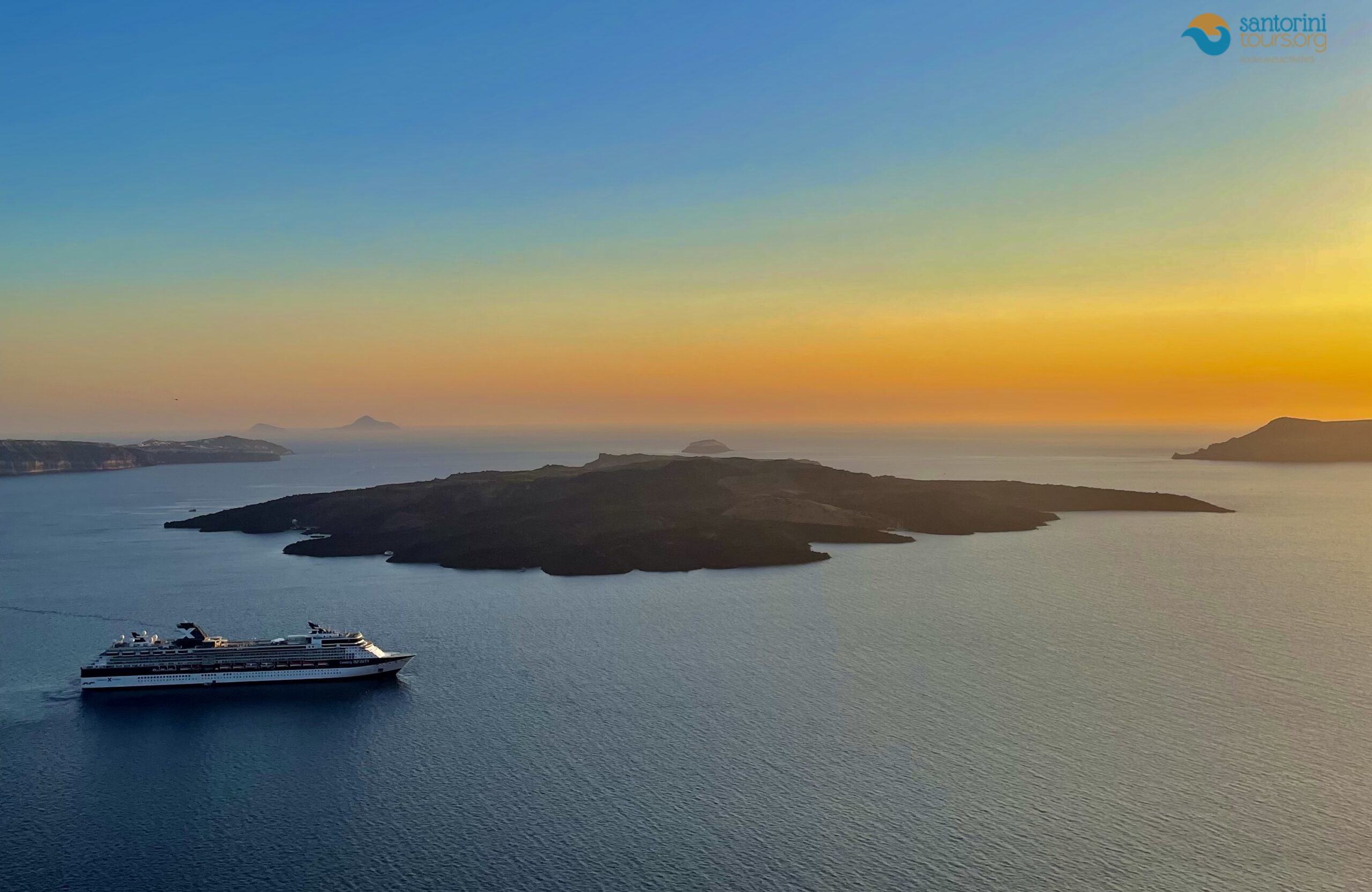

July is often considered as one of the best months to visit Santorini for several reasons, related to the weather, cultural activity, and tourist experience. Santorini’s sunsets are world-famous, and in July 2024 you can enjoy them in all their glory, with the sky taking on spectacular colors. The clear skies and clear atmosphere in July offer excellent visibility, making the views from the high points of the island even more impressive.
Although Santorini is busier in July, this means that all tourist shops, restaurants, and services are in full operation. Also, the vibrancy of the island at this time offers many opportunities for social activities and acquaintances.
Many festivals and cultural events take place in July. These include traditional dances, concerts, and other activities that offer a deeper understanding of the local culture.
Why should you see the sunset of Santorini in July 2024?
The sunset in Santorini is one of the most famous and breathtaking in the world and is one of the top experiences you should not miss when visiting the island. As the sun sinks into the sea, the sky fills with stunning shades of orange, pink, purple, and red, creating a pandemonium of colors. The sunset light reflects on the sea and the Caldera, creating images that look like they are taken from a painting.
Santorini is known for its steep Caldera, which offers dramatic views of the sea and surrounding volcanic islands. The combination of this view with the sunset creates one of the most spectacular landscapes in the world. The sparkling white houses and blue-domed churches add to the beauty of the landscape, especially when lit by the colors of the sunset.
The colors change from deep red to yellow, orange, and purple as the sun sinks into the Aegean and turns golden red, reflecting the light on the sea and the surrounding islands, while the volcanic scenery in the background constantly changes colors, transforming Santorini on a huge postcard.
Romantic atmosphere in Santorini in July 2024
The sunset in Santorini is a popular destination for romantic moments and marriage proposals. The magnificent view and the tranquility of the moment create the perfect romantic atmosphere. Watching the sunset is a relaxing activity that allows you to enjoy the natural beauty and rejuvenate. You can take a Santorini private sunset tour in July 2024 with Santorini Tours.
The sunset in Santorini offers endless photo opportunities, with the spectacular landscape and the rich colors of the sky creating unique images. Santorini sunset photos become souvenirs that you will remember forever and share with friends and family.
The village of Oia is the most famous spot to see the sunset. The narrow streets are filled with tourists looking for the best place to enjoy the spectacle. Firostefani and Imerovigli offer panoramic views with fewer crowds than Oia, making the experience quieter. Lighthouse in Akrotiri is a lesser-known but beautiful sunset destination, overlooking the vast ocean.
Sharing the sunset moment with other guests makes the experience even more memorable and emotional. Sunset is the perfect time for a romantic dinner overlooking the sea, making the evening unforgettable. The view of the sunset can be a rejuvenating experience, filling you with energy and positive emotions.
The sunset experience in Santorini is something not to be missed. From stunning natural beauty to spiritual rejuvenation and connecting with local culture, it offers something for everyone.
Take a Santorini private wine tour
Visiting the wineries of Santorini is one of the most exciting and enjoyable experiences on the island. Santorini has a long tradition of wine production, combining the unique volcanic land with local grape varieties and innovative winemaking. You can take a Santorini private wine tour in July 2024 with Santorini Tours.
Santorini is known for its volcanic soil, which is rich in minerals and gives the island’s wines their special characteristics. This soil contributes to the production of wines with a unique taste and aromatic profile. The conditions on the island are harsh, with little rainfall and strong winds. These elements enhance the quality of the grapes, leading to concentrated, full-flavored wines.
Visitors can participate in organized wine tastings at the wineries, tasting Santorini’s exceptional wines and learning about the flavors and aromas that make them so special. Winery tours provide the opportunity to learn about the winemaking process, from grape harvest to bottling, and understand how different techniques affect the final product.
Many of the wineries are located in locations with stunning views of the Caldera and the Aegean Sea, offering a unique tasting experience. The vineyards of Santorini, with the special ways of cultivation and the imposing volcanic landscape, offer enchanting images and a unique feeling. You can take a tour of Santorini!
The personal contact with the wine producers and oenologists offers valuable knowledge and the opportunity to hear the stories behind each wine. The cultivation and production of wine is an integral part of the cultural identity of Santorini. Visiting the wineries allows you to connect with the local tradition and understand the importance of wine in the daily life of the island. Santorini’s wineries offer the opportunity to purchase wines that may not be available elsewhere. These wines make excellent souvenirs or gifts for wine lovers.
Planning the Sunset in Santorini in July
The article above explains why the sunset is unmissable. July is the month of long days, clear skies and the island at full energy, but also of the biggest crowds. A little planning turns the sunset in Santorini in July from a crush into the highlight of your trip.
Sunset in Santorini in July: the timing. The sun sets at around 20:45 at the start of July and at about 20:25 by the end of the month. Golden light begins roughly an hour earlier.
Sunset in Santorini in July: the crowds. July is one of the busiest months of the year. The famous viewpoints fill up well before sunset, especially in Oia.
Sunset in Santorini in July: the wind. The summer meltemi can blow strongly in July, keeping the air clear but making exposed viewpoints and boats feel cool after dark.
Sunset in Santorini in July: the choice. Oia for the classic view, Imerovigli, Firostefani, Pyrgos or the lighthouse for calm, or a boat for the sea.
The sections below cover each option, with practical tips for a July evening.
Oia at Sunset in July
As the article above says, Oia is the most famous spot and its narrow streets fill with people looking for the best place. This is how to enjoy the sunset in Santorini in July in Oia.
The castle. The ruins of the castle of Agios Nikolaos at the western tip of the village give the classic view over the caldera and the sea. In July, arrive at least an hour and a half before sunset for a good spot.
The windmills. The white windmills at the edge of the village make a beautiful foreground and are slightly less crowded than the castle.
Sunset in Santorini in July from a restaurant. A west-facing table avoids the scramble for space. Book several weeks ahead for July.
Ammoudi. Below the village, tavernas by the water offer the sunset at sea level, away from the crowds above.
Sunset in Santorini in July: getting away. After sunset, the roads and buses out of Oia are packed. Pre-book a transfer, or stay for a late dinner and leave once the crowds have gone.
Respect. Many rooftops belong to hotels and homes; do not climb onto them for the view.
Finikia: Oia’s Quiet Neighbour
Just outside Oia, the small village of Finikia is one of the best-kept secrets for the sunset in Santorini in July.
The village. Colourful cave houses, cobbled lanes and small churches, much calmer than Oia even in high season.
The walk. A short path links Finikia and Oia. Many visitors walk from Finikia to the edge of Oia in the late afternoon, avoiding the parking and bus crowds.
The view. From the higher ground around Finikia and the approach to Oia, you see the same sunset over the sea with far fewer people around you.
Dinner. A few tavernas in Finikia offer simple local food at fairer prices than the caldera restaurants of Oia.
Staying here. Traditional houses to rent in Finikia put the sunset within walking distance without the Oia prices.
Sunset in Santorini in July from the north: tip. Leave the car in Finikia, walk to the viewpoints, and return after the crowds have thinned.
Imerovigli and Skaros
As the article above notes, Imerovigli offers panoramic views with fewer crowds than Oia. It is one of the finest places for the sunset in Santorini in July.
The view. At the highest point of the caldera rim, around 300 metres above the sea, Imerovigli looks across the volcano to Thirasia, with Skaros Rock in the foreground.
Skaros Rock. A stepped path leads down to the rock that once held the island’s medieval castle. Watching the sunset from the path is unforgettable, but leave enough light to climb back up.
Sunset in Santorini in July from a terrace. Many cafés and restaurants along the path face west. Book ahead in July.
The crowds. Busy in July, but far calmer than Oia.
Sunset in Santorini in July: tip. Walk from Fira to Imerovigli in the late afternoon along the caldera path, around 30 to 45 minutes, then stay for the sunset and dinner.
Firostefani and Fira
The article above mentions Firostefani as a quieter alternative. With Fira next door, it is one of the easiest places for the sunset in Santorini in July.
Firostefani. A short walk north of Fira, with terraces facing the volcano and a relaxed atmosphere. The famous blue-domed church often called the Three Bells of Fira lies just below the path.
Fira. The capital’s caldera promenade is lined with cafés and cocktail bars. The sun sets behind the volcano and Thirasia.
Sunset in Santorini in July in the capital. Fira is busy in July, but the long promenade spreads the crowds, and it is easy to reach by bus.
After sunset. Fira comes alive at night, with bars and clubs open late in July.
Sunset in Santorini in July: tip. Book a sunset table, or arrive at a café an hour early to secure a seat with a view.
The Akrotiri Lighthouse
The article above calls the lighthouse at Akrotiri a lesser-known but beautiful sunset destination, overlooking the vast sea. It is one of the best alternatives for the sunset in Santorini in July.
The lighthouse. Built in the late 19th century, it is one of the oldest in the Cyclades. The building is usually closed, but the headland is open.
The view. The sun sinks into the open sea beyond the cliffs, while the whole caldera stretches away to the north.
Sunset in Santorini in July without the Oia crowds. The lighthouse is popular, but far calmer than Oia.
Safety. The cliffs have no railings. Stay well back from the edge, especially in the wind.
Parking. Space is limited; arrive early.
Sunset in Santorini in July: combine it. Visit Akrotiri, the Red Beach viewpoint and a winery earlier in the day, then drive to the lighthouse.
Megalochori and the South Caldera
The southern part of the caldera is far quieter than the north, and it offers some of the most peaceful places for the sunset in Santorini in July.
Megalochori. A traditional village of old mansions and wine cellars, with a much-photographed bell tower on the edge of the caldera. A short walk leads to quiet viewpoints over the cliffs.
The view. From the southern rim, the sun sets over the sea beyond Thirasia, with the white villages of Fira and Imerovigli catching the last light in the distance.
Wineries. Several wineries in the area have terraces facing the caldera, ideal for a tasting that ends with the sunset.
Dinner. The small square of Megalochori has tavernas under the trees, calm even in July.
Sunset in Santorini in July in the south: combine it. Visit Akrotiri and the Red Beach in the morning, swim at Vlychada in the afternoon and end at Megalochori or the Akrotiri Lighthouse.
Getting there. About 15 minutes by car from Fira, and on the bus route to Akrotiri and Perissa.
Pyrgos and Profitis Ilias
Inland, the island’s highest village and its highest point offer a different kind of sunset in Santorini in July: the whole island glowing below you.
Pyrgos. Built in circles around the hill of an old castle, the village has cafés and terraces at the top with views over both coasts.
Profitis Ilias. Above Pyrgos, the summit at around 560 metres looks over the caldera, the vineyards and the sea.
Sunset in Santorini in July in the villages. These viewpoints are much quieter than the caldera villages, even at the height of summer.
A cooler evening. Being higher, Pyrgos often feels a little cooler on July evenings.
Dinner. Pyrgos has some of the island’s best tavernas and wine bars, a perfect place to stay after sunset.
Sunset in Santorini in July: tip. Walk the lanes of Pyrgos before sunset, then choose a terrace near the top.
Vlychada and Ammoudi: Sunsets by the Sea
Not every sunset needs a cliff. Watching the sunset in Santorini in July at sea level has its own beauty.
Vlychada. On the south coast, the pale, wind-sculpted cliffs glow in the evening light, and the small marina has fish tavernas.
Ammoudi. Below Oia, tavernas by the water face the sunset, with the red rock of the cliffs rising behind.
Sunset in Santorini in July after a swim. Both places combine a late-afternoon swim with dinner as the sun goes down.
Getting there. Park in the settlement at Vlychada and walk to the beach; walk down the steps from Oia to Ammoudi or take the road.
Sunset in Santorini in July: book a table. Waterfront tables at Ammoudi are in demand in July.
Sunset Cruises in July
The article above recommends a private sunset tour. Watching from the water is the calmest way to see the sunset in Santorini in July.
The cruise. Catamarans sail from the south coast in the afternoon, stopping at the Red and White beaches and quiet bays for swimming, with dinner on board.
The view. As the sun sinks behind Thirasia, the villages on the caldera rim glow above you, far from the crowds.
Sunset in Santorini in July by private boat. A private catamaran or boat lets couples, families and groups choose their route and their moment.
The wind. The meltemi can make the sea rough in July. Cruises are sometimes rerouted or cancelled; keep a flexible day.
What to bring. Swimwear, a towel and a light layer; it gets cool on the water after sunset.
Sunset in Santorini in July: book ahead. Sunset cruises sell out in July; reserve before you arrive.
Sunset at a Winery
The article above describes wineries with stunning views of the caldera and the Aegean. Combining a tasting with the sunset in Santorini in July is one of the most relaxed ways to end the day.
Caldera terraces. Several wineries sit on the edge of the caldera, with terraces facing west.
What to taste. Assyrtiko, the crisp mineral white that suits a hot July evening, and Vinsanto, the traditional sweet wine.
Sunset in Santorini in July with wine: timing. Book a late-afternoon tasting so that it ends as the sun goes down.
The harvest. The grape harvest usually begins in late July or August, so you may see the vineyards at their busiest.
Safety. Book a tour with transport rather than driving after tasting.
Sunset in Santorini in July: book early. Sunset tastings are popular in high season.
A July Day Built Around the Sunset
In the heat of July, the best days are planned backwards from the evening. This sample day makes the sunset in Santorini in July the climax.
Early morning. Visit Oia or Fira before 9:00, when the lanes are cool and quiet.
Late morning. Akrotiri, under its protective roof, or the museums of Fira.
Midday. A long lunch and a swim at Perivolos, Kamari or Vlychada, or a rest at your hotel pool.
Late afternoon. A winery tasting, a walk along the caldera path or a sunset cruise departure.
Sunset in Santorini in July: the evening. Watch from your chosen spot, then enjoy a late dinner; Greeks eat at 21:30 or later.
Sunset in Santorini in July with a guide. Our private sunset tours plan the day around the heat, the crowds and the best viewpoints.
Photographing the July Sunset
As the article above says, the sunset offers endless photo opportunities. These tips help you capture the sunset in Santorini in July.
Golden hour. The hour before sunset turns the cliffs and whitewashed walls gold. Arrive early to use it.
Foregrounds. Windmills in Oia, Skaros Rock in Imerovigli and the blue domes of Firostefani give depth to the picture.
Sunset in Santorini in July: the haze. Summer air can be hazy near the horizon; the colours often deepen just after the sun disappears.
The blue hour. Stay after sunset for the lights of the villages against a deep blue sky.
Crowds. In Oia, find a spot early and be patient; in Imerovigli and Pyrgos, you will have more room.
Sunset in Santorini in July: respect. Do not climb onto private rooftops, and check the drone rules before flying.
Proposals and Romantic Evenings
As the article above says, the sunset is a popular moment for romance and marriage proposals. These are the best ways to plan a romantic sunset in Santorini in July.
Private settings. A private boat, a hotel terrace or a quiet corner of Imerovigli offer more privacy than the crowded castle in Oia.
Dinner with a view. Book a west-facing table in Imerovigli, Firostefani or Oia weeks ahead for July.
Sunset in Santorini in July for a proposal: timing. Plan the moment for the last half hour before sunset, when the light is warmest.
A photographer. Local photographers know the best spots and how to work around the crowds.
Sunset in Santorini in July: the backup. If the wind is strong, choose a sheltered terrace rather than an exposed viewpoint or a boat.
With Children and Older Travellers
The crowds, the steps and the late hour need some thought for families and older visitors. This is how to make the sunset in Santorini in July work for everyone.
Choose a calmer spot. Imerovigli, Firostefani or a terrace in Pyrgos are easier than the packed lanes of Oia.
Book a table. A seat at a restaurant with a view avoids long standing waits in the crowd.
Sunset in Santorini in July with children. Hold young children’s hands near cliff edges, as many viewpoints have no railings. Bring snacks and water for the wait.
Steps. Many viewpoints involve steps and uneven paths. Older travellers should choose spots with easy access and a place to sit.
Transport. A pre-booked transfer avoids long queues for buses and taxis after dark.
Sunset in Santorini in July from the sea. A catamaran cruise is comfortable for families, with space to sit, swim and eat, though very young children may find a long trip tiring.
Timing. Rest in the afternoon so that everyone has energy for the late evening.
The Sunset in Santorini in July on a Budget
July is the most expensive season of the year, but the sunset itself is free. These are the best ways to enjoy the sunset in Santorini in July without spending much.
Public viewpoints. The castle ruins in Oia, the caldera path in Imerovigli and Firostefani, the top of Pyrgos and the Akrotiri Lighthouse cost nothing.
Bring a picnic. A bottle of water, some fruit and a snack from a supermarket make waiting for the sunset easier and cheaper than buying at a sunset bar.
Sunset in Santorini in July by bus. The public bus to Oia is inexpensive; take an earlier bus to avoid the late-afternoon queues, and be patient for the return.
Walk. Staying in Fira, Firostefani or Imerovigli, you can walk to a sunset viewpoint along the caldera path.
Eat after the crowds. Village tavernas away from the caldera serve good food at fairer prices once the sunset rush is over.
Sunset in Santorini in July: where to splurge. If you spend on one thing, make it a sunset cruise or a single dinner with a view. See our page on Santorini on a budget.
July Compared with June and August
As the article above says, July is often considered one of the best months to visit. This is how the sunset in Santorini in July compares with the months either side.
June. The longest days of the year, with the sun setting around 20:45 at the end of the month. Crowds are usually a little lighter than in July.
July. Clear skies, warm evenings and the island at full energy, with all services open. The meltemi can be strong.
August. Just as busy, with Greek holidaymakers joining international visitors. The sun sets earlier, at around 19:50 by late August.
Sunset in Santorini in July: the advantages. Long, warm evenings, clear air and a lively atmosphere after dark.
The disadvantages. Crowds, higher prices and competition for tables and boats.
Sunset in Santorini in July or September? September offers softer light, fewer people and a warm sea, but the lively summer atmosphere of July is part of its appeal.
Watching from Your Hotel
Many visitors dream of watching the sunset in Santorini in July from their own terrace. Where you stay decides whether that is possible.
West-facing villages. Oia, Imerovigli, Firostefani and Fira face the caldera and the sunset.
Sunset in Santorini in July from a caldera room. Oia and Imerovigli have the clearest views of the sun setting over the sea. Ask whether your room faces west, as not every caldera room does.
Beach resorts. Kamari and Perissa face east. You will see the sunrise from your room and travel to the sunset.
Inland villages. Some terraces in Pyrgos and Megalochori face west over the island.
Book early. Caldera rooms with sunset views sell out months ahead for July.
Sunset in Santorini in July: steps and heat. Many caldera hotels involve long flights of steps; ask about porter services and air conditioning.
Cruise Passengers and the July Sunset
July is a busy month for cruise ships, and many passengers hope to see the sunset in Santorini in July before returning on board.
Check your ship’s schedule. Many cruise ships leave the caldera in the late afternoon or early evening, before sunset. Know your last tender time.
The cable car. Queues for the cable car back down to the Old Port can be very long in the afternoon. Allow plenty of time.
Sunset in Santorini in July from the ship. If your ship sails at dusk, watching the sunset from the deck as you leave the caldera can be spectacular.
A shore tour. A private shore tour times the day around your ship’s schedule, so you see Oia and the caldera views and return on time.
Sunset in Santorini in July on a longer stay. If your ship stays late or overnight, Imerovigli or Firostefani are closer to Fira and the cable car than Oia.
July Weather and What to Wear
July is hot and dry by day, but evenings on the caldera can surprise visitors. Dressing well makes the sunset in Santorini in July more comfortable.
The heat. Days are hot and sunny, with very little rain. Stay hydrated and avoid long walks in the middle of the day.
The wind. The meltemi often blows in July, keeping temperatures pleasant but making exposed viewpoints and boats feel cool after dark.
Sunset in Santorini in July: bring a layer. A light jacket or shawl is useful for the evening, especially on the rim and at sea.
Shoes. Comfortable shoes with grip for steps and paths; many viewpoints are reached on foot.
Sun protection. Hat, sunglasses and sunscreen until the sun is low.
Water. Carry a bottle while you wait; viewpoints can be hot in the last hour before sunset, and kiosks nearby are often crowded.
A small bag. Crowded lanes and steep steps are easier with a light cross-body bag than with a large backpack, and it keeps valuables close in busy places.
Something for the evening. If you plan to stay for dinner, a smarter shirt or dress is welcome at many caldera restaurants, though dress codes are relaxed.
Getting to and from the Sunset
Transport is the hidden challenge of the sunset in Santorini in July.
Buses. Buses to Oia are packed in the late afternoon, and queues for the return are long after sunset.
Taxis. There are few taxis for the number of visitors. Waits after sunset in Oia can be very long.
Sunset in Santorini in July by car. Parking in Oia is very difficult in July. Arrive early or choose a less crowded viewpoint.
Walking. The caldera path links Fira, Firostefani and Imerovigli; walking to the sunset avoids transport altogether.
Private tours and transfers. A pre-booked transfer or private sunset tour removes the stress of getting back.
Sunset in Santorini in July: stay late. Having dinner after sunset lets the crowds and traffic clear before you leave.
Sunset Etiquette
As the article above notes, sharing the moment with other guests is part of the experience. A few courtesies make the sunset in Santorini in July better for everyone.
The applause. In Oia, the crowd often applauds as the sun disappears into the sea, a long-standing tradition that many visitors love to join.
Space. Spots fill early. Do not push in front of people who have been waiting, and keep tripods out of walkways.
Private property. Many rooftops and terraces belong to hotels and homes. Do not climb onto them for a better view.
Sunset in Santorini in July and noise. The villages are home to residents; keep voices down in the lanes after dark.
Rubbish. Take bottles and wrappers with you; bins can be hard to find at viewpoints.
Photographs of people. Ask before photographing couples, families or local residents, and be discreet around weddings and proposals, which are common at sunset in July.
Leaving. When the sun has set, move away slowly; the narrow lanes and steps become crowded, and patience keeps everyone safe on the uneven ground. Many people stay a little longer to enjoy the blue hour, when the lights of the villages come on and the crowds gradually drift away towards dinner in the village tavernas and restaurants nearby, where the evening continues late into the warm July night.
Sunset in Santorini in July: enjoy the moment. Take a few photographs, then put the phone away and watch the colours change.
July Evenings After the Sunset
As the article above says, July is full of cultural activity. Evenings do not end with the sunset in Santorini in July.
Fira at night. The caldera promenade is lit and lively, with cocktail bars on the cliff and clubs in the lanes behind.
Open-air cinema. Summer screenings under the stars on the Kamari promenade are a much-loved tradition.
Village festivals. Saints’ days in summer bring music, dancing, food and wine to village squares, and visitors are welcome.
Sunset in Santorini in July, then dinner. Late dinners are part of island life; a table at 21:30 or later is normal.
Getting home. Taxis are scarce late at night, so book a transfer in advance.
Frequently Asked Questions
What time is the sunset in Santorini in July?
Around 20:45 at the start of July and about 20:25 by the end of the month.
How early should I arrive in Oia?
At least an hour and a half before sunset in July for a good spot near the castle.
Where can I see the sunset without the crowds?
Imerovigli, Firostefani, Pyrgos, the Akrotiri Lighthouse or from a boat.
Is a sunset cruise worth it in July?
Yes, if the wind allows. It is the calmest way to watch, with swimming and dinner included.
Is it cold after sunset?
Not cold, but the wind can make exposed spots feel cool. Bring a light layer.
With Santorini Tours. Our private sunset tours make the sunset in Santorini in July the highlight of your trip, with the right viewpoint and no transport stress. Contact us to plan your evening.