Santorini, a gem in the Aegean Sea, is an island that enchants visitors with its stunning beauty, rich history, and unique experiences. You can experience the magic atmosphere of the island by taking a Santorini tour.
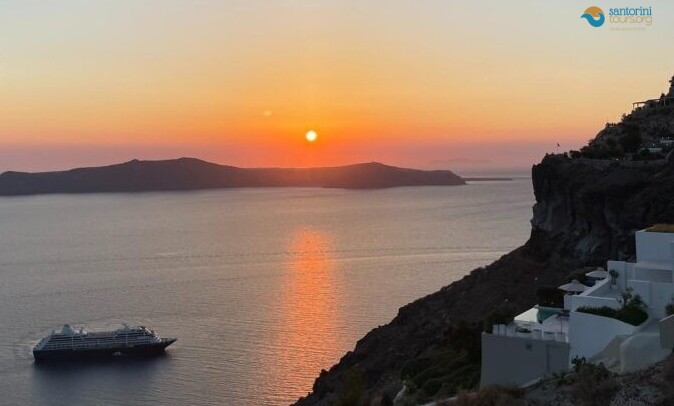
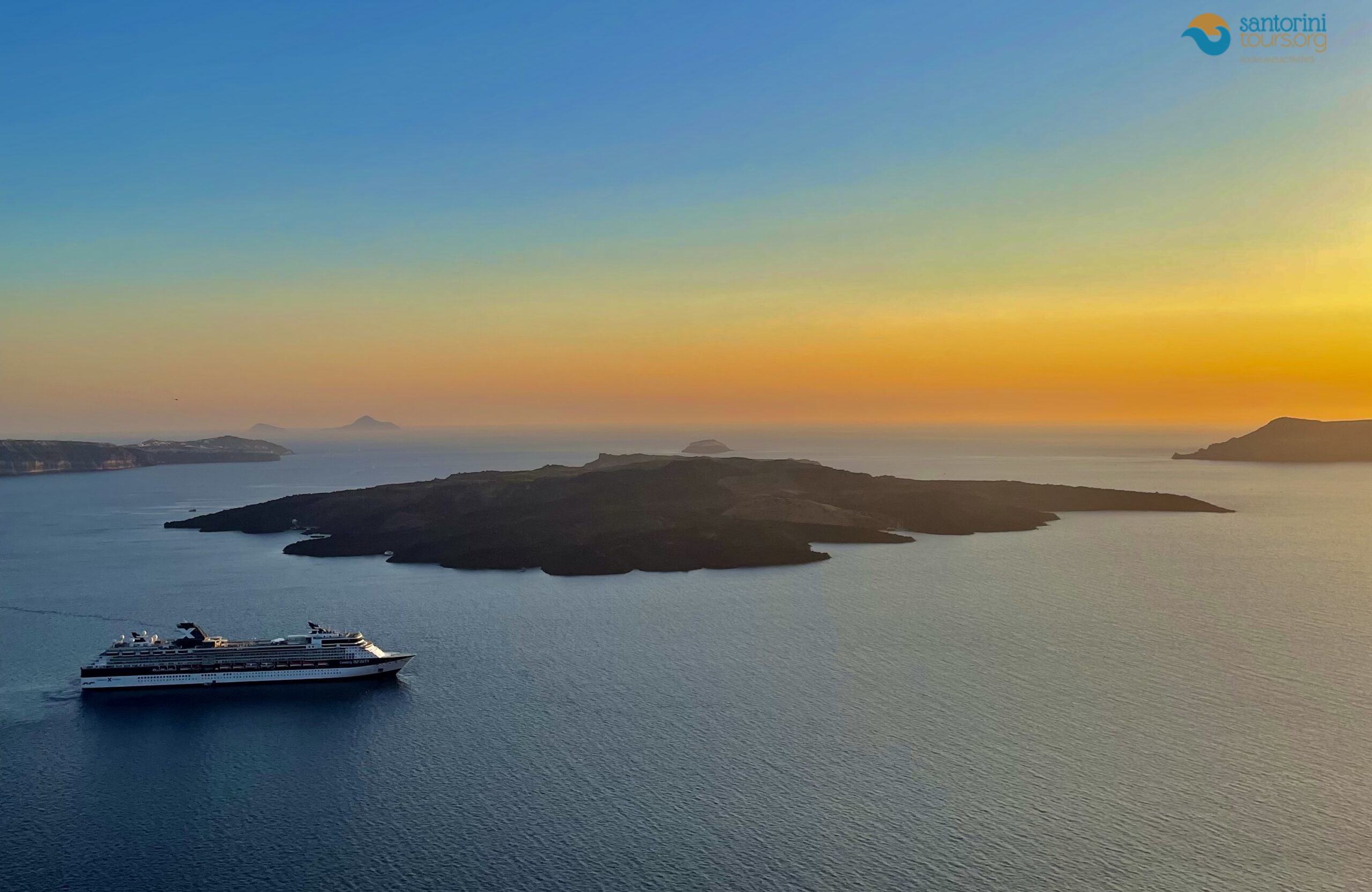
The island’s iconic whitewashed buildings, blue-domed churches, and dramatic cliffs create a picture-perfect landscape that is instantly recognizable. The breathtaking views from the caldera, especially during sunset, are reason enough to visit. Watching the sun dip below the horizon, painting the sky in shades of pink, orange, and purple, is an unforgettable experience.
1. Visit Oia, the Sunset Haven
Oia is undoubtedly the most famous village in Santorini, known for its mesmerizing sunsets that attract visitors from all over the world. Perched on the northern tip of the island, Oia offers panoramic views of the caldera and the Aegean Sea. The village itself is a labyrinth of narrow, cobblestone streets lined with white-washed houses, blue-domed churches, and charming boutiques.
As the sun begins to set, find a spot along the cliffside or enjoy a meal at a cliff-top restaurant to witness the sky transform into a canvas of oranges, pinks, and purples. Oia is also home to the Maritime Museum and the ruins of a Venetian castle, both of which are worth exploring.
2. Take a walk to Fira, the Vibrant Capital
Fira, the capital of Santorini, is a bustling town that perfectly blends traditional Greek charm with modern amenities. Situated on the western edge of the island, Fira offers stunning views of the caldera and is a hub of activity both day and night. Wander through its lively streets, filled with shops, restaurants, and cafes, and don’t miss the opportunity to visit the Archaeological Museum of Thera, which houses artifacts from the ancient city of Akrotiri. For those interested in nightlife, Fira has an array of bars and clubs where you can dance the night away. The cable car ride down to the old port is a thrilling experience, offering breathtaking views of the cliffs and the sea below.
3. Explore Akrotiri
For history enthusiasts, a visit to the ancient city of Akrotiri is a must. Often referred to as the “Minoan Pompeii,” Akrotiri was a prosperous settlement that was buried under volcanic ash during the eruption of 1600 BC. The ash preserved the city remarkably well, and today, visitors can explore the ruins of multi-storied buildings, frescoes, and pottery that provide a glimpse into life in the Bronze Age.
Akrotiri is one of the most important archaeological sites in Greece and offers a fascinating journey back in time. After exploring the ruins, head to the nearby Red Beach, famous for its striking red cliffs and crystal-clear waters.
4. Stroll to Imerovigli, the Balcony of the Aegean
Imerovigli is a picturesque village located between Fira and Oia, often referred to as the “Balcony of the Aegean” due to its elevated position offering some of the best views on the island of Santorini. The village is less crowded than Oia but offers equally stunning sunset views. Imerovigli is home to the Skaros Rock, a massive rock formation that was once the site of a medieval fortress. Adventurous visitors can hike to the top of Skaros Rock for a panoramic view of the caldera and the surrounding islands. Imerovigli is also known for its luxury hotels and fine dining, making it a perfect spot for a romantic getaway.
5. Go to Pyrgos, the Hidden Gem
Pyrgos is a lesser-known village that offers a quieter, more authentic experience of Santorini. Located inland, Pyrgos is the highest village on the island and offers panoramic views of the entire island. The village is a maze of narrow streets, traditional houses, and churches, all leading up to the ruins of a Venetian castle at the top.
Pyrgos has retained much of its traditional charm, making it a great place to escape the crowds and enjoy a more relaxed pace. The village is also known for its Easter celebrations, where locals light thousands of candles along the streets, creating a magical atmosphere.
6. Santorini wine tour
Santorini’s volcanic soil and unique climate produce some of Greece’s best wines, particularly the Assyrtiko, a crisp white wine. The island is dotted with vineyards and wineries, many of which offer tours and tastings. Visiting a winery is a wonderful way to learn about Santorini’s winemaking tradition while enjoying stunning views of the vineyards and the sea. You can take a private Santorini wine tour with Santorini Tours.
7. Santorini Horse Riding Tour
Taking a Santorini horse riding tour offers a unique and unforgettable way to experience the island’s natural beauty and diverse landscapes. The Riding Horse group in Santorini offers a unique experience of riding and exploring the amazing landscape of the island. With a love for horses and nature, the Riding Horse team has created a full-service program offering riding lessons and horseback riding in the nature and sights of Santorini. Whether you’re an experienced rider or a complete beginner, Riding Horse’s expert instructors can provide you with a safe horse riding lesson.
Santorini is a destination that captivates all who visit, offering a mix of natural beauty, history, and culture. Whether you’re exploring ancient ruins, relaxing on unique beaches, savoring local wines, or simply soaking in the breathtaking views, Santorini provides an unforgettable vacation experience and Santorini tours provide you the opportunity to explore the island with a whole-day private Santorini tour.
More Things You Must Experience in Santorini
The seven experiences above, from the Oia sunset to horse riding, are a wonderful start. The island has many more, and this section completes the list of things you must experience in Santorini, with practical advice for each one.
Things you must experience in Santorini at sea. The volcano, the hot springs, a catamaran cruise and the quiet island of Thirasia.
Things you must experience in Santorini on foot. The caldera walk from Fira to Oia, the climb to Ancient Thera and the lanes of the old villages.
Things you must experience in Santorini at the table. Local food, a cooking class and seafood by the water in Ammoudi.
Things you must experience in Santorini after dark. Sunsets from quiet viewpoints, nights out in Fira and summer cinema under the stars.
Each entry explains why it matters, how long to allow and when to go.
8. Walk on the Volcano and Swim in the Hot Springs
The caldera views described above look even more dramatic from its centre. Setting foot on the volcano is one of the things you must experience in Santorini.
Nea Kameni. The youngest island in the caldera, built by eruptions from the 18th century onwards, with the most recent in 1950. A marked path crosses black lava and gravel to the crater area, around an hour up and down.
What you see. Craters, lava fields, steam vents and yellow sulphur deposits, with views back to the white villages on the cliffs.
The hot springs. In a bay off Palea Kameni, the boat anchors and you swim into warm, iron-rich water. Wear an old swimsuit, as the water can stain.
Things you must experience in Santorini: how long. Most excursions last half a day or a full day, often with a stop on Thirasia for lunch.
Things you must experience in Santorini: when. Choose a morning departure in summer; the black lava absorbs the heat and there is no shade.
9. Sail the Caldera at Sunset
The sunset from Oia, described above, is famous. Watching it from the water is quieter and, for many, even more beautiful. A sunset cruise is one of the things you must experience in Santorini.
The cruise. Catamarans sail from the south coast, stopping at the Red and White beaches and quiet bays for swimming, with a meal on board.
The view. From the sea you see the full height of the cliffs, the coloured layers of volcanic rock and the villages strung along the rim.
The sunset. The sun sinks behind Thirasia as the villages begin to glow above you.
Things you must experience in Santorini privately. A private catamaran or boat lets couples, families and groups choose their own route and stops.
Things you must experience in Santorini: when. From spring to autumn. Summer winds can make the sea rough, so keep a flexible day.
What to bring. Swimwear, a towel, sun protection and a light layer for the evening.
10. Walk the Caldera from Fira to Oia
The article above suggests walking to Fira and strolling to Imerovigli. Continuing all the way to Oia along the rim is one of the great things you must experience in Santorini.
The route. Around ten kilometres from Fira through Firostefani and Imerovigli, then over open ground past small chapels to Oia. Allow three to five hours with stops.
Things you must experience in Santorini: the views. The whole caldera below you: the volcanic islands, Thirasia and the cliffs dropping hundreds of metres to the sea.
Skaros Rock. As described above, a detour from Imerovigli leads to the rock that once held a medieval fortress.
Things you must experience in Santorini on foot: when. Start early in summer, as the second half has little shade. Spring and autumn are ideal.
What to carry. Plenty of water, sun protection and proper walking shoes.
Things you must experience in Santorini at the finish. Arrive in Oia in time for the sunset, then take a bus, taxi or transfer back.
24. Walk from Fira to Firostefani at Dusk
Between Fira and Imerovigli, the short walk to Firostefani at the end of the day is one of the gentlest things you must experience in Santorini.
The path. A paved path runs along the caldera rim from the centre of Fira to Firostefani, around 10 to 15 minutes at an easy pace, lined with cafés, terraces and small hotels.
The Three Bells of Fira. Just below the path stands the blue-domed church often called the Three Bells of Fira, one of the island’s best-known views.
Firostefani. Its name refers to the way it crowns Fira. The village has small squares, relaxed tavernas and wide views over the volcano.
The blue hour. Just after sunset, the sky turns deep blue and the lights of the villages come on along the rim. It is one of the most beautiful moments of the day.
Dinner. Firostefani’s tavernas are usually calmer than those in the centre of Fira, with the same views.
Things you must experience in Santorini: a tip. Bring a light layer; the rim can be breezy after dark, even in summer.
23. Ride the Cable Car or Walk the Steps to the Old Port
The article above describes the thrilling cable car ride from Fira to the old port. Getting down to the harbour and back is one of the classic things you must experience in Santorini.
The cable car. The quickest way between Fira and the Old Port, a ride of three to five minutes down the cliff, with views across the caldera to the volcano.
The steps. A zigzag path of around 588 steps links the port and the town. Walking down is easy and scenic; walking up in the summer heat is tiring.
The mules. Mules still carry visitors on the steps, but their welfare has been widely criticised. We recommend walking or taking the cable car instead.
At the port. A few cafés and tavernas, and boats leaving for the volcano, the hot springs and Thirasia.
Things you must experience in Santorini on cruise days. When several ships are anchored in the caldera, the cable car queue can be long, especially in the afternoon. Go down early and come back up before the rush.
More detail. See our page on the Santorini cable car for fares, hours and alternatives.
19. See Oia at Dawn
Most visitors see Oia at sunset, as described above. Far fewer see it at sunrise, which is one of the most magical things you must experience in Santorini.
Things you must experience in Santorini at dawn: empty lanes. Before the tour groups arrive, the marble streets, blue domes and white houses are quiet and softly lit.
The castle. The ruins at the western tip of the village, packed at sunset, are almost empty at dawn.
Photography. The soft morning light is ideal for photographs without crowds.
Things you must experience in Santorini before breakfast. Walk through the village, then enjoy coffee on a quiet terrace as the island wakes up.
The Maritime Museum. As mentioned above, it is worth exploring later in the morning.
Respect. Many rooftops belong to hotels and homes; do not climb onto private property for a photograph.
11. Climb to Ancient Thera
Akrotiri, described above, tells the Bronze Age story. The later city on the ridge above Kamari adds the next chapter, and the climb is one of the things you must experience in Santorini.
The city. Founded by Dorian settlers around the 9th century BC and inhabited into Byzantine times, with houses, temples, a theatre and an agora spread along the ridge.
Things you must experience in Santorini: the views. From the top you look down on Kamari on one side and Perissa on the other, with the open Aegean beyond.
Things you must experience in Santorini: getting there. A winding road climbs from Kamari to a car park below the site; fit walkers can hike up from Perissa.
Things you must experience in Santorini: how long. Allow two hours, including the drive or walk.
Things you must experience in Santorini: when. Early in the day; the site is exposed and has no shade. Check opening hours, which vary by season.
12. Lunch by the Water in Ammoudi
Below Oia, the small harbour of Ammoudi offers one of the simplest and most memorable things you must experience in Santorini: fresh fish by the sea.
The harbour. Fish tavernas line the water, colourful boats bob in the bay and red volcanic rock rises behind.
A swim. A path along the rocks leads to the islet of Agios Nikolaos, where strong swimmers jump into deep, clear water. Check the depth and never jump alone.
Things you must experience in Santorini at sunset: Ammoudi. A table by the water is a lovely place to watch the sun go down, away from the crowds above.
Things you must experience in Santorini: getting there. Walk down the steps from Oia; the climb back is steep, so take a taxi to the top if needed.
Things you must experience in Santorini: tip. Ask the price per kilo before ordering fish.
13. Cross to Thirasia
Across the caldera from Oia lies Thirasia, the quiet island once joined to Santorini. Visiting it is one of the most peaceful things you must experience in Santorini.
Korfos. The small harbour where boats land, with fish tavernas at the water’s edge.
Manolas. The main village, reached by steps from Korfos, sits on the caldera rim and looks straight across at Oia and Fira.
Things you must experience in Santorini from the other side. From Manolas, the line of white villages on the Santorini cliffs is one of the finest views in the Cyclades.
The pace. Few cars, few shops and almost no crowds.
Things you must experience in Santorini: getting there. Small boats from Ammoudi, or a stop on many volcano excursions.
Things you must experience in Santorini: how long. A few hours for lunch and a walk, or a full day at a slow pace.
14. Taste the Island’s Food and Take a Cooking Class
The wines described above are only half of the island’s flavours. Its food is one of the tastiest things you must experience in Santorini.
Fava. A creamy purée of yellow split peas grown on the island, served with olive oil, onion and capers.
Tomatokeftedes. Fritters made from the small, intense Santorini tomato, grown without irrigation.
White aubergine and chloro cheese. Local specialities worth seeking out in village tavernas.
Things you must experience in Santorini in the kitchen. A cooking class, often at a family farm or winery, teaches you to prepare local dishes, then eat them with island wine.
Where to eat. Village tavernas often serve the best local food at the fairest prices; caldera-view restaurants are best kept for one special evening.
Things you must experience in Santorini: dinner time. Greeks eat late; a table at 21:30 is normal.
15. Watch the Sunset from the Akrotiri Lighthouse
The article above calls Oia the sunset haven. For a quieter evening, the lighthouse at the island’s south-western tip is one of the things you must experience in Santorini.
The lighthouse. Built in the late 19th century, it is one of the oldest in the Cyclades. The building is usually closed, but the headland is open.
The view. The sun sinks into the open sea beyond the cliffs, with the whole caldera stretching away to the north.
Things you must experience in Santorini without the crowds. The lighthouse is popular, but far calmer than Oia.
Things you must experience in Santorini safely. The cliffs have no railings. Stay well back from the edge.
Things you must experience in Santorini in one day. Combine Akrotiri and the Red Beach, described above, with a winery and the lighthouse sunset.
16. Explore Megalochori and Emporio
Pyrgos, described above as the hidden gem, is not the only traditional village. Wandering Megalochori and Emporio is one of the quieter things you must experience in Santorini.
Megalochori. Old mansions, wine cellars and a shaded square, with a much-photographed bell tower on the edge of the caldera.
Emporio. The island’s largest village, with a medieval kasteli of narrow passages and tall houses built as a defence against pirates.
The windmills. Old windmills stand on the hill above Emporio, overlooking the south of the island.
Things you must experience in Santorini in the villages. Visit in the morning or late afternoon, and finish with lunch in a village taverna.
Nearby. Wineries around Megalochori and the beaches of Perissa and Perivolos near Emporio.
25. Discover the Cave Villages
Inland, between Fira and the east coast, villages are built into the soft volcanic rock. Exploring them is one of the more unusual things you must experience in Santorini.
Vothonas. Built along a ravine, with houses and churches carved into its walls. From above you see only doorways, domes and chimneys.
Karterados. A traditional village of cave houses and cobbled lanes, a short drive from Fira.
Messaria. Known for its 19th-century mansions built by wealthy wine merchants, in contrast with the cave houses around them.
Why caves. The cave houses, called yposkafa, were dug into the rock so that their thick walls would keep them cool in summer and warm in winter, and protect them from the wind.
Staying in a cave. Many cave houses on the caldera and inland have been restored as hotels, a memorable way to experience the island’s architecture.
Things you must experience in Santorini inland: a tip. These villages are rarely crowded. Walk slowly, respect residents’ privacy and finish with lunch in a village taverna.
22. Easter in Pyrgos
The article above mentions the Easter celebrations in Pyrgos, when locals light thousands of candles along the streets. If your dates allow, Greek Orthodox Easter is one of the most moving things you must experience in Santorini.
Good Friday. On the night of Good Friday, the village of Pyrgos is lit with thousands of small fires and lanterns along its lanes, walls and rooftops as the Epitaph procession passes through. Visitors gather at the foot of the village to watch the hill glow in the dark.
The Resurrection. At midnight on Holy Saturday, church bells ring across the island, candles are lit and people greet each other with “Christos Anesti”.
Easter Sunday. Families gather for lamb on the spit, red-dyed eggs and a long lunch that lasts into the evening.
The date. Orthodox Easter often falls on a different Sunday from Western Easter, usually in April or early May. Check the date for your year.
Things you must experience in Santorini at Easter: practical notes. Roads to Pyrgos are busy on Good Friday evening, so arrive early or come with a local driver. Accommodation fills quickly with Greek visitors over the Easter weekend.
Respect. These are religious ceremonies. Dress modestly, keep your voice down and follow the lead of local families.
26. Stand on Profitis Ilias
Above Pyrgos, described above as the highest village on the island, rises Profitis Ilias, the island’s highest point. Standing on its summit is one of the quieter things you must experience in Santorini.
The view. At around 560 metres, the summit looks over the whole island: the caldera and the volcano to the west, the vineyards and black-sand beaches to the east and, on a clear day, the neighbouring Cyclades on the horizon.
The monastery. The monastery of Profitis Ilias, founded in the 18th century, stands near the summit. Dress modestly if you visit.
The geology. The mountain is made of limestone that predates the volcano, part of the original island around which the volcano later grew.
Getting there. A road climbs from Pyrgos, and a walking path offers a steady ascent of around an hour. Fit walkers can continue along the ridge towards Ancient Thera.
Things you must experience in Santorini at golden hour. Late afternoon light turns the whole island gold; bring a light layer, as the summit is often breezy. Finish with dinner on a terrace in Pyrgos as the sun goes down over the whole island.
17. Swim on Black, Red and White Beaches
As the article above mentions, relaxing on the island’s unique beaches is part of the experience. The volcanic coast is one of the things you must experience in Santorini.
Kamari. A long black-sand beach on the east coast with a promenade of restaurants and cafés.
Perissa and Perivolos. Several kilometres of dark sand with beach bars and water sports.
The Red Beach. Below a dramatic red cliff near Akrotiri. Access is sometimes restricted because of rockfalls.
The White Beach. A small cove under pale cliffs, reached only by boat.
Vlychada. Pale, wind-sculpted cliffs above a long, quieter beach.
Things you must experience in Santorini at the beach: tips. The dark sand gets very hot, so bring beach shoes; the south coast is often calmer when the north wind blows.
18. Kayak, Snorkel and Dive
Beyond the horse riding described above, the island offers plenty for active travellers. Exploring the coast is one of the more adventurous things you must experience in Santorini.
Sea kayaking. Guided trips along the south coast pass sea caves and quiet coves. Calm mornings are best.
Snorkelling. Dark volcanic rock, underwater caves and clear water make the south coast and caldera bays rewarding.
Diving. Dive centres offer courses and guided dives, including along the caldera walls.
Things you must experience in Santorini for adventure. Stand-up paddleboarding, e-bike tours and hiking complete the options.
Things you must experience in Santorini safely. Choose licensed operators and check the weather; wind can affect activities at sea. See our page on adventure activities in Santorini.
21. Visit the Museums of Fira
The article above recommends the Archaeological Museum of Thera. Together with the Museum of Prehistoric Thera, the museums of Fira are among the things you must experience in Santorini for history lovers.
The Museum of Prehistoric Thera. Wall paintings, pottery and finds from Akrotiri, bringing the Bronze Age town to life.
The Archaeological Museum. Finds from Ancient Thera and later periods, near the upper cable car station.
Things you must experience in Santorini on a hot afternoon. The museums are ideal in the hottest hours or on windy days when boats do not sail.
Combine it. Visit Akrotiri first, then the Museum of Prehistoric Thera, for the full story.
Opening hours. These vary by season; check before you go.
20. A Night Out Under the Stars
As the article above says, Fira has an array of bars and clubs. Evenings on the island are one of the most enjoyable things you must experience in Santorini.
The caldera promenade. At dusk, the path along the rim in Fira fills with people as the lights of the villages come on.
Bars and clubs. Cliffside cocktail bars and livelier clubs in the lanes behind, busy late into the night in summer.
Things you must experience in Santorini at the cinema. Summer screenings under the stars on the Kamari promenade are a much-loved island tradition.
Village festivals. Saints’ days bring music, dancing, food and wine, and everyone is welcome.
Getting home. Taxis are scarce late at night; book a transfer in advance.
Experiences for Couples and Families
Different travellers enjoy the island in different ways. These are the things you must experience in Santorini for couples and for families.
For couples. As the article above says, Imerovigli is perfect for a romantic getaway. Add a sunrise walk in Oia, a private sunset cruise, a winery terrace at golden hour and dinner with a view in Firostefani.
Proposals and weddings. The chapel below Skaros, a quiet corner of Oia at dawn or a private boat at sunset are favourite settings.
For families. Children usually love the volcano walk, the warm springs, the boat trips and the story of Akrotiri. Beach bases such as Kamari and Perissa are easier with young children than caldera hotels with many steps.
Horse riding. As described above, riding programmes welcome beginners, making them a good activity for older children.
Things you must experience in Santorini with children: timing. Families should plan outings for the morning and late afternoon, with a rest in the middle of the day in summer.
Safety. Many viewpoints have no railings. Hold young children’s hands near cliff edges.
Where to Stay and How to Get Around
Your base and your transport shape which of the things you must experience in Santorini you can fit into each day.
Fira. The most practical base, with the main bus station, the most restaurants and nightlife and easy access to the cable car and Old Port.
Imerovigli and Firostefani. Caldera views with calmer evenings, a short walk from Fira.
Oia. The most romantic setting, magical at dawn and dusk but crowded at sunset.
Kamari and Perissa. Beach resorts with better value and flat streets.
Getting around. Buses are cheap but crowded in summer; taxis are scarce; a small car helps for the south and the villages. Quad bikes are involved in many accidents, so choose a car if you are inexperienced.
A private tour. As the article above suggests, a whole-day private tour lets you combine many experiences with a local guide handling the roads, parking and timing.
Planning the Experiences
Fitting everything in takes a little planning. These tips help you enjoy the things you must experience in Santorini without rushing.
One area per day. The caldera villages, the sea, the south and the south-east each make a natural day.
Timing. Sightsee early, rest at midday in summer and save the evening for the sunset.
Things you must experience in Santorini: book ahead. Boat trips, wine tours, horse riding, transfers and sunset dinners sell out in high season.
Season. Late May, June, September and early October give the best balance of weather, sea and crowds.
How long to stay. Three days for the essentials, five for a relaxed pace. See our page on 5 days in Santorini.
Things you must experience in Santorini with a guide. As the article above suggests, a whole-day private tour combines many highlights with no stress.
Frequently Asked Questions
What are the things you must experience in Santorini?
The Oia sunset, Fira and the cable car, Akrotiri, Imerovigli and Skaros, Pyrgos, a wine tour, horse riding, the volcano and hot springs, a caldera cruise, the Fira to Oia walk and a meal by the sea in Ammoudi.
How many days do I need?
Three days for the essentials, five to experience the island at a relaxed pace.
What is the most unique experience?
Walking on the volcano and swimming in the hot springs, something possible in very few places in the world.
Is Santorini good for families?
Yes. Children usually love the volcano, the boat trips and Akrotiri.
When is the best time to visit?
Late May, June, September and early October.
With Santorini Tours. Our private tours help you enjoy the things you must experience in Santorini, timed around the crowds, the weather and the sunset. Contact us to plan your visit.