
Santorini seafood restaurants divide neatly into the ones that weigh the fish in front of you and the ones that hope you will not ask. This is a volcanic rock with a fleet of a few dozen small boats and two million visitors a year, so the fish here is excellent, limited and expensive in roughly that order. We drive guests to these tavernas every week, and this page covers where the good ones are, how the kilo pricing works, which fish and shellfish you will actually see, and what a seafood dinner really costs village by village.
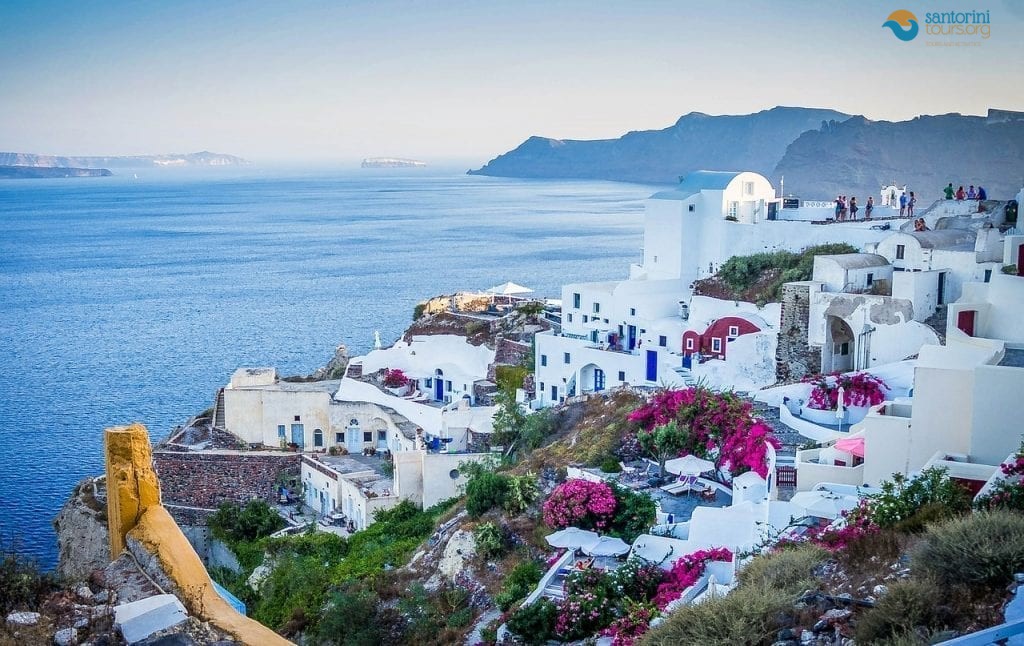
Known around the world and one of the most famous tourist destinations in the Mediterranean, Santorini is a dream destination for many. See which Santorini attractions you can see in September with Santorini Tours.
Volcano
There is no other island in the world like Santorini and its uniqueness is mainly due to the volcano. It is one of the most important in the world, it was born from the sea and significantly influenced the geological form of the entire Eastern Mediterranean of course also the human life and activity in the area.
When the locals say volcano today, they mean the small island of Nea Kameni, in the center of the almost circular perimeter formed by Santorini, Thirasia and Aspronisi. In Nea Kameni, after all, one can see vapors emitting steam from the bowels of the earth, while only about 60 years ago, its most recent soils were formed, during the 1950 eruption.
Right next to it, Palaia Kameni is the island that was formed about 2,000 years ago, during the 47 AD eruption. Both islets of the volcano can be visited and one can even walk on them and reach the steams of Nea Kameni or swim in the warm waters of Palaia, where sulfur is released, coloring them yellowish.
Prehistoric settlement of Akrotiri
The prehistoric settlement of Akrotiri in Santorini is today one of the most important archaeological sites in the entire Mediterranean. The visitor can see a very representative sample of that settlement, which was destroyed by the volcano: Multi-storied buildings, some public and some private, with their courtyards fully exposed.
Public roads pass between them, while, based on the research, free spaces that function as squares emerge. Part of the drainage system is also distinct, while the way of construction of all the buildings is typical, based on the building materials of Santorini and complex techniques, which ensured both insulation from the weather conditions and anti-seismic protection, in such a sensitive area.
Caves
Caves in Santorini are the traditional houses that are built in the ground. They were the houses that the inhabitants built in a very simple way, in order to ensure as many advantages as possible, so as to avoid strong winds, extreme cold and extreme heat, and even disasters from raids or even earthquakes.
They are found in many villages of the island, as the volcanic subsoil, easy to work with, but at the same time very strong – the Theraic mortar is known for its strength – provided the solution and helped to create in Santorini architectural structures that there are few like in the whole the world. The small houses are intertwined with each other, so that the outer space of one belongs to another house at the same time and the result looks magically functional.
The labyrinth of streets, stairs, roofs, courtyards, doors and windows can cause chaos to anyone who doesn’t know, but it serves in the best way the people who live their lives in this place with seemingly so many adversities.
Kanaves
The Kanaves of Santorini are the traditional wineries of the island, where the famous wine of the Santorini vineyard, Vissanto and other varieties are produced.
They are traditional buildings, which can be found in almost all villages as in the majority of them they were built next to the producer’s house, forming a single whole with the auxiliary spaces, the warehouse, and perhaps the stable.
They are primarily caves, so that the properties of the island’s volcanic soil and subsoil help wine fermentation.
Akrotiri Lighthouse
The Akrotiri Lighthouse is located at the westernmost point of Santorini, west of Akrotiri village.
It is considered one of the most beautiful structures of its kind in the entire Aegean and the view from the point towards the magnificent Santorini, the caldera and the volcano, Aspronisi and Thirasia, but also the unique sunset, in absolute tranquility and away from the crowds , makes many of the island’s visitors arrive there every day.
Also see: Fall in love with Santorini this September
Panagia Episkopi
Panagia Episkopi, one of the most important Byzantine monuments of Santorini, has never ceased to function and for more than 1000 years has received the prayers of the faithful to God.
It is located in the village of Episkopi Gonia, approximately in the center of Santorini and is dedicated to the Dormition of the Virgin Mary. In all probability it was founded in 1115 by Alexios Komnenos and its main structure is preserved intact to this day.
Prophet Ilias Monastery
The Monastery of Prophet Ilias in Santorini is the largest monastery on the island. It is built at an altitude of 567 meters on top of the mountain of the same name, in the south-eastern part of Santorini, at a distance of only 3 kilometers from Pyrgos.
It was founded in 1711 by the hieromonk brothers Gabriel and Joachim, who came from the village and until today it functions as a men’s monastery. There are also two collections, the Folklore Collection, with old furniture and objects, and the Ecclesiastical Collection, with great icons and dishes. You can take a tour of Santorini!
Cathedral of Santorini
The Cathedral of Santorini is located in one of the busiest parts of Fira and is dedicated to the Virgin Mary. The temple worshiped today by the faithful and seen by the thousands of visitors who gather in front of it, on the budi, that is, the low wall, especially at sunset, was completed in 1968, designed by Georgios Nomikos. The frescoes of the Santorinian painter Christoforos Asimis adorn the interior of this church, which is today the center of Orthodoxy on the island.
Five days in Santorini in September are ideal to visit its most popular villages, to see up close its impressive sights and its very special beaches, but also to visit both the volcano and Akrotiri.
Read more about Santorini Tours:
- Santorini Sightseeing Private Tour
- Exclusive Shore Santorini Private Tour
- Impressive Caldera Santorini Private Tour
- South Part Santorini Private Tour
- North Part Santorini Private Tour
- Santorini Historical Private Tour
- Santorini Sunset Private Tour
Santorini Seafood Restaurants: The Short Answer
Santorini is a volcanic rock with almost no fresh water, a small fishing fleet and two million visitors a year, which means the seafood here is excellent, limited and expensive in roughly that order. The good santorini seafood restaurants are honest about where the fish came from and price it by the kilo in front of you. The bad ones sell frozen imports at caldera-view prices. Telling them apart takes about thirty seconds if you know what to look for.
Where the santorini seafood restaurants are. Ammoudi below Oia, Vlychada marina, Akrotiri, Perivolos, Kamari and the old port at Fira.
The famous one. Ammoudi Bay, a row of fish tavernas at the bottom of three hundred steps, with tables on the water.
How santorini seafood restaurants price fish. By the kilo, weighed raw at the table. A whole fish for two runs sixty to a hundred and forty euros.
What a meal in santorini seafood restaurants costs. Forty to seventy euros a head at a proper fish taverna, and twenty-five to thirty-five if you order octopus and small fish instead of a large one.
The single best order. Grilled octopus, which is cheap, local, cooked well almost everywhere, and better than most of the expensive fish.
The best value fish. Gopes, atherina and marida, the small fish, fried whole and eaten by the handful for eight to fourteen euros a plate.
What santorini seafood restaurants do best. Simple cooking. Charcoal, olive oil, lemon, oregano and nothing else.
The frozen question. Greek law requires frozen items to be marked on the menu, usually with an asterisk or the word katepsygmeno.
The fleet. Small, with boats working out of Ammoudi, Vlychada and Athinios, and a catch that cannot possibly feed the island in August.
What that means. Much of the fish sold here comes from other Aegean islands and from farms, which is normal and not dishonest as long as it is declared.
Booking santorini seafood restaurants. Essential at Ammoudi from June to September, and worth doing anywhere with a sunset view.
The one-line answer. Eat octopus and small fried fish at a village taverna most nights, and book one table on the water at Ammoudi for a whole grilled fish, and the santorini seafood restaurants will have given you everything they have.
How Fish Is Sold and Priced in Greece
This is the part visitors find strange and it is where most of the complaints come from.
Priced by the kilo in santorini seafood restaurants. Fresh fish is listed on the menu at a price per kilo, not per portion. Sixty to a hundred and twenty euros a kilo on Santorini.
Choosing the fish. You go to the display, pick the fish, and it is weighed in front of you before cooking.
Ask for the weight. A one-kilo fish at ninety euros a kilo costs ninety euros. Always ask what it weighs before you agree.
Portion sizes. Six to eight hundred grams feeds one person generously. A kilo and a half feeds three.
Why the bill shocks people. Nobody asks the weight, the fish comes in at one and a half kilos, and the table of two gets a hundred and thirty-five euro line item.
Fixed-price fish. Farmed sea bass and sea bream are usually sold per portion at fifteen to twenty-five euros, and this is the safe order.
Shellfish. Priced per portion or per piece. Lobster and crayfish are per kilo and are the most expensive thing in any of the santorini seafood restaurants.
The frozen asterisk. Greek menus mark frozen produce. Calamari and shrimp are very often frozen and this is legal, normal and declared.
Fresh versus frozen. Frozen octopus is genuinely better than fresh for grilling, because freezing tenderises it. This is not a compromise.
The cover charge in santorini seafood restaurants. Bread and water appear automatically at one to three euros a head.
Tipping. Five to ten per cent, rounded up, and never expected at the American level.
The one rule. Ask the weight and ask the price before the fish goes on the grill, and no meal in any of the santorini seafood restaurants will ever surprise you.
Reading a Greek Fish Menu
Greek fish menus are short and the vocabulary repeats, so twenty words covers almost everything you will see.
Psari. Fish. Psaria in the plural, and it heads the section you want.
Thalassina. Seafood, meaning shellfish, octopus, squid and prawns.
Sto karvouno. On charcoal. The best thing that can happen to a fish.
Sti schara. Grilled. The same idea, sometimes on a flat grill instead.
Tiganito. Fried. Small fish and calamari.
Vrasto. Boiled, usually as a fish soup.
Kakavia. The fisherman’s soup, made from whatever did not sell, and one of the great dishes of Greece when a kitchen bothers.
Ladolemono. Olive oil and lemon whisked together, which is the only sauce a grilled fish needs.
Ouzo meze. Small seafood plates meant for drinking, and the cheapest way to eat well in santorini seafood restaurants.
Katepsygmeno. Frozen. Marked with an asterisk on the menu by law.
Ichthyokalliergeia. Farmed. You will see it in small print next to sea bass and bream.
Freskaria. Fresh, meaning landed rather than frozen.
Merida. A portion.
To kilo. Per kilo, the phrase that decides your bill.
Poso kanei afto. How much is this? Ask it while pointing at the fish, before it is cooked.
Poso zygizei. How much does it weigh? The most useful question on this page.
The Price Trap, and How to Avoid It
Almost every bad review of santorini seafood restaurants describes the same sequence, and it is entirely avoidable.
What happens in santorini seafood restaurants. A waiter brings a tray of fish to the table, you point at one, and nobody mentions weight or price.
What arrives. A beautiful grilled fish, and a bill with a hundred and forty euro line on it.
Why it is not a scam. The price per kilo was on the menu and the fish genuinely weighed what it weighed.
Why it feels like one. Nobody in northern Europe buys restaurant food by weight, so the convention is invisible to visitors.
The fix, in one sentence. Ask what it weighs and what that comes to, before it is cooked.
The second fix. Ask for a smaller fish. Every fish taverna has a range and they will find you a seven hundred gram one.
The third fix. Order fish sold by the portion, which is nearly all the farmed bass and bream on the island.
Where the santorini seafood restaurants risk is highest. Places with a sunset view, a tray of fish and a waiter who does not volunteer a price.
Where santorini seafood restaurants risk is lowest. Village tavernas inland, where the fish is smaller, cheaper and often better cooked.
The santorini seafood restaurants cover charge. Bread and water at one to three euros a head, always charged, never optional, and completely normal in Greece.
Service charge. Rarely added. Leave five to ten per cent in cash.
The honest summary. Santorini seafood restaurants are expensive because fish is expensive in the Aegean, not because anybody is cheating you, and a single question at the display removes every unpleasant surprise.
Ammoudi Bay, the Famous One
Ammoudi is the small harbour directly below Oia, at the foot of a cliff, reached by three hundred steps or a narrow road. Four or five fish tavernas sit on the water with their tables almost in it, and this is the image most people have of santorini seafood restaurants.
What it is. A working harbour with a handful of boats, a slipway, red cliffs behind and tables at the water line.
The santorini seafood restaurants at Ammoudi. Long-established family places, all serving broadly the same menu, all pricing fish by the kilo.
The setting. Genuinely extraordinary at golden hour, with the cliff turning orange and the water two metres from your feet.
What to order in santorini seafood restaurants. Grilled octopus first, then whatever is on the display, and a plate of small fried fish.
What the Ammoudi santorini seafood restaurants cost. Fifty to ninety euros a head with wine, and less if you skip the whole fish.
Getting down. Three hundred steps from Oia, twenty minutes down and thirty-five up, or a taxi and minibus on the switchback road.
The donkeys. Still offered on the steps. We do not recommend them and neither does anybody who has looked at the animals closely.
Getting back up. Arrange a taxi or a transfer in advance. After a long dinner in July the climb is genuinely hard.
Booking the Ammoudi santorini seafood restaurants. Essential from June to September, and a table at the water line needs several days’ notice.
Timing. Lunch is quieter, cheaper and cooler. Dinner at eight puts the sun on the cliff.
The swimming. There is a path around the headland to a small rock platform and the ruined chapel on Agios Nikolaos islet.
Is it worth it. Yes, once. The food is good rather than extraordinary, and the setting is the reason to come.
The honest note. Of all the santorini seafood restaurants, Ammoudi charges the most for the view and the least for the cooking, and it is still the meal people remember.
The Other Fish Places, Which Are Often Better
Santorini seafood restaurants at Vlychada. A marina on the south coast with the fishing boats moored in front of the tables, less visited than Ammoudi and generally better value.
Santorini seafood restaurants at Akrotiri. Tavernas near the lighthouse and above the caldera on the western side, with a different sunset and far fewer people.
Santorini seafood restaurants at Perivolos and Perissa. Black-sand beach tavernas, informal, with good grilled fish and octopus and half the Ammoudi price.
Santorini seafood restaurants at Kamari. A long promenade of restaurants, competitive, with several serious fish kitchens among them.
Santorini seafood restaurants at the Fira old port. A few places at the bottom of the cable car, touristy, and better for a drink than for a meal.
Santorini seafood restaurants at Monolithos. A quiet family beach near the airport with a long-running taverna that locals use.
Exo Gialos and Vourvoulos. Northern coastal hamlets with one taverna each and almost no visitors.
Santorini seafood restaurants at Baxedes. The north coast beyond Oia, with two or three simple places and excellent fried fish.
Karterados and Messaria. Inland, where the santorini seafood restaurants are cheaper because they feed islanders.
Megalochori and Pyrgos. Village tavernas that do a small seafood section very well alongside everything else.
Santorini seafood restaurants on Thirasia. The island across the caldera, reached by boat, with two harbourside tavernas and the best value fish in the whole caldera.
The pattern. The further from Oia, the lower the price and the higher the proportion of locals at the tables.
What we tell guests. Book Ammoudi for the experience and eat at Vlychada or Baxedes for the food, and you will have done santorini seafood restaurants properly.
Eating at Sea Level: The Old Port, the Cable Car and the Boats
Santorini has three ways down to the water and each one puts you next to a different kind of table.
The old port at Fira. Reached by cable car, by five hundred and eighty steps or by donkey, with a handful of places at the bottom.
What is down there. Cafes and two or three tavernas, aimed at cruise passengers, and better for a drink than for a serious dinner.
The cable car. Six euros each way, three minutes, and queues of forty minutes when tenders are running.
The steps. Five hundred and eighty of them, sharing the path with the donkeys, and unpleasant in both directions.
Ammoudi versus the old port. Ammoudi has the fish and the old port has the cable car. They are not comparable as places to eat.
Santorini seafood restaurants at Armeni. The second, smaller port below Oia, reached by a steep path, with one taverna and almost nobody in it.
Santorini seafood restaurants at Korfos on Thirasia. The harbour opposite, with two tavernas fed by boats tied up outside, and the best value in the caldera.
Boat trips with lunch. Most caldera cruises feed you on board, and on a private boat the crew will grill fish rather than serve a buffet.
What a good boat lunch looks like. Grilled fish or octopus, Greek salad, fava, bread and cold Assyrtiko, eaten at anchor off Thirasia.
The hot springs stop. Between Palea and Nea Kameni, and nothing to eat there at all.
Timing a boat day. Morning departures return at three, which makes a late seafood lunch the natural end to it.
Sunset cruises. Dinner is served on board, and the alternative is a late table at one of the santorini seafood restaurants afterwards.
The practical point. Water-level dining on this island means Ammoudi, Armeni, Vlychada, Korfos or a boat, and all five beat a rim terrace for fish.
Boat Trips and Seafood Together
The half-day caldera cruise. Volcano, hot springs and Thirasia, with lunch on board or at Korfos.
The full-day cruise. Adds the Red Beach, White Beach and Indian Rock, with a longer lunch stop.
Private catamarans. Six to twelve people, a crew that cooks, and the only version where the food is genuinely good.
Fishing trips and santorini seafood restaurants. A handful of boats take small groups out, and some will cook what you catch.
What you might catch. Bream, small tuna, bonito and squid, depending on the season and the wind.
The meltemi again. Boats cancel in July and August when the north wind gets up, usually the evening before.
Thirasia as a day out. The ferry from Ammoudi, a climb or a taxi to Manolas, and lunch back down at Korfos.
Why Thirasia is different. Three hundred residents, no cruise ships, no rim hotels, and tavernas that buy off boats fifty metres away.
The price difference. Roughly half of Ammoudi for the same fish, and the crossing is fifteen minutes.
Combining it. A morning on the water and an evening at a village taverna is the best food day this island offers.
What we run. Private caldera cruises with the galley cooking, plus transfers to Ammoudi, Vlychada and Akrotiri for dinner.
The booking note. Tell us what you want to eat when you book the boat, because the santorini seafood restaurants and the crews both need a day’s notice to do it properly.
Which Fish and Shellfish You Will Actually See
Aegean fish is different from Atlantic fish, and half of what appears on a Santorini display has no familiar English name.
Tsipoura in santorini seafood restaurants. Gilt-head bream. The most common fish on the island, farmed and wild, and reliably good grilled.
Lavraki in santorini seafood restaurants. Sea bass. The same story, and the safest order for anybody unsure.
Fagri. Red porgy. Wild, expensive, and one of the finest fish in the Aegean.
Sinagrida. Dentex. Large, wild, costly and superb.
Barbouni. Red mullet. Small, sweet, usually fried whole, and a Greek favourite.
Koutsomoura. The smaller cousin of barbouni, cheaper and nearly as good.
Marida. Picarel. Tiny, fried whole, eaten head and all, and the best value plate in most santorini seafood restaurants.
Gopes and atherina. Bogue and sand smelt. The same idea, fried in a heap with lemon.
Sardeles and gavros. Sardines and anchovies, grilled or marinated, cheap and excellent.
Skorpina. Scorpion fish. Ugly, bony, and the base of a real kakavia soup.
Ktapodi, the best order in santorini seafood restaurants. Octopus. Hung to dry on lines outside the taverna, then grilled. The single best thing to order here.
Kalamari. Squid. Grilled whole is far better than the fried rings, which are usually frozen.
Soupia. Cuttlefish, often stewed with spinach or its own ink.
Garides. Prawns, usually frozen, and excellent in saganaki with tomato and feta.
Astakos in santorini seafood restaurants. Lobster, meaning the clawless Mediterranean kind, sold by the kilo and served with pasta as astakomakaronada.
Mydia. Mussels, steamed or with rice.
Achinos. Sea urchin, served raw with lemon in season, and an acquired and worthwhile taste.
Melanouri and sargos. Saddled bream and white bream, mid-priced, wild and very good.
The best value trio. Octopus, marida and sardines, which together make a dinner for two for under fifty euros anywhere on the island.
How It Is Cooked, and What to Order
Charcoal grilling in santorini seafood restaurants. The default for anything above four hundred grams, dressed with ladolemono and oregano.
Frying. For small fish and calamari, in olive oil, with a light flour dusting.
Ktapodi sti schara. Octopus grilled over charcoal after drying, served with vinegar, oil and capers.
Ktapodi krasato. Octopus stewed in red wine, a winter dish that appears year-round here.
Astakomakaronada. Lobster with pasta in a light tomato sauce, the special-occasion dish in santorini seafood restaurants.
Garides saganaki. Prawns baked with tomato, feta and ouzo.
Mydia achnista. Mussels steamed with wine, garlic and parsley.
Soupia me spanaki. Cuttlefish with spinach, dark, rich and genuinely local.
Kakavia. Fisherman’s soup with whatever the boat brought, and worth ordering wherever you see it.
Psarosoupa. A clearer fish soup with vegetables and egg-lemon.
Taramosalata. Fish roe dip, pale pink when it is good and bright pink when it is not.
Marinated anchovies. Gavros marinatos, cured in vinegar and oil, and the best cheap starter on any menu.
Fish roe and smoked items. Common as meze, alongside the Santorini staples of fava, capers and tomato.
What to order in the best santorini seafood restaurants. Octopus, marinated anchovies, a Greek salad, fava, and one grilled fish between two.
What to skip. Fried calamari rings, seafood pasta with cream, and anything described as a seafood platter, which in santorini seafood restaurants usually means the frozen shelf.
Season by Season, and What Is Landing When
Aegean fish is seasonal, and the good santorini seafood restaurants change their display through the year.
Santorini seafood restaurants in April. Calm seas returning, boats out again, and small fish and octopus on every menu.
Santorini seafood restaurants in May. Excellent. Sardines improving, red mullet appearing, and prices before the peak.
Santorini seafood restaurants in June. The best month for wild fish before the meltemi sets in properly.
Santorini seafood restaurants in July. The wind keeps small boats in port for days at a time, which pushes tavernas onto frozen and imported stock.
Santorini seafood restaurants in August. Peak demand, peak wind, and the month when the least of the fish on the island was caught near it.
Santorini seafood restaurants in September. The best month overall. The wind drops, the boats sail, the crowds thin, and sardines are at their fattest.
Santorini seafood restaurants in October. Very good, with octopus at its best and prices falling.
Santorini seafood restaurants in November and December. Fewer places open, and the ones that stay open are cooking for islanders.
Santorini seafood restaurants from January to March. Storms, closed tavernas and a fleet that barely sails. Not the season for this.
Octopus. Year-round, because it is dried and frozen, and none the worse for it.
Sea urchin. Spring and early summer, and only where you see it fresh.
Lobster. Summer, at a high price, and worth it once.
The practical point. Ask what came in today. Any of the serious santorini seafood restaurants will answer straight, and the answer tells you what to order.
Wild, Farmed and Frozen
Farmed bass and bream. Greece is the largest producer in Europe, so almost all the tsipoura and lavraki on the island is farmed.
Is that bad. No. Greek farmed bream is good, consistent and affordable, and the alternative would be nothing on most menus.
How to tell. Farmed fish are uniform in size and priced per portion. Wild fish vary and are priced per kilo.
Wild fish. Fagri, sinagrida, sargos, melanouri, barbouni and the small fry, all landed locally when the wind allows.
Frozen. Calamari rings, prawns and most of the large squid. Declared on the menu by law.
Frozen octopus. Better than fresh, because the freeze breaks down the muscle. Nobody in Greece considers this a downgrade.
Imported fish. Common in August, from other Aegean islands and from the mainland market at Keratsini.
The local fleet. Small boats out of Ammoudi, Vlychada and Athinios, working nets and longlines within a few miles.
Why it cannot be enough. Fifteen thousand residents and two million visitors, against a fleet of a few dozen small boats.
What honesty looks like. A taverna that says today the boats did not go out and offers you the farmed bream instead.
What dishonesty looks like. A tray of identical fish described as caught this morning at a hundred and twenty euros a kilo.
Sustainability. Avoid undersized fish, avoid bluefin tuna, and prefer sardines, anchovies, mackerel and octopus, which are abundant.
The takeaway. The best santorini seafood restaurants tell you exactly what is wild, what is farmed and what is frozen, and the question is a compliment rather than an accusation.
Village by Village
Santorini seafood restaurants in Oia. The highest prices on the island and the fewest genuine fish kitchens, with Ammoudi below it doing the real work.
Santorini seafood restaurants in Ammoudi. Four or five tavernas on the water, all serious about fish, all needing a booking in summer.
Santorini seafood restaurants in Fira. Everything from good to tourist-trap within four hundred metres. The seafood improves as you walk away from the caldera path.
Santorini seafood restaurants in Firostefani and Imerovigli. Small, expensive and view-led, with a handful of kitchens that handle fish properly.
Santorini seafood restaurants in Karterados. Inland and residential, where a plate of fried marida costs what a coffee costs in Oia.
Santorini seafood restaurants in Messaria and Vothonas. Working villages on the bus routes, cheap, honest and unvisited.
Santorini seafood restaurants in Megalochori. A beautiful square and two tavernas that do a small, well-judged seafood section.
Santorini seafood restaurants in Pyrgos. The highest village, better known for meat and ladera, with good octopus wherever you see it.
Santorini seafood restaurants in Emporio. The largest village, least touristed, and genuinely cheap.
Kamari. A long promenade with several serious santorini seafood restaurants among the general run of beach places.
Santorini seafood restaurants in Perissa and Perivolos. Black sand, informal tables and reliably good grilled fish at fair prices.
Santorini seafood restaurants in Vlychada. The marina, with boats in front of the tables. Our first recommendation for fish on the island.
Santorini seafood restaurants in Akrotiri. The lighthouse end, quiet, with a western sunset and no crowd at all.
Exo Gialos, Vourvoulos and Baxedes. The north and east coasts, one taverna each, and excellent small fried fish.
Santorini seafood restaurants on Thirasia. Across the caldera by boat, two harbour tavernas, and the best price-to-quality ratio anywhere near Santorini.
What a Seafood Dinner Costs
The cheapest real meal. Fried marida, a Greek salad, bread and a half litre of house wine. Twenty-two to thirty euros a head.
The standard meal. Octopus, marinated anchovies, fava, salad and a shared farmed bream. Thirty-five to fifty euros a head.
The Ammoudi meal. The same with a wild fish by the kilo and a bottle of Assyrtiko. Sixty to ninety-five euros a head.
The lobster meal. Astakomakaronada for two at a hundred and forty to two hundred and twenty euros, once in a trip.
Wine. House Assyrtiko by the half litre at eight to fourteen euros, bottles from twenty-five.
The cover. One to three euros a head for bread and water, charged everywhere.
Where the money goes. The fish, not the cooking. Grilling is free and the kilo price is not.
How to eat well for less. Order three meze and one small fish rather than one large fish, which is how Greeks eat anyway.
The caldera premium. Three to four times village prices for a rim table, on food that is generally no better.
Lunch versus dinner. The same kitchen, twenty to thirty per cent cheaper, and a quieter room.
Set menus. Increasingly common in Oia, usually poor value, and almost never how a Greek would order.
Tipping. Five to ten per cent in cash.
The honest verdict. Santorini seafood restaurants are not cheap and they are not a rip-off, and the difference between a forty euro dinner and a hundred and forty euro one is usually one fish and one question nobody asked.
Wine to Drink With It
This is the one place where Santorini beats every other Greek island outright, because the local white was made for this food.
Assyrtiko in santorini seafood restaurants. Bone dry, high acid, mineral, and one of the great seafood whites in the world. It grows here and nowhere quite like it.
Why it works. The acidity cuts oil and the salinity mirrors the fish, which is why every serious taverna pours it by the carafe.
House Assyrtiko. Eight to fourteen euros a half litre, and usually from a cooperative rather than a named estate.
Bottled Assyrtiko. Twenty-five to sixty euros in a restaurant, from Argyros, Sigalas, Gavalas, Hatzidakis, Gaia and Santo.
Nykteri. The barrel-aged style, fuller, and better with grilled fish than with fried.
Athiri and Aidani. The island’s softer white grapes, often blended, and good with shellfish.
Vinsanto. The sweet sun-dried wine. Dessert, not dinner.
Retsina. Better than its reputation and a genuinely good match for fried small fish.
Ouzo. The traditional accompaniment to seafood meze, served with ice and water, and it turns a plate of octopus into an afternoon.
Tsipoura with tsipouro. The Greek joke, and it works.
Beer. Local Donkey beers from the Santorini Brewing Company, particularly with fried fish.
Red wine. Mavrotragano and Mandilaria exist here and do not belong anywhere near a grilled fish.
The order to place. A half litre of house Assyrtiko to start, and a bottle of something named if the fish is worth it. Every one of the santorini seafood restaurants will have both.
Allergies, Children and Dietary Needs
Shellfish allergy in santorini seafood restaurants. Greek menus separate psari from thalassina clearly, and fish tavernas understand the distinction.
The Greek for shellfish. Ostrakoeidi, and thalassina for seafood generally. Say allergia to make it medical.
Cross-contamination. Real in a fish kitchen, where one grill and one fryer do everything.
Fish allergy. Harder in santorini seafood restaurants for obvious reasons, though every one of them has meat, salads and ladera dishes.
Gluten. Grilled fish is naturally safe. Fried fish is floured, and the fryer is shared.
Children in santorini seafood restaurants. Grilled bream, chips, rice and bread work everywhere, and Greek tavernas are genuinely relaxed about children.
Bones. Whole fish is served whole. Ask for it filleted at the table, which most places will do without comment.
Small fish. Marida and atherina are eaten whole, bones and all, which children either love or refuse outright.
Vegetarians at a fish table. Fava, gigantes, briam, horta, salads and grilled vegetables are on every menu here.
Raw fish. Uncommon in Greece beyond marinated anchovies and the occasional carpaccio in the modern places.
Pregnancy. Avoid the marinated raw anchovies and the sea urchin, and everything grilled is fine.
Booking with requirements. Phone rather than email, and say it once clearly, because Greek kitchens remember conversations better than messages.
The Fishing Fleet and Where the Fish Comes From
Understanding the supply explains every price on every menu here.
The fleet size. A few dozen small boats, mostly under ten metres, working out of Ammoudi, Vlychada and Athinios.
The gear. Gillnets, longlines and traps. There is no trawling fleet based on Santorini.
The grounds. The caldera itself, the reefs off Akrotiri, the channel to Thirasia and the open water east towards Anafi.
The caldera depth. Up to three hundred and ninety metres inside the crater, which is deep water immediately offshore and unusual.
Why the catch is small. The Aegean is nutrient-poor, the shelf is narrow here, and the volcano leaves little shallow ground.
The meltemi. The north wind blows June to September and keeps small boats in harbour for days at a time.
What fills the gap. Fish from Naxos, Paros, Amorgos and the Athens market, plus Greek farmed bass and bream.
Where to see it landed. Vlychada marina in the early morning, and Ammoudi when a boat comes in.
The fish market. There is no large public fish market on Santorini. Tavernas buy direct and through wholesalers.
Buying your own. Fishmongers in Fira and Karterados, best in the morning, and a good option if you have a kitchen.
The drying lines. Octopus hung outside a taverna is a genuine signal, not decoration, and it means somebody in that kitchen cares.
Thirasia and its santorini seafood restaurants. A working fishing community across the caldera with almost no tourism, and the tavernas there buy from boats fifty metres away.
What it adds up to. Santorini seafood restaurants sit at the end of a short, honest and genuinely constrained supply chain, and the good ones will explain it if you ask.
Santorini Seafood Restaurants: Questions People Ask
Where are the best seafood restaurants in Santorini? Ammoudi below Oia for the setting, Vlychada marina for the fish, and the Perivolos and Baxedes tavernas for value.
Why is fish so expensive on Santorini? A small fleet, a narrow shelf, a wind that stops boats sailing, and two million visitors. Supply, not greed.
How is fish priced? By the kilo, weighed raw at the table, at sixty to a hundred and twenty euros a kilo for wild fish. Farmed bass and bream are sold per portion.
How do I avoid a shock bill? Ask what the fish weighs and what that comes to before it is cooked. One question, every time.
Is the fish fresh? Some of it. Greek law requires frozen items to be marked, and in August much of the stock is imported or farmed.
What should I order in santorini seafood restaurants? Grilled octopus, marinated anchovies, fried marida and one grilled fish shared between two.
What does dinner in santorini seafood restaurants cost? Twenty-five to thirty-five euros a head for meze and small fish, and sixty to ninety-five at Ammoudi with a whole wild fish.
Do I need to book santorini seafood restaurants? At Ammoudi from June to September, yes, and several days ahead for a table at the water.
Is Ammoudi worth it? Once. The setting is extraordinary and the food is good rather than exceptional.
How do I get back up from Ammoudi? Three hundred steps, or a pre-booked taxi or transfer on the road. Arrange it before dinner.
What wine goes with it? Assyrtiko, which grows here and is one of the best seafood whites anywhere.
Is frozen octopus worse? No. Freezing tenderises it, and it is what most good Greek kitchens use deliberately.
When is the best month? September, when the wind drops, the boats sail and the crowds thin.
Are the santorini seafood restaurants open in winter? A handful in Fira, Karterados and Emporio. Most of the coastal ones close.
Cooking Fish Yourself
A lot of Santorini accommodation has a kitchen, and buying fish here is easier and cheaper than eating it out.
Where to buy. Fishmongers in Fira and Karterados, and the fish counters in the larger supermarkets.
When to go. Morning, between eight and eleven, when what came in overnight is on the ice.
What to pay. Roughly a third to a half of the restaurant kilo price, so twenty-five to forty-five euros a kilo for wild fish.
What to ask for. Kathari, meaning cleaned, and the fishmonger will gut and scale it for you at no charge.
The easiest santorini seafood restaurants dish to cook at home. Whole bream or bass, scored, oiled, salted, twelve minutes in a hot oven, dressed with lemon and oregano.
The second easiest. Octopus, already tenderised if frozen, boiled for forty minutes and finished in a hot pan.
Small fish. Floured and shallow fried for three minutes a side, eaten whole with lemon.
What to buy alongside. Santorini tomatoes, capers, chloro cheese, a lemon and a bottle of Assyrtiko.
The grill. Many Santorini apartments have a terrace and a small charcoal grill, which is the right way to do this.
What to avoid buying. Pre-cut steaks and anything already filleted, which on this island usually means it has travelled.
The saving. A fish dinner for two costs thirty euros cooked at home and ninety in one of the santorini seafood restaurants.
Why people still use santorini seafood restaurants. The charcoal, the setting and somebody else washing up, which on a caldera terrace is worth paying for.
The mixed approach. Cook three nights and book two, which is what most people staying a week end up doing anyway.
What the Island Ate Before Tourism
Santorini’s food history is poorer and more interesting than the menus suggest, and it explains why the seafood tradition here is thinner than on other islands.
No fresh water. The island collected rain in cisterns until a desalination plant arrived. Everything was built around scarcity.
A farming island, not a fishing one. Vines, fava, barley, tomatoes and capers, grown without irrigation in volcanic ash.
The wine economy. Santorini exported wine to Russia and France through the nineteenth century, and that paid for the mansions in Oia.
Salt fish. Salted and dried fish, not fresh, was the everyday protein, because there was no ice and no refrigeration.
Bakaliaros. Salt cod, imported, soaked and fried with skordalia, and still on menus across Greece for exactly this reason.
Cured meat. Apochti, cured pork loin in vinegar and cinnamon, which kept without cold.
Pulses. Fava above all, plus chickpeas and lentils, which is why the island’s signature dish is a split pea puree.
The fishermen. A small community at Ammoudi and the north coast, feeding the villages above rather than exporting.
The 1956 earthquake. It emptied the island, and the population fell to a few thousand before tourism brought it back.
What changed. Refrigeration, ferries and money, in that order, which is when fresh fish became an everyday item here.
What survived. Fava, capers, tomatoes, white aubergine, chloro cheese and the wine, all of which belong on a seafood table.
Why it matters. The best santorini seafood restaurants serve the fish alongside that older island food, and the combination is the actual local cuisine rather than a menu assembled for visitors.
Mistakes People Make
Not asking the weight. The single cause of almost every bad seafood review on this island.
Ordering fried calamari rings. Frozen, uniform and dull. Grilled whole squid is on the same menu and is a different food.
Assuming a view means good fish. The correlation on Santorini runs the other way more often than not.
Eating only in Oia. The most expensive village on the island, and the fish is downstairs at Ammoudi anyway.
Skipping the meze. Three small plates beat one large fish for both cost and pleasure.
Ignoring the octopus. Cheap, local, superb, and the thing Greek visitors order first.
Ordering a seafood platter. Almost always the frozen shelf assembled on one dish.
Walking down to Ammoudi without a plan to get back. Three hundred steps after a long dinner in July is a genuinely hard climb.
Not booking santorini seafood restaurants. The good tables at the water go days in advance from June to September.
Coming in August and expecting local fish. The wind keeps the boats in and the island imports.
Sending back a fish for bones. Ask for it filleted when you order and any kitchen will do it.
Drinking red wine with it. The island makes good reds and none of them belong with grilled fish.
Treating the cover charge as a scam. Bread and water at one to three euros a head is standard across Greece.
Judging all the santorini seafood restaurants by one caldera-view dinner. The island has thirty of them and four are on the rim.
How We Help, and What to Send Us
Why this page exists. We drive guests to these places every week and hear the same two questions: where is good, and why was the bill that size.
Transfers to the Ammoudi santorini seafood restaurants. The road down is a narrow switchback and parking is close to impossible. We drop you at the tavernas and collect you afterwards.
The climb back. Book the return leg when you book the table, because taxis do not wait at the bottom at eleven at night.
Thirasia by boat. A half day across the caldera to two harbour tavernas and the best value fish in sight of Santorini.
Catamaran cruises. Our boats cook on board, and grilled fish, octopus, salad and fava is what a Greek crew makes anyway.
Sunset timing. We can time a village tour to finish at Vlychada or Akrotiri for dinner, which is a better sunset than the Oia crowd.
Wine pairing. A morning at Santo or Venetsanos and an evening of grilled fish with the same Assyrtiko is the best day this island offers.
Santorini seafood restaurants bookings. We will phone ahead in Greek, which gets a better table than an online form.
Dietary requirements. Tell us when you book and we tell the kitchen, which matters more in a fish taverna than almost anywhere.
Groups. Fish tavernas seat large tables well, and a group of eight ordering meze eats better than four couples ordering mains.
Cruise passengers. A seafood lunch at Vlychada or Akrotiri fits a six-hour call comfortably, and Ammoudi does not.
What to send us. Your dates, your hotel and whether you want the view or the fish, because on Santorini those are two different dinners.
The last word. The santorini seafood restaurants worth your money are the ones that weigh the fish in front of you, hang octopus outside and pour Assyrtiko from a carafe, and every village on this island has one.
A Week of Seafood, Planned
Arrival evening. A village taverna near your hotel. Octopus, fava, salad, house Assyrtiko. Thirty euros a head and no pressure.
Day two lunch. Vlychada marina, with the boats in front of the tables and a plate of fried marida.
Day two dinner. Light, inland, in Megalochori or Pyrgos, because the good seafood nights should be spaced out.
Day three. A caldera cruise with lunch on board, then an early night.
Day four. Thirasia by ferry from Ammoudi, lunch at Korfos, back mid-afternoon.
Day five. A wine tour in the morning and grilled fish in Akrotiri at sunset, which is the western view almost nobody sees.
Day six. The big one. A booked table at the water in Ammoudi, a whole wild fish, and a car arranged for the way back up.
Day seven. Beach lunch at Perivolos, grilled octopus and a salad, feet in the black sand.
What that costs. Around three hundred and fifty euros a head for the week, against six hundred if every dinner is on the rim.
What to skip entirely. A caldera-view seafood dinner in Oia on a Friday in August, which is the worst value meal available on this island.
What to book first. Ammoudi, several days out, and the boat.
The pattern. Two big seafood nights and five small ones is how the santorini seafood restaurants are best used, and it is also how people who live here eat.
Seafood Beyond the Taverna
Ouzeri, the small-plate santorini seafood restaurants. Small-plate places built around ouzo, where four seafood meze and a bottle feed two for forty euros.
Beach bars. Perivolos and Perissa, with fried calamari and grilled octopus at sunbed service prices.
Fine dining santorini seafood restaurants. A handful of ambitious kitchens in Fira, Imerovigli and Oia doing modern Greek seafood at a hundred euros a head and up.
Wine estate restaurants. Santo, Venetsanos and others serve food with the view, and the seafood plates are designed around Assyrtiko.
Hotel santorini seafood restaurants. Often better than their reputation on the rim, and worth checking before walking twenty minutes for something worse.
Cooking classes. Several run on the island and most include fish or octopus alongside fava and tomatoketedes.
Food tours. Half-day walking tours in Fira and the villages, with tastings rather than a full meal.
Fishmonger takeaway. Some will grill what you buy, which is the cheapest good fish on the island.
Delivery. Fira and Karterados have delivery apps, and seafood is the wrong thing to order from one.
Picnics. Marinated anchovies, bread, tomatoes, capers and a bottle, eaten on a terrace, which beats most restaurants for about twelve euros.
Breakfast seafood. Not a Greek habit, and nothing on the island does it.
The full range. Santorini seafood restaurants run from an eight euro plate of fried fish in Emporio to a two hundred euro lobster in Oia, and both are worth doing once.
Every Village and Site on the Island
Any of these can be built into a private day. Each has its own page with what to see and how long to allow.
Caldera villages: Fira · Firostefani · Imerovigli · Oia · Finikia · Baxedes
Inland villages: Pyrgos · Megalochori · Emporio · Mesaria · Karterados · Vothonas · Vourvoulos · Exo Gonia · Mesa Gonia · Pigadia
Beaches: Perissa · Perivolos · Kamari · Vlychada · Monolithos · Red Beach · White Beach · Agios Georgios · Agia Paraskevi
Sites and landmarks: Akrotiri · Ancient Thira · Akrotiri Lighthouse · Nea Kameni · Palia Kameni · Thirasia · Athinios Port
All our tours: All Santorini tours · Full day tour · Sightseeing tour · Personalised tour · North part tour · Horse riding · South part tour · Sunset tour · Shore excursion · Caldera tour · Food experience · Wine tour · Historical tour · Small group tour
Planning and services: Famous sights tour · Private transfers · Transfers to Oia and Finikia · Transfers to other villages · Villages of Santorini · History of Santorini · Tours near you · Languages we guide in · Food and fun tours · Gay friendly tours · Our tour buses · Daily tours · Day tours · FAQ · Gallery · Tour photo gallery · About us · Contact · Blog








Leave a Reply