
The best time to visit santorini is late May to mid June, or the second half of September into early October. Both windows give warm weather, a swimmable sea, everything open, and roughly half the crowds and prices of August. September has the warmest sea of the year at 25 to 26 degrees; June has the longest days.
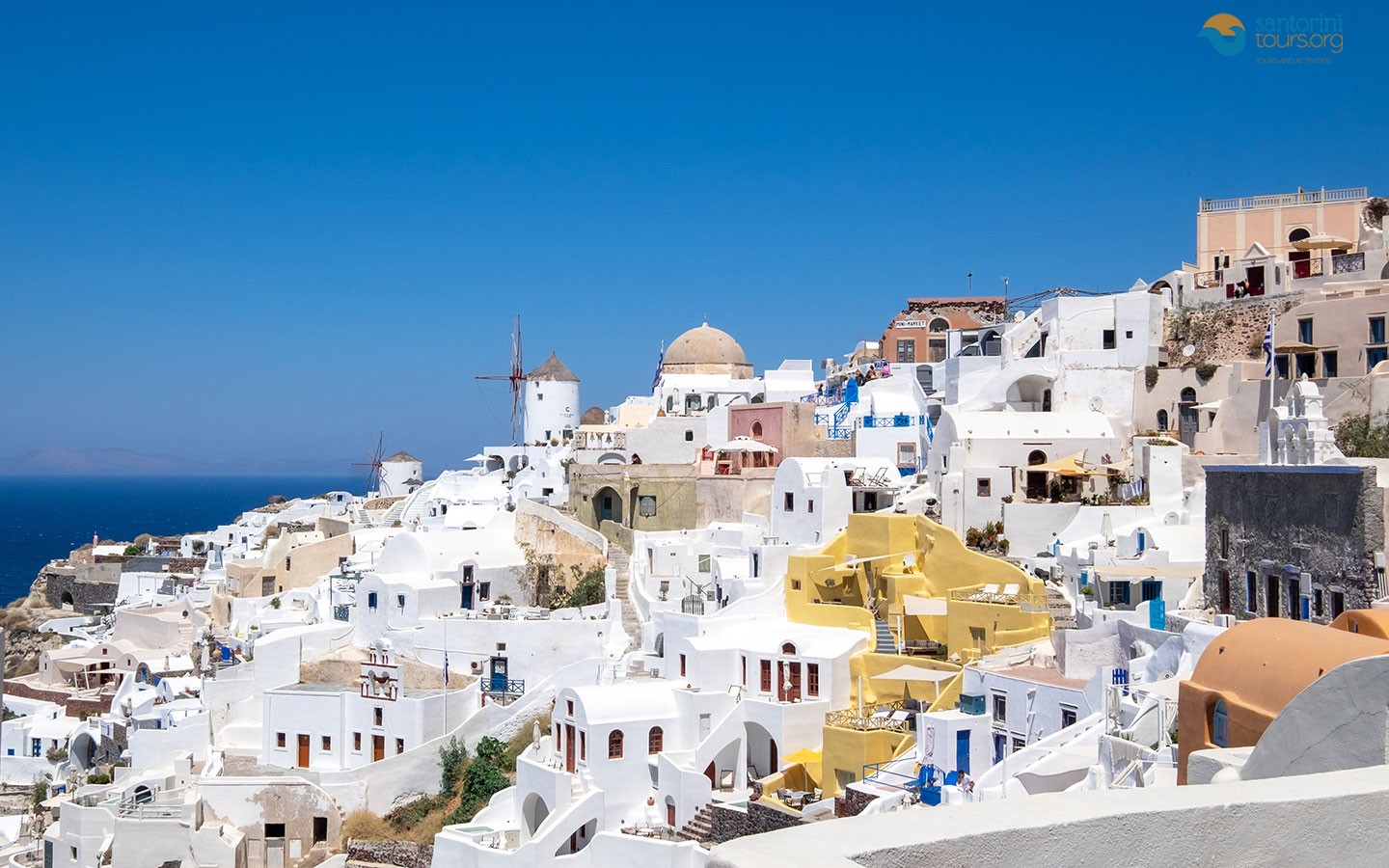
Santorini is one of the most beautiful islands in the world and rightly characterized by many as the diamond of the Aegean. You may explore Santorini with Santorini Tours.
The geological specificity of Santorini is unique and breathtaking. Its rich history and cultural heritage attract crowds from all over the world.
Santorini is one of the most important tourist destinations, not only in Greece but also in Europe.
Santorini is located in the South Aegean Sea, north of Crete, and is the southernmost island in the Cyclades.
The island
Santorini is the southernmost island of the Cyclades and is located between Ios and Anafi. Its area is 76 sq.km. and the length of its coasts 69 km. The perimeter is about 36 nautical miles. It is 128 nautical miles from the port of Piraeus and 63 nautical miles from Crete.
The volcano
It is a complex of the islands of Thira, Thirasia, Aspronisi and the volcano (Old Kameni and Nea Kameni, in which the crater of the volcano is located). It is included together with Methana, Nisyros and Milos among the active volcanoes of Greece.
The history of Santorini
The name Thira was taken from the mythical settler Thera of Sparta, who settled on the island around the 10th century BC. and founded the homonymous city in Mesa Vounos.
The name Santorini was given to the complex of islands by the Venetians and is mentioned by the Arab geographer Edrisis, in 1153. It is a portmanteau of the words Santa Irene, which he got either from the church of the same name on the plain of Thirasia, or from the church of the same name early Christian basilica in Perissa, which is not preserved.
Thira, Thirasia and Aspronisi are remains of the prehistoric round island. They surround a deep basin-shaped sea basin, in the center of which Palia and Nea Kameni emerged. This basin is called Caldera or Caldera, according to international geological terminology. It has dimensions of 8X5 km and a depth that reaches 370 m.
Santorini as a destination for 2023
Santorini is the only island complex in which the settlements are not built at sea level, but on the edges of the inner walls of the Caldera. It is also one of the few places in the world where architectural ensembles of cave houses in the volcanic terrain are preserved. The Caldera and the entire complex of the islands of Santorini have been designated as of special natural beauty.
The main island, Thira, has a crescent shape and is located in the easternmost position of the complex. Its western side is made up of the walls of the Caldera that keep alive the image of its geological history and capture the different phases of volcanic activity. There are 13 villages in Thira and 3 in Thirasia. The capital of the island is Fira, a name that came from a corruption of the word Thira and has prevailed.
From the 1980s until today, thousands of couples from all over the world choose Santorini to get married, or to spend their honeymoon. It is estimated that every year the ceremonies exceed 500. Orthodox weddings are usually held in churches overlooking the Caldera such as the Cathedral of Fira, Agios Minas, the Church of the Resurrection in Imerovigli, Agios Georgios and Panagia Platsani of Oia. Catholics choose the Cathedral of Fira.
Known for its romantic sunsets, picturesque scenery and Cycladic Architecture, Santorini is the perfect destination for travelers and tourists who want to live an unforgettable experience! You can take a tour of Santorini!
Fira
The capital of Santorini, Fira, located in the center of the island, dominates the Caldera opposite the volcano. The view is breathtaking and the sunset here is famous all over the world.
In the picturesque cobbled streets of the city, visitors have the opportunity to wander and admire the huge variety of souvenirs, clothes, handmade carpets and textiles that hang elegantly in the shop windows.
A prominent place in the market of Thira is occupied by the “road of gold”. Elaborate jewelry made of gold, silver and other precious metals adorned with precious gems in unique designs inspired by Greek history emits enticing sparkles to would-be buyers. The gold market, perhaps the largest in Europe, is a living part of Thira. Visitors from all over the world invest here in “golden memories”.
Around the central square of Thira and at a distance of a few meters, there are the Police Station, the Port Authority, the Hospital, Pharmacies, Post Office, Public Services, Banks, Tourist Offices, all willing to make your holidays unforgettable. Here is also the central Bus and Taxi Station that will take you to all the villages of the island, the beaches, the port and the airport.
Museum of Prehistoric Thera
It was inaugurated in 2000 and you will see the mobile finds from the excavations at the Archaeological Site of Akrotiri, such as the original wall paintings, but also finds from excavations in other places of the island. You will find it behind the Metropolis of Ypapanti. The Archaeological Museum of Thira remains closed as the New Museum is under construction.
Read more about Santorini Tours:
- Santorini Sightseeing Private Tour
- Exclusive Shore Santorini Private Tour
- Impressive Caldera Santorini Private Tour
- South Part Santorini Private Tour
- North Part Santorini Private Tour
- Santorini Historical Private Tour
- Santorini Sunset Private Tour
Best Time to Visit Santorini: The Short Answer
The best time to visit santorini is late May to mid June, or the second half of September into early October. Both windows give you warm weather, a swimmable sea, everything open, and roughly half the crowds and prices of August.
Seven answers cover almost every version of the question about the best time to visit santorini.
For the best all-round trip. June. Long days, hot sun, warm sea, and the peak has not arrived.
The best time to visit santorini for the warmest sea. September. The Aegean holds its heat and peaks at about 25 to 26 degrees.
The best time to visit santorini for low prices with everything open. Late April, early May, or late October.
The best time to visit santorini for walking and photography. April, May and October, when the light is soft and the heat is manageable.
The best time to visit santorini for an empty island. November to March, with the trade-off that half of it is closed.
Avoid if you can. The last two weeks of July and the whole of August, unless heat, crowds and peak prices are acceptable.
The single worst decision. Booking mid-August because it is the school holiday, then being surprised by the crowds at the Oia sunset.
How the Seasons Work, and What That Means for the Best Time to Visit Santorini
Santorini has a Mediterranean climate with a hard seasonal edge, and the year divides into four phases that behave very differently. Understanding those phases matters more than any month-by-month table, because it tells you why a given month feels the way it does.
The reopening, March to early May. The island is green — genuinely green, briefly — with wild flowers on the volcanic slopes and rain still arriving in fronts. Businesses reopen progressively from mid-March through April. Temperatures climb from the mid-teens to the low twenties. The sea is cold, around 17 to 18 degrees, and almost nobody swims.
The good season, mid May to early July. The rain stops, the green burns off to gold, and the days stretch out. Everything is open, the sea warms from 20 to 24 degrees, and the crowd builds week by week without ever becoming the wall it is later. This is where the best time to visit santorini sits for most people.
The peak, mid July to early September. Hot, dry, windy and full. Temperatures of 28 to 34 degrees, no rain at all, the meltemi blowing for days at a time, and cruise ships stacking up in the caldera. Everything is open and everything is expensive.
The wind-down, mid September to October. The sea is at its warmest all year, the crowds thin sharply from the second week of September, the harvest happens in the vineyards, and the light turns golden. By late October the season is visibly closing.
The closure, November to February. The worst time to visit santorini for a conventional holiday, and the best for solitude. Mild, wet, windy and largely shut outside Fira. Empty in a way that is either wonderful or disappointing depending entirely on what you came for.
Best Time to Visit Santorini, Month by Month
Each month has a distinct character, and the best time to visit santorini depends on which of these twelve pictures you recognise as your holiday.
January. 10 to 15 degrees, the wettest month with the rest of winter, and the island at its quietest. Fira functions; almost nothing else does. Cheap, atmospheric, and not a holiday for most people.
February. Similar to January, marginally brighter, with almond blossom towards the end. Ferries and flights run but thin. Around 11 to 15 degrees.
March. The turn. 13 to 17 degrees, green hillsides, the first businesses reopening from mid-month, and rain still frequent. Excellent for walking and for having Akrotiri to yourself.
April. 16 to 20 degrees, wild flowers, most things open by the end of the month, and Greek Easter somewhere in April or early May. The sea is 17 to 18 and cold. One of the best value months of the year.
May. 20 to 24 degrees, sunshine, the sea climbing from 19 to 21, and everything open by mid-month. The second half of May is the start of the best time to visit santorini for most travellers.
June. The other strongest answer to the best time to visit santorini. 24 to 28 degrees, the longest days of the year, the sea at 22 to 24, and a crowd that builds through the month without overwhelming anything. Arguably the best month on the island.
July. 28 to 31 degrees, no rain, the meltemi at full strength, and the first half noticeably calmer than the second. Peak prices begin.
August. 28 to 34 degrees, the busiest and most expensive month of the year, with the sea at 25 to 26 and the island genuinely full. Beautiful, and hard work.
September. The strongest single answer to the best time to visit santorini. 25 to 29 degrees, the warmest sea of the year at 25 to 26, the harvest in the vineyards, and a crowd that thins visibly from the second week. The other best month.
October. 21 to 25 degrees, the sea still 23 to 24, golden light and the first rain since spring. Everything open until roughly the third week, then closing.
November. 17 to 20 degrees, the first proper storms, Oia and the beach resorts closing, and prices at a quarter of August. Empty and interesting.
December. 13 to 17 degrees, wet, quiet, Christmas lights in Fira, and a genuinely local island. Only Fira really functions.
Sea Temperature Through the Year
If swimming decides your trip, this table decides the best time to visit santorini.
Water temperature lags air temperature by about two months in the Aegean, which is why September beats June for swimming and April feels colder than it looks.
January to March. 15 to 16 degrees. Cold-water swimming.
April. 17 degrees. Brief and bracing.
May. 19 to 21. Comfortable by the end of the month for most people.
June. 22 to 24. Genuinely warm.
July. 24 to 25.
August. 25 to 26. The peak, along with September.
September. 25 to 26. The warmest sea of the year and the best swimming month.
October. 23 to 24. Still very good, and the beaches are empty.
November. 21 falling to 19. Swimmable early in the month.
December. 18 falling to 17.
One local detail: the black volcanic sand at Perissa, Kamari and Perivolos absorbs heat and warms the shallows, which makes the east coast noticeably more comfortable in the shoulder months than the caldera side.
Crowds, and How to Read Them
The crowd on this island is not evenly distributed, and understanding that changes the answer to when you should come.
Santorini receives well over two million visitors a year on an island of about 15,500 residents, and a large share of them arrive on cruise ships that dock in the caldera for a single day. Those passengers come ashore between roughly nine in the morning and five in the afternoon, take the cable car up to Fira, are bussed to Oia, and leave. The result is a very sharp daily curve: Fira and Oia are congested from ten until six and comparatively calm outside those hours, all season long.
That has a practical consequence which matters more than the month you choose. Even in the middle of August, Oia at seven in the morning is empty, Akrotiri at opening time is quiet, and the caldera path before nine belongs to whoever is on it. The best time to visit santorini is partly a question of which month and largely a question of which hour.
Five things to know about crowds before you settle on the best time to visit santorini.
Peak congestion. Mid-July to the end of August, between ten and six, in Fira and Oia.
Cruise season. Roughly April to early November, heaviest from June to September.
Sunset at Oia. Congested from May to October, whatever else is happening.
The calm hours, in any month. Before nine in the morning and after seven in the evening, every month of the year.
The calm places. The inland villages, the south, and the east coast beaches, all of which stay manageable even in August.
What the Best Time to Visit Santorini Costs
The cost swing on Santorini is larger than on almost any other Greek island, and it is the strongest single argument for the shoulder season.
August. The peak. Caldera-view suites at 400 to 900 euros a night, standard doubles at 200 to 350, and restaurants at their highest prices of the year.
July and the first week of September. Roughly 20 per cent below August.
June and late September. Roughly 40 to 50 per cent below August, with identical weather.
May and October. The cheapest version of the best time to visit santorini. Roughly half to a third of August. This is where the value sits.
April and early November. A quarter of August, with the trade-off of a cold sea and reduced services.
December to March. The cheapest of the year, and most of the island is closed.
Flights. The same curve. Direct European routes exist roughly from April or May to October, and they are cheapest at both ends of that window.
The practical saving. Moving a trip from mid-August to mid-June or late September typically halves the accommodation bill without changing the weather in any way you would notice.
The Meltemi and Why It Matters
Any serious answer about the best time to visit santorini has to include the wind, because it is the one weather factor that changes what you can actually do.
The meltemi is a strong, dry northerly that blows across the Aegean from roughly June to September, at its most persistent in July and August. It arrives for two to four days at a stretch, drops the perceived temperature by several degrees, and makes an August afternoon genuinely pleasant rather than oppressive.
What it costs you is the water. Fast catamarans cancel, small boats stay in port, volcano trips and caldera cruises are called off, and the exposed beaches on the north and west become unusable. A strong meltemi can also divert flights, because Santorini’s runway is short and cross-winded.
How to plan around it. Book boat trips early in your stay so a cancellation can be moved to another day. Choose the south and east coasts for beaches in July and August. Take a conventional ferry rather than a catamaran if the forecast is poor. And never schedule a crossing on the day you fly home.
When the meltemi is not a factor. April, May, October and November are largely free of it, replaced in the late autumn by weather systems that bring rain and southerlies instead.
The Best Time to Visit Santorini for Each Kind of Trip
Twelve versions of the trip, and the best time to visit santorini for each of them.
Honeymoons and couples. Late May, June or late September. Warm, open, romantic, and not shoulder to shoulder at the sunset.
Weddings. May, June, September and early October. Reliable weather, comfortable temperatures for guests, and photographers who are not booked solid.
Families with children. Late June or the first half of September, for a warm sea and heat that a child can tolerate. Avoid August.
The best time to visit santorini for a beach holiday. July, August and September, when the sea is at its warmest and everything on the coast is running.
The best time to visit santorini for photography. April, May, October and November. Soft light, dramatic weather, empty locations.
Walking the caldera path. March to May and October to November. In summer this walk is a heat risk.
Wine. September, for the harvest, or any shoulder month for an unhurried tasting.
Archaeology. April, May, October and November, when Akrotiri and Ancient Thera are quiet and cool.
Cruise passengers. Whatever your ship gives you, with one rule: get away from Fira and Oia between ten and four.
The best time to visit santorini on a budget. April, early May, late October and November.
Nightlife. July and August, and nothing else comes close.
Solitude. November to March, accepting that much of the island is closed.
What Is Open, and When
Seasonality is the hidden variable in any answer about the best time to visit santorini, because a beautiful month with everything shut is not the same holiday.
Fira. Open all year, whatever the best time to visit santorini turns out to be for you. The island’s only genuinely year-round town, with supermarkets, pharmacies, banks and restaurants through the winter.
Oia. Roughly April to October. Hotels and restaurants close progressively from early November and reopen from late March.
Imerovigli and Firostefani. Similar to Oia, with a slightly longer tail at both ends.
Kamari, Perissa and Perivolos. Roughly May to October. Almost entirely closed in winter.
Akrotiri and Ancient Thera. Open all year, on reduced winter hours.
The museums in Fira. Open all year.
Wineries. Most open March to November; several of the larger estates run year-round on reduced hours.
The cable car. All year, reduced in winter.
Boat trips to the volcano. Roughly April to October, weather permitting at both ends.
Direct European flights. Roughly late April or May to October. Athens connects year-round.
Weather Risks by Season
Seven risks worth weighing against each other when you choose.
Heat, July and August. 30 degrees and above, no shade on the caldera path, and stone that holds the heat into the evening. Plan the day around it rather than through it.
Wind, June to September. The meltemi, cancelling boats and closing exposed beaches.
Rain, November to March. Six to ten wet days a month, usually in short heavy bursts.
Storms, November to February. Genuine Aegean weather, spectacular over the caldera, and disruptive to ferries.
Cold sea, December to May. 15 to 19 degrees. The single reason spring loses to autumn for most visitors.
Closures, November to March. Not weather, but the same effect on a trip.
Crowd pressure, June to September. The most underestimated risk of all, and the easiest to manage by shifting your hours rather than your month.
The Best Time to Visit Santorini for the Sunset
The sunset is the reason a large share of visitors come, and it changes more across the year than anything else on the island.
Seven things change about the sunset across the year, and together they decide the best time to visit santorini for it.
Timing. The sun goes down at about half past eight in late June, around eight in early September, half past six in late October, and just after five in December. That single fact reshapes the whole day: in June dinner happens after the sunset, in November it happens long after dark.
Position. The sun sets over open sea to the north-west in midsummer and swings south-west towards Thirasia and the Akrotiri lighthouse in the winter. From Oia the midsummer sun drops beside the caldera; in late autumn it drops behind it.
Colour. The most spectacular skies of the year are in the shoulder and winter months, when there is cloud to catch the light. A cloudless August evening is a clean orange disc and very little else. October and November give the drama.
Crowds. Oia castle is congested from May to October, with people arriving two hours early. In November and March it holds a few dozen people; in January, almost nobody.
The best compromise. Late September and early October: warm evenings, real cloud, and a crowd that has started to disperse. For sunset alone, that is the best time to visit santorini.
Where to stand. Skaros Rock, the path below Imerovigli, Firostefani’s terraces or the Akrotiri lighthouse. All four give the same hour without the queue at the castle.
Choosing the Best Time to Visit Santorini by What You Can Tolerate
Most advice about when to travel assumes everybody wants the same thing. They do not, and the honest way to choose is to decide which of the four constraints you are least willing to accept.
If you cannot tolerate heat, rule out July and August. The caldera path has no shade, the villages are stone that holds the temperature into the night, and 34 degrees on a cliff staircase is a genuine problem for anybody who is not used to it. April, May, October and November are your months.
If you cannot tolerate crowds, rule out mid-June to early September, or accept them and re-time your day. Cruise passengers are ashore between about nine and five, and the difference between Oia at seven in the morning and Oia at six in the evening is the difference between two different places.
If you cannot tolerate a cold sea, rule out everything before late May and after early November. This is the constraint that quietly settles the argument between spring and autumn for most people, and it is why the best time to visit santorini tilts towards September for anybody who intends to swim.
If you cannot tolerate closures, travel between mid-May and mid-October. Outside that window the island progressively shuts, starting with Oia and the beach resorts and ending with almost everything except Fira.
If the constraint is money, late April, early May, late October and November cut the accommodation bill by half to three quarters against August, and everything else follows the same curve.
Very few people are constrained by all five. Work out which one actually applies to your trip and the month usually chooses itself.
A Week-by-Week Guide to the Shoulder Season
The shoulders are where the value is, and they are not uniform. Within them, a fortnight either way makes a real difference.
Fortnight by fortnight, this is where the best time to visit santorini actually sits inside the shoulders.
Late March. Green, cool, wet, and reopening. Around 16 degrees. Good for walking and archaeology, poor for everything else.
Early April. Wild flowers at their peak, most businesses open by mid-month, 17 to 19 degrees, and a cold sea. The cheapest week worth travelling.
Late April. Greek Easter falls here in many years. Warm days, full villages of Greek visitors, and an atmosphere unlike anything in the summer.
Early May. 20 to 22 degrees, everything open, the sea at 19 and still cold. Quiet, cheap and comfortable.
Late May. The start of the good season. 23 to 24 degrees, a sea at 20 to 21, long days and a manageable crowd.
Early June. Arguably the best fortnight of the year and the cleanest answer to the best time to visit santorini. Warm, open, bright, and not yet full.
Early September. Still peak-adjacent: hot, busy and expensive, with the warmest sea of the year.
Mid September. The crowd breaks. Same weather, noticeably fewer people, prices beginning to fall.
Late September. The strongest candidate of the year for the best time to visit santorini: 26 degrees, a sea at 25, harvest in the vineyards, and half the August crowd.
Early October. 24 degrees, sea at 24, golden light, everything still open, prices down sharply.
Mid October. The Santorini Experience weekend, the first rain, and the last reliably warm week.
Late October. The end of the best time to visit santorini. The season closes, businesses shut through the month, direct flights end, and the island tips into winter.
Events Worth Timing a Trip Around
Seven dates that can decide the best time to visit santorini on their own.
Greek Easter. Movable, usually April or early May. The most interesting week of the Greek year: candlelit processions on Good Friday, fireworks at midnight on Holy Saturday, and lamb on the Sunday. The island is Greek rather than touristic that week.
The August harvest and September vintage. The best time to visit santorini for anybody who cares about wine. Grapes come in from mid-August through September, and a winery visit during it is a different experience from a normal tasting.
The Santorini Experience, mid-October. Trail running on the caldera path and an open-water swim across the crater, with a public programme around it.
Ifestia, late August. A re-enactment of the volcanic eruption with fireworks over the caldera, staged in most years.
15 August, the Dormition. A major religious holiday across Greece. Domestic travel peaks and everything is full.
Christmas and New Year in Fira. Lights, a local crowd, and an island that belongs to its residents.
The one week to avoid. Whatever else decides the best time to visit santorini for you, not the week around 15 August, when Greek domestic tourism adds to the international peak.
Common Mistakes When Choosing Dates
Eight ways people get the best time to visit santorini wrong.
Assuming August is the best month because it is the busiest. It is the busiest because of school holidays, not because it is the best time to visit santorini.
Coming in April expecting to swim. April is never the best time to visit santorini for a swimmer. The air is 20 degrees and the sea is 17.
Booking November for a beach holiday. The beaches and their resorts are closed.
Ignoring the daily curve. The best time to visit santorini is an hour as much as a month. The month matters less than the hour. Sunrise in Oia in August is emptier than midday in June.
Scheduling a ferry on the flight day. The most expensive mistake available in the Aegean.
Booking three nights. Two full days on this island is not enough, in any month.
Choosing a cliff hotel in July without checking the walk. Some caldera hotels are two hundred steps from the nearest road, which is a different proposition at 32 degrees.
Not booking the sunset restaurant. From May to October the good tables go weeks ahead.
How Long to Stay
Length of trip and the best time to visit santorini are the same decision seen from two sides.
The month you choose interacts with the length of the trip, because a short stay in a month with weather risk is a gamble.
Three nights. The minimum that works, and only during the best time to visit santorini itself: and only in the settled months of June to September. Caldera villages, Akrotiri, a winery, one beach.
Four to five nights. The right length for most trips. Adds the inland villages, a boat day, Ancient Thera and an unscheduled day.
A week. Comfortable in any month, inside or outside the best time to visit santorini, and essential in November to March, when a storm can remove two days from the plan.
Longer. Combine with Naxos, Paros, Milos, Ios or Crete, all of which are within a few hours by ferry from roughly April to October.
Rule of thumb. The further from the best time to visit santorini you travel, the more days you should build in as a buffer.
Spring Against Autumn
The best time to visit santorini comes down to this comparison more often than any other.
These two shoulders are the real contest for the best time to visit santorini, and most visitors default to spring for no better reason than the calendar.
Spring — April and May — gives you a green island, wild flowers on the volcanic slopes, dramatic cloud, Greek Easter, the lowest prices of the open season, and a landscape that never appears in the photographs because it lasts about six weeks. What it does not give you is a warm sea. April is 17 degrees and May reaches 19 to 21 only at the end. Rain is still possible. Some businesses are still reopening in early April.
Autumn — late September and October — gives you the warmest sea of the entire year, a landscape that is burnt gold rather than green, the grape harvest, the best light of the year for photography, and a crowd that falls away week by week. What it does not give you is certainty at the far end: by late October things begin closing, and the first rain of the year arrives.
Choose spring as the best time to visit santorini if you want walking, wild flowers, Greek Easter, the lowest prices, and you do not care about swimming.
Choose autumn as the best time to visit santorini if you want to swim, want warm evenings, want the harvest, and can travel before the third week of October.
The verdict. For most visitors autumn wins, and the second half of September is the single strongest week-for-week answer to the best time to visit santorini.
Best Time to Visit Santorini: Frequently Asked Questions
What is the best time to visit santorini overall? Late May to mid June, or the second half of September into early October. Warm weather, warm sea, everything open, and far fewer people than August.
What is the cheapest time to visit santorini? November to March, and then April and late October among the months when the island is properly open.
When is the sea warmest in santorini? September, at about 25 to 26 degrees, with August close behind.
Is August the best time to visit santorini? It is the hottest, fullest and most expensive month. Beautiful, and hard work unless you shift your day to the early morning and the evening.
When is santorini least crowded? November to March. Within the open season, late April and late October.
Can you swim in May? By the end of the month, comfortably, at 20 to 21 degrees. Early May is cold.
Is winter ever the best time to visit santorini? For an empty, atmospheric, local island, yes. For a conventional holiday, no. Most of Oia and all of the beach resorts are closed.
When does the meltemi blow? June to September, hardest in July and August, for two to four days at a time.
Does it rain in summer? Almost never between June and September.
When do direct flights operate? Roughly late April or May to October. Athens connects to Santorini year-round.
How many days do I need in santorini? Four to five nights in the open season, and a week outside it.
What is the best time to visit santorini for a honeymoon? June or late September, on both weather and crowd grounds.
Is the Oia sunset always crowded? From May to October, yes. Skaros Rock and the Akrotiri lighthouse give the same hour with a fraction of the people.
Plan the Trip Around the Right Week
We are a local operator running private tours and transfers in our own vehicles, all year, which means there is no best time to visit santorini we have not seen — the empty January caldera and the August crush both.
Tell us your dates and we will tell you honestly whether they are the best time to visit santorini for the trip you have in mind, what that week looks like, what will be open, and how to arrange the days so the crowd never becomes the story.
Prices are per vehicle rather than per person, hotel pickup anywhere on the island is included, we guide in twelve languages, and an 80 EUR deposit confirms a date.
See the personalised tour, the private transfers, or contact us.
Every Village and Site on the Island
Any of these can be built into a private day. Each has its own page with what to see and how long to allow.
Caldera villages: Fira · Firostefani · Imerovigli · Oia · Finikia · Baxedes
Inland villages: Pyrgos · Megalochori · Emporio · Mesaria · Karterados · Vothonas · Vourvoulos · Exo Gonia · Mesa Gonia · Pigadia
Beaches: Perissa · Perivolos · Kamari · Vlychada · Monolithos · Red Beach · White Beach · Agios Georgios · Agia Paraskevi
Sites and landmarks: Akrotiri · Ancient Thira · Akrotiri Lighthouse · Nea Kameni · Palia Kameni · Thirasia · Athinios Port
All our tours: All Santorini tours · Full day tour · Sightseeing tour · Personalised tour · North part tour · Horse riding · South part tour · Sunset tour · Shore excursion · Caldera tour · Food experience · Wine tour · Historical tour · Small group tour
Planning and services: Famous sights tour · Private transfers · Transfers to Oia and Finikia · Transfers to other villages · Villages of Santorini · History of Santorini · Tours near you · Languages we guide in · Food and fun tours · Gay friendly tours · Our tour buses · Daily tours · Day tours · FAQ · Gallery · Tour photo gallery · About us · Contact · Blog








Leave a Reply