
Akrotiri Santorini: Excavation, Village and Cape
Akrotiri Santorini is a village located on the south western side of Santorini island. The village’s name Akrotiri means “cape” as the area is one of the biggest capes of the Aegean.
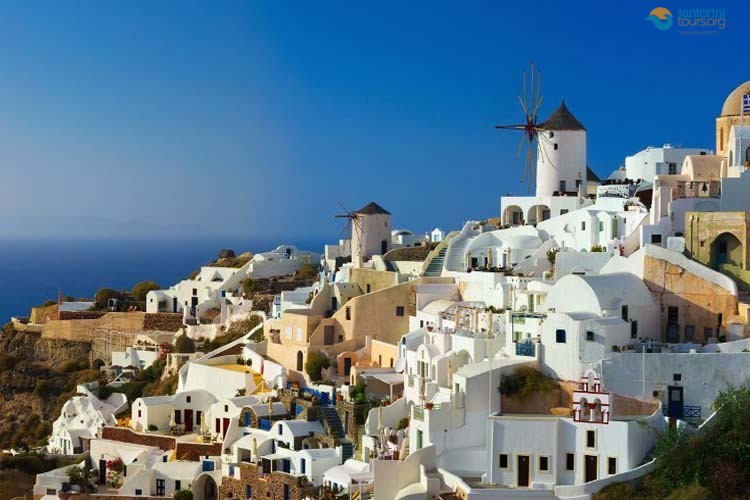
The traveler can enjoy an amazing view of the volcano by paying a visit to this place. You can also take a look at Oia and enjoy the view of the whole Caldera region. Here you can find an enormous beach and a variety of quiet beaches. Akrotiri village is famous for the quality of the fish taverns. A beautiful beacon and a castle are two of the most known sights in here.
Akrotiri private transfers
The locals say that if someone falls in love with Santorini once, they will always be in love with that amazing place. Santorinitours gives you a great opportunity to find out all the beauties of this island by Santorini tours and by Santorini Private Transfers. If you would like to have a total view of every side of the island by visiting Akrotiri you can take an Akrotiri private transfer for you and your company or even better an Akrotiri guided private transfer.
History of Akrotiri
During the Middle Ages Akrotiri was one of five fortified housing developments on the island. Also the archaeologists have brought into light a prehistorical town which was located at the same region with the village of Akrotiri.
Book A Private Tour Now

Book now and discover our amazing tours in Santorini!
See more about Santorini Private Tours:
- Santorini Sightseeing Private Tour
- Santorini Exclusive Shore Private Tour
- Santorini Impressive Caldera Private Tour
- Santorini South Part Private Tour
- Santorini North Part Private Tour
- Santorini Historical Private Tour
- Santorini Sunset Private Tour
Akrotiri Santorini: Village, Excavation and Cape
Akrotiri Santorini is three things that share a name, and knowing which one people mean saves confusion. Book with Santorini Tours, a licensed local operator.
The archaeological site. The Bronze Age town buried by the eruption around 1600 BC and preserved under metres of ash. This is what most visitors come for, and it is one of the most important excavations in the Aegean.
The modern village. A small settlement on the hillside above, with a ruined Venetian kastelli, a few tavernas and almost no tourism of its own.
The cape. The south-western tip of the island, ending at the Akrotiri lighthouse, with the Red Beach and White Beach along its coast.
All three sit at the south-west corner of Santorini, about twenty-five minutes from Fira and forty from Oia. The excavation, the village and the lighthouse can be done comfortably in a half day.
Why it matters
Akrotiri Santorini is the reason the island appears in histories of the ancient Mediterranean rather than only in holiday brochures. The town beneath the ash had paved streets, drainage, three-storey houses and wall paintings of a quality nobody expected from the Bronze Age Aegean.
The Excavation at Akrotiri
The site sits under a large modern shelter, which means it is walkable in any weather – useful to know if your dates are in spring or autumn.
What was there. A substantial Aegean port in contact with Crete, mainland Greece, Egypt and the Levant. It had paved streets, a drainage system running beneath them, and houses of two and three storeys with windows, internal staircases and plumbing. That is a level of urban planning not matched in Europe for centuries afterwards.
What buried it. Around 1600 BC the volcano erupted in one of the largest events in recorded human history. Metres of pumice and ash sealed the town, and the sealing is why it survives. Walls, doorways, storage jars and the impressions of wooden furniture all remain in place.
The frescoes. The reason the site changed archaeology. The Spring Fresco with its swallows and lilies, the Fishermen, the Boxing Boys, the miniature Flotilla frieze showing ships and a coastal town. These are wall paintings of extraordinary sophistication, and they are alive in a way contemporary Egyptian art is not. The originals are not at Akrotiri Santorini – they are in the Museum of Prehistoric Thera in Fira, which is why we tell guests to visit the museum first.
What is missing. Bodies. Nobody has been found. The population appears to have been warned by earthquakes and left, taking their valuables with them. Where they went is unknown, and that absence gives the site a strange, orderly emptiness quite unlike Pompeii.
Practical. Entry is around 12€, not included in any tour price. Allow forty-five minutes minimum, longer if you have a guide. Walkways are largely level, which makes Akrotiri Santorini one of the more accessible ancient sites in Greece.
Guiding Rules at Akrotiri Santorini
This catches people out, so it is worth stating plainly.
In Greece, only a state-licensed guide – a qualification requiring a degree and formal examination – may interpret inside a protected archaeological site. A driver-guide can take you to Akrotiri Santorini and brief you thoroughly outside the gate, but cannot legally walk you through the interior explaining what you are looking at.
A great many “historical” tours sold on this island use a driver-guide and describe the arrangement as archaeological guiding. It is worth asking which you are getting before you book, whoever you book with.
Our historical tour includes a licensed archaeologist for the duration and covers Akrotiri Santorini, Ancient Thera and both Fira museums. That is where the higher price of that itinerary goes.
If you want to see the site without a specialist, our south part tour takes you there as part of a wider afternoon, with the briefing given outside and the walk through the site done at your own pace. Both are legitimate; they are simply different products.
The Village of Akrotiri
Above the excavation sits the modern village, and almost nobody who visits the site walks up to it.
Akrotiri Santorini was one of the island’s five fortified kastelli, built under Venetian rule against pirates – along with Pyrgos, Emporio, Skaros and Oia. The outer ring of houses formed the defensive wall, and the lanes inside were deliberately narrow and confusing.
What remains is a ruin. The Goulas, the castle tower at the top, is partly collapsed and partly restored, and the village around it is a mix of abandoned and reoccupied houses. It is far less intact than Pyrgos or Emporio, which is precisely why it is quiet.
There are two or three tavernas, a bakery, and views south over the cape and east across the island. The church of Ypapanti sits within the old kastelli walls.
Allow twenty minutes if you are passing, an hour if you want to walk the lanes properly. Combined with the excavation below, the lighthouse at the tip and a beach, Akrotiri Santorini makes a full and unhurried half day.
The Akrotiri Lighthouse
The south-western tip of the island, about ten minutes beyond the village along a road that narrows to almost nothing.
The lighthouse was built in 1892 by a French company and is one of the oldest in Greece. It is not open to the public – it remains operational and is fenced – but the point of coming is the position rather than the building.
From the headland you look back up the entire length of the caldera: the cliffs, the volcanic islets in the middle, Thirasia opposite, and the villages strung along the far rim. It is the reverse of the view everyone photographs from Oia, and hardly anyone comes for it.
Sunset. This is the quiet alternative to the Oia crush. The sun drops into open sea, the cliffs go red, and on most evenings there will be a handful of people rather than a thousand. If you have a car and want the sunset without the crowd, Akrotiri Santorini lighthouse is the answer, and our sunset tour will finish here on request.
Practical. Park before the end – the road is narrow and turning is awkward. There is no shade, no facilities and no barrier at the cliff edge in places. Take water and wear proper shoes.
The Beaches at Akrotiri Santorini
The Red Beach
The famous one, five minutes from the excavation. Iron-red cliffs dropping into blue water, and genuinely spectacular from the viewpoint above.
The honest assessment: it is small, the surface is coarse red pebble rather than sand, it gets crowded, and there have been rockfalls – access is periodically restricted for good reason and signs warn of the danger. The car park fills by ten in season.
Go, look from the viewpoint, and decide there whether to walk down. We will give you the same advice on the day. More on the Red Beach.
White Beach
Next along the coast, beneath pale cliffs, and reachable only by boat from the Red Beach. Small taxi boats run in season. Quieter, and the contrast between the white cliffs and the dark sand is striking. More on White Beach.
Kambia and Mesa Pigadia
Two smaller, rougher coves on the same stretch, reached by dirt track. Almost nobody goes. No facilities at all.
Caldera Beach
Below the village on the caldera side, a small dark pebble beach with a couple of tavernas and calm water – the only beach on Santorini that sits inside the crater rather than on the outer coast.
None of these are sandy in the way visitors expect. Akrotiri Santorini beaches are volcanic: dramatic, deep-watered and better for looking at than for a full beach day. For that, Perissa and Perivolos on the south coast are the better choice.
Getting to Akrotiri Santorini
By car. Twenty-five minutes from Fira, forty from Oia, twenty from the airport. The road is good as far as the village and narrows toward the lighthouse. Parking at the excavation is adequate outside peak hours.
By bus. There is a service from Fira to Akrotiri, running less frequently than the Oia and Perissa routes. It reaches the village and the excavation but not the lighthouse or the Red Beach viewpoint.
By boat. Some caldera cruises stop at the Red Beach and White Beach, though these are swimming stops rather than access to the site.
On a tour. The most straightforward option, and the only one that solves both transport and the guiding rules. Our south part tour at 280€ per vehicle covers Akrotiri Santorini, the beaches and the inland villages in five hours; the historical tour from 692€ adds a licensed archaeologist and Ancient Thera; the full day tour at 460€ fits Akrotiri alongside the caldera villages.
Pickup is included from anywhere on the island on all of them.
The Eruption That Made Akrotiri Santorini
Everything on this cape is a consequence of one event, and the site only makes sense once you know it.
Around 1600 BC – the exact date is genuinely contested, with radiocarbon and ice-core evidence pointing about a century earlier than traditional archaeological dating – the volcano beneath the island erupted. It expelled an estimated 60 cubic kilometres of material. The magma chamber emptied, the centre of the island collapsed into the sea, and the caldera formed.
Ash from that eruption has been identified in Greenland ice cores and in tree rings as far away as Ireland. Tsunamis struck the north coast of Crete, damaging Minoan coastal settlements. Minoan civilisation did not end that day – the archaeology shows it continuing for a century or more – but it entered a decline from which it never recovered, and Mycenaean Greece took its place as the dominant Aegean power.
Akrotiri Santorini was buried, and the burial preserved it. The pale layers you drive past on the road to the site are that ash, tens of metres deep in places. The red of the Red Beach is oxidised iron in older volcanic rock. The soil that grows the island’s Assyrtiko, its PDO tomatoes and its fava is the same material.
Atlantis. The question comes up constantly. Plato describes an advanced island civilisation destroyed in a single day and night, writing roughly 1,200 years after the eruption. The parallel is striking. There is no evidence he had Santorini in mind and no serious archaeologist claims the identification is proven. A good guide will mark that line clearly, which is one of the reasons a licensed one is worth the money.
Planning a Visit to Akrotiri Santorini
Go early or late. The site is roofed but the car park and the approach are not, and coach groups arrive between ten and one. First thing in the morning is quiet.
See the museum first. The Museum of Prehistoric Thera in Fira holds the frescoes, the pottery and the gold ibex from this site. Forty minutes and a few euro, and it turns Akrotiri Santorini from a field of stone walls into a town with people in it. Most visitors do it the other way round or skip the museum entirely, which is the single most common mistake made with this site.
Allow enough time. Forty-five minutes minimum inside, an hour and a half with a guide who is allowed to explain it.
Combine it properly. Akrotiri, the Red Beach viewpoint, the village kastelli and the lighthouse make a coherent half day. Adding Ancient Thera on the same day is possible but long, and the switchback road above Kamari takes time.
What it costs. Around 12€ entry, not included in tour prices. A combined ticket covering Akrotiri, Ancient Thera and the Fira museums is usually available and worth asking about if you plan to see more than one.
Opening hours. Longer in summer, considerably shorter outside it, and the site closes earlier than most visitors expect in shoulder season. Check on the day rather than relying on a printed schedule.
Practical Notes
Shade. The excavation is roofed. Everything else on this cape – the village, the lighthouse, the beach viewpoints – has none at all.
Shoes. The site is walkways; the village is cobbles and rubble; the Red Beach approach is loose rock. Proper shoes throughout.
Water. Carry it. There is a café at the site entrance and very little else on the cape.
Accessibility. The excavation itself is among the more accessible archaeological sites in Greece, with largely level walkways. The village kastelli, the Red Beach and the lighthouse headland are not.
Children. Akrotiri Santorini holds children’s attention better than a viewpoint does – it is a buried town with streets and staircases, which is a story that lands. The Red Beach scramble is less suitable.
Photography. Permitted at the site without flash. Tripods need permission.
Weather. The one itinerary on the island that is unaffected by rain, because the site is under a roof.
Cash. Useful for entry and the small tavernas in the village.
Frequently Asked Questions About Akrotiri Santorini
Is Akrotiri worth visiting? Yes. It is the most significant Bronze Age site in the Aegean outside Crete, and it is roofed, so it works in any weather.
How long do I need? Forty-five minutes at the site, or a half day for the site, village, lighthouse and a beach.
How much is entry? Around 12€, paid at the gate and not included in tour prices.
Is it the same as the modern village? No – the excavation is below, the village above, and the lighthouse further on. All three share the name.
Can my guide explain it inside? Only if they hold a state guiding licence. A driver-guide can brief you outside but not interpret within the site.
Where are the frescoes? In the Museum of Prehistoric Thera in Fira, not at Akrotiri Santorini. Visit the museum first.
Is it like Pompeii? Similar in preservation, different in feel – there are no bodies here because the population left before the eruption.
Is the Red Beach nearby? Five minutes. Spectacular from the viewpoint, small and rockfall-prone up close.
Can I swim? At the Red Beach, White Beach by boat, or Caldera Beach below the village.
Is it accessible? The excavation largely is. The rest of the cape is not.
Is it good in bad weather? The best site on the island in rain, because of the shelter.
How do I get there without a car? The bus from Fira, or a tour with pickup included.
Tours That Include Akrotiri Santorini
We are a licensed local operator with guides who live on the island. Prices are per vehicle rather than per person, pickup is included from anywhere including both ports, and an 80€ deposit confirms any date.
Historical tour – from 692€, with a licensed archaeologist who can guide you inside Akrotiri Santorini and Ancient Thera, plus both Fira museums. The only itinerary on our list that does this legally.
South part tour – five hours from 280€, covering Akrotiri, the Red Beach, Vlychada and the wine country.
Full day tour – eight hours from 460€, fitting Akrotiri alongside Oia and the caldera villages.
Personalised tour – from 220€, built around whatever you want to see.
Every itinerary and all prices are on the santorini tours page. Send your dates and party size and you will get a reply from someone on the island, usually the same day.
When to Visit Akrotiri Santorini
April and May. The best window. Comfortable temperatures for the village and the lighthouse, quiet at the site, and the cape green rather than burnt.
June to August. Hot, and everything on this cape except the excavation itself is fully exposed. Akrotiri Santorini is still a good choice in high summer precisely because the site is roofed – it is the one archaeological visit that does not punish you at midday. Go early for the Red Beach car park.
September and October. Warm, thinning crowds, and the best light of the year on the red cliffs in the late afternoon.
November to March. The site stays open with shorter hours. The cape is windswept and dramatic, the Red Beach is empty, and the tavernas in the village mostly close. Akrotiri Santorini in winter is a genuinely different visit.
Time of day
Coach groups arrive between ten and one. First thing in the morning or after three is quieter. The lighthouse is best in the last hour of light, when the whole caldera opens up in front of you and there is almost nobody there.
Akrotiri Santorini and Ancient Thera
The island has two major archaeological sites and visitors routinely conflate them. They are separated by roughly 800 years and belong to different civilisations.
Akrotiri Santorini is Bronze Age – a Cycladic town with Minoan connections, buried around 1600 BC and preserved under ash. Roofed, level, and about the daily life of a prosperous port.
Ancient Thera is a Dorian, Hellenistic and Roman city founded in the ninth century BC on the ridge of Mesa Vouno at 360 metres, occupied for more than 1,500 years. Open, exposed, fragmentary, and about civic and military life – an agora, a theatre, a gymnasium and a Ptolemaic garrison.
If you only have time for one: Akrotiri Santorini, for the preservation and because it works in any weather. If you have interest and stamina, do both – they are the two halves of the island’s ancient story, and our historical tour covers them together with a licensed archaeologist.
Who Should Visit Akrotiri Santorini
Anyone with an interest in archaeology. The obvious case, and the site rewards it.
Visitors in poor weather. The roof makes Akrotiri Santorini the only weather-proof visit on the island.
Families with children over about eight. A buried town with streets and staircases holds attention far better than a viewpoint.
Travellers who have already seen the caldera villages. This is the other Santorini, and it is the one the island is actually famous for among historians.
Anyone visiting Crete on the same trip. Knossos and Akrotiri are two halves of the same civilisation.
Less suited to visitors on a very short cruise call, where the drive south eats the time available – take our shore excursion and we will tell you honestly whether it fits.
Whatever else you do on Santorini, Akrotiri Santorini is the stop that explains why the island looks the way it does.
A Half Day at Akrotiri Santorini
The cape works best as a single unhurried half day rather than a stop squeezed into a longer circuit. This is the shape we use.
09:00 – the excavation. Arrive as it opens, before the coach groups. Forty-five minutes to an hour and a half depending on whether you have a licensed guide with you.
10:30 – the Red Beach viewpoint. Five minutes away. Look from above, decide there whether the scramble down appeals, and be honest with yourself about the rockfall warnings.
11:15 – the village. Up the hill to the kastelli, the Goulas tower and the church of Ypapanti. Twenty minutes to an hour, and coffee at one of the tavernas.
12:30 – the lighthouse. Ten minutes on to the tip of the cape for the reverse view up the whole caldera. Almost nobody is there.
13:30 – lunch. Either in the village or fifteen minutes east at Vlychada, where the wind-carved cliffs are the strangest coastline on the island.
That is Akrotiri Santorini done properly. Add the Museum of Prehistoric Thera in Fira on a different day – before this one if you can – and the site becomes a town rather than a ruin.
Our south part tour covers this ground in five hours with a guide and pickup from anywhere on the island, and the personalised tour will build the day entirely around Akrotiri Santorini if that is what interests you.
A Final Word on Akrotiri Santorini
Most visitors come to Santorini for the caldera and leave without seeing the reason the island matters historically. Akrotiri Santorini is that reason: a Bronze Age port with drainage under its streets and wall paintings that changed what archaeologists believed about the Aegean, sealed under ash for three and a half thousand years.
It is not spectacular in the way Oia is. It is a set of stone walls under a modern roof, and without context it can read as exactly that. With context – the museum in Fira first, and ideally a guide who is legally allowed to explain it – Akrotiri Santorini is the most interesting hour on the island.
Add the kastelli village above it, the lighthouse at the tip of the cape, and the Red Beach, and you have a half day that almost nobody does properly.
We are a licensed operator with guides who live here year round, and one licensed archaeologist itinerary for people who want the site read to them properly. Pickup is included from anywhere on the island, prices are per vehicle rather than per person, and an 80€ deposit confirms any date. Send your dates and party size and we will tell you honestly which of our tours fits what you want from Akrotiri Santorini – including when the answer is the bus and a 12€ ticket.
Everywhere the Santorini Akrotiri Santorini Can Reach
Any of these can be built into a private itinerary. Each has its own page with what to see and how long to allow.
Caldera villages: Fira · Firostefani · Imerovigli · Oia · Finikia · Baxedes
Inland villages: Pyrgos · Megalochori · Emporio · Mesaria · Karterados · Vothonas · Vourvoulos · Exo Gonia · Mesa Gonia · Pigadia
Beaches: Perissa · Perivolos · Kamari · Vlychada · Monolithos · Red Beach · White Beach · Agios Georgios · Agia Paraskevi
Sites and landmarks: Akrotiri · Ancient Thira · Akrotiri Lighthouse · Nea Kameni · Palia Kameni · Thirasia · Athinios Port
All our tours: All Santorini tours · Full day tour · Sightseeing tour · Personalised tour · North part tour · Horse riding · South part tour · Sunset tour · Shore excursion · Caldera tour · Food experience · Wine tour · Historical tour · Small group tour
Planning and services: Famous sights tour · Transfers to Oia and Finikia · Transfers to other villages · Villages of Santorini · History of Santorini · Tours near you · Languages we guide in · Food and fun tours · Gay friendly tours · Our tour buses · Daily tours · Day tours · FAQ · Gallery · Tour photo gallery · About us · Contact · Blog








Leave a Reply