
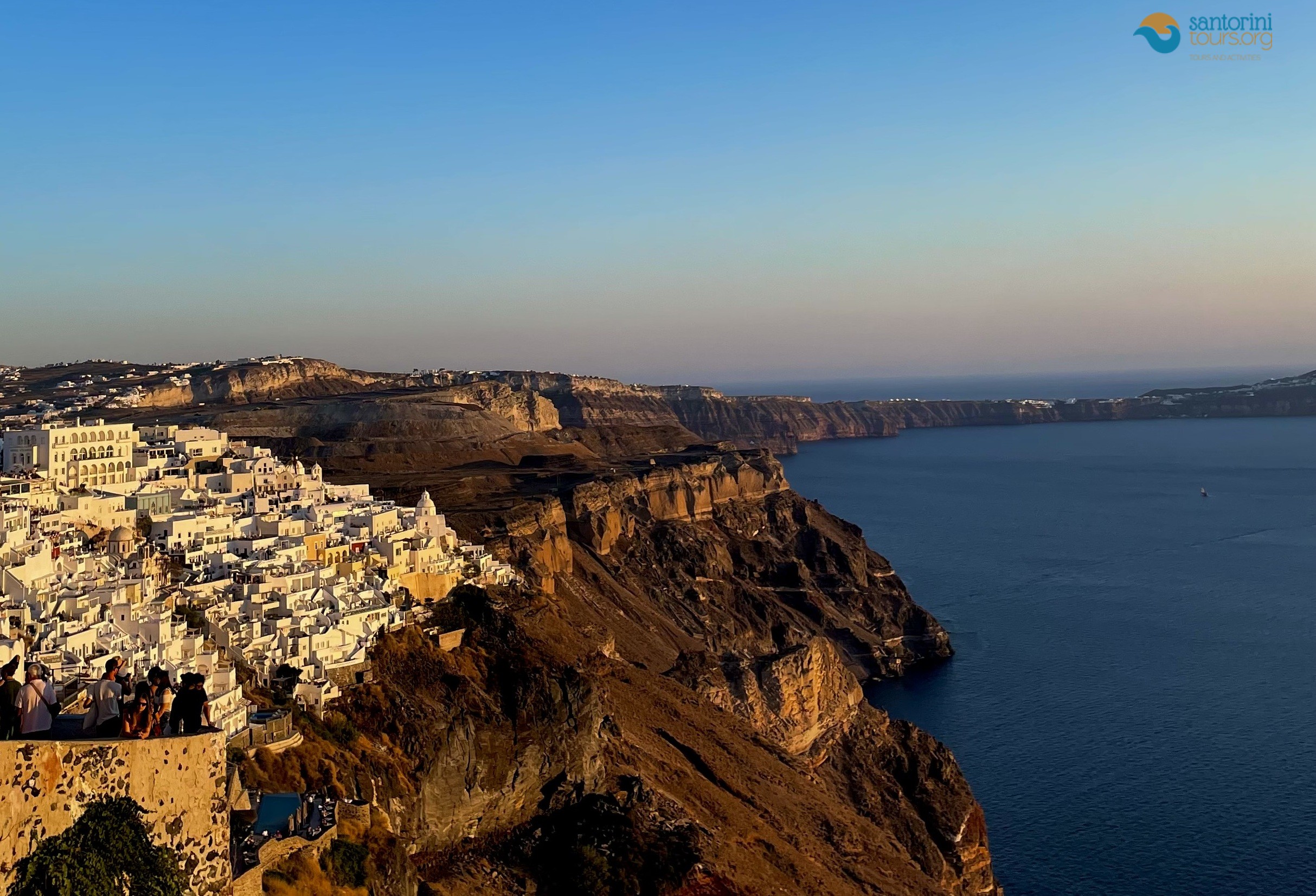
While summer is the island’s peak season, visiting Santorini in fall 2024 offers a unique experience that is often overlooked. You can take a Santorini private tour in the fall of 2024 and get to know the island without too many people and fuss.
1. Milder Weather and Comfortable Temperatures
One of the main reasons to visit Santorini in the fall is the weather. Summers in Santorini can be really hot, making it difficult to explore the island during the hottest parts of the day. In contrast, fall offers much milder temperatures. This comfortable weather is perfect for strolling through the charming streets of Fira and Oia, hiking along the caldera, or relaxing on the island’s famous beaches without being overwhelmed by heat.
Moreover, the Mediterranean Sea is still warm enough for swimming well into October, so you can enjoy the beaches without the intense summer crowds. Imagine floating in the crystal-clear waters of the Aegean, soaking up the last rays of the autumn sun, without the pressure of packed beach resorts.
2. Fewer Crowds and More Intimate Experiences
Santorini is infamous for its high tourist numbers in the summer months, which can detract from the island’s charm. In fall, particularly in September and October, the crowds thin out considerably, making it easier to explore at a more relaxed pace. The streets are less crowded, the queues shorter, and the overall atmosphere is more tranquil.
For those looking for a more intimate experience, fall is the ideal time to visit Santorini’s top attractions without battling through hordes of tourists. You can savor the island’s beauty in a more personal way, enjoying quiet moments on the caldera cliffs and taking photographs that aren’t filled with people. Sunsets in Oia, which are famous but notoriously crowded in summer, can be enjoyed in a much calmer setting.
3. Better Accommodation Deals and Availability
Due to the decreased demand in the fall, accommodation prices drop significantly compared to the peak summer months. Luxury hotels, boutique guesthouses, and traditional cave dwellings become more affordable, allowing you to experience the best of Santorini at a fraction of the cost. Not only are prices lower, but availability is also higher, meaning you can choose from a wider range of options.
This is especially important in Santorini, where accommodations with prime views of the caldera and sunset are highly sought after. During fall, you have a better chance of securing a room with a perfect view, enhancing your overall experience.
4. Breathtaking Sunsets and Sunrises
Santorini is famous for its sunsets, and they’re no less spectacular in the fall. The cooler air often brings clearer skies, enhancing the vibrant hues of the sunset as it dips below the horizon. Watching the sunset from Oia when you are taking a Santorini private tour, the island’s most famous sunset spot, is a magical experience year-round, but in the fall, you’ll be able to enjoy it without the huge crowds that often gather during the summer months.
For those who enjoy quieter, more serene moments, fall also brings the opportunity to experience stunning sunrises. Imagine waking up early, heading to the cliffs, and watching the sun rise over the Aegean Sea, casting soft, pastel colors over the island. It’s an experience that will stay with you long after your trip ends.
5. Unique Cultural and Historical Experiences
Santorini’s history is as rich as its landscape, and fall is an excellent time to explore the island’s cultural and historical sites. The Akrotiri archaeological site, often called the “Minoan Pompeii,” offers a glimpse into an ancient civilization preserved by a volcanic eruption. Fall provides a more relaxed environment for exploring these ruins and learning about the island’s fascinating past.
The island’s museums, such as the Museum of Prehistoric Thera and the Archaeological Museum of Thera, are also less crowded, allowing for a more immersive and personalized visit. You’ll have the time and space to truly appreciate the artifacts and exhibits that showcase Santorini’s history, from its Bronze Age beginnings to its role in Greek mythology.
6. Unforgettable Culinary Experiences
Fall is also a great time to indulge in Santorini’s culinary offerings. The island’s fertile volcanic soil produces an array of unique ingredients, such as fava beans, cherry tomatoes, and capers, which are the foundation of its delicious local cuisine. In the fall, you can enjoy these fresh, seasonal dishes at local tavernas and restaurants, many of which offer open-air dining with stunning caldera views.
The cooler temperatures also make taking a Santorini private food tour more enjoyable. Imagine savoring a traditional Greek meal, paired with a glass of Santorini wine, while watching the sunset over the Aegean—an unforgettable dining experience.
Take a Santorini private tour in fall 2024
Santorini in fall 2024 offers a blend of beauty, culture, and tranquility that’s hard to match. With perfect weather, fewer crowds, more affordable prices, and unique seasonal experiences, it’s the ideal time to visit this iconic island. One of the best ways to immerse yourself in everything Santorini has to offer during this time is by taking a Santorini private tour. By fall, the summer crowds in Santorini have largely dispersed, leaving the island with a more peaceful ambiance. However, some of the more popular spots like Oia, Fira, and Red Beach can still attract tourists, especially during peak hours. A private tour allows you to time your visit perfectly to avoid the busiest periods.
More Reasons to Visit Santorini in Fall
The six reasons above, from milder weather to unforgettable food, make a strong case on their own. There are many more reasons to visit Santorini in fall, some practical and some simply beautiful. This section adds them, then covers the months, the weather, what stays open and how to plan a fall trip.
Why fall is different. Between September and November, the island moves from late summer to a calm, local season. The sea stays warm long after the heat has gone, and daily life slows down.
Who it suits. Couples, walkers, photographers, wine lovers and anyone who prefers space to crowds.
What to expect. September still feels like summer, October brings the classic autumn balance and November is quiet and local.
The additional reasons to visit Santorini in fall below are numbered to continue the list above.
7. The Warmest Sea of the Year
As the article above says, the sea is still warm enough for swimming well into October. In fact, one of the strongest reasons to visit Santorini in fall is that the water is at its warmest.
September. After the long summer, the sea is typically around 24 degrees Celsius, as warm as it gets all year.
October. Still around 22 degrees Celsius in the first half of the month, comfortable for most swimmers.
November. Cooler but still swimmable for the hardy, especially early in the month.
The beaches. Kamari, Perissa, Perivolos and Vlychada are far calmer than in summer, and sunbeds are easy to find.
The hot springs. The warm iron-rich water off Palea Kameni feels even better as the season cools.
Reasons to visit Santorini in fall for swimmers, in one line. Warm water, empty sand and no summer heat.
8. The Wine Harvest and New Vintages
Wine is one of the most delicious reasons to visit Santorini in fall. The grape harvest usually runs from late July into September, and the weeks that follow are full of activity in the wineries.
The harvest. In early fall you may see the last grapes being picked from the low, basket-shaped vines, called kouloura, that protect the fruit from wind and sun.
In the cellars. By October, the new wines are fermenting and resting. Winemakers often have more time to talk than in the busy summer.
What to taste. Assyrtiko, the island’s crisp mineral white, and Vinsanto, the traditional sweet wine made from sun-dried grapes.
Reasons to visit Santorini in fall for wine lovers. Calm tasting rooms, winery terraces at sunset and a food scene built around the season.
Safety. Book a wine tour with transport rather than driving after tasting.
9. Perfect Walking Weather
The article above mentions hiking along the caldera. The mild temperatures make walking one of the best reasons to visit Santorini in fall.
Fira to Oia. Around ten kilometres along the caldera rim, through Firostefani and Imerovigli, then over open ground to Oia. In summer it is a battle with the heat; in fall it is a pleasure.
Skaros Rock. The stepped path from Imerovigli to the rock that held the medieval capital, with the chapel of Theoskepasti beyond.
Profitis Ilias and Ancient Thera. The ridge walk from the island’s highest point towards the ruined city above Kamari.
Reasons to visit Santorini in fall on foot. You can walk in the middle of the day without exhausting heat, and the paths are far less crowded.
What to carry. Water, sun protection, a light layer and shoes with grip.
10. Calmer Seas for Boat Trips
The strong summer meltemi usually fades in fall. Calmer water is one of the practical reasons to visit Santorini in fall if you want to see the caldera from the sea.
The volcano. The crater walk on Nea Kameni is far more comfortable without the summer heat on the black lava.
The hot springs. Boats anchor in a bay off Palea Kameni, where you swim into warm, iron-rich water.
Catamaran cruises. Shared and private cruises sail to the Red and White beaches and quiet bays, with a meal on board.
Reasons to visit Santorini in fall for a sunset cruise. Evening departures end with the sun setting behind Thirasia, with fewer boats around you.
Fewer departures. Schedules thin out late in October and in November, so check before you go and keep a flexible day.
11. The Photographer’s Season
The article above mentions photographs that aren’t filled with people. For photographers, the light itself is one of the strongest reasons to visit Santorini in fall.
Golden hours. A lower sun gives warmer, softer light for longer each morning and evening.
Clear air. After the summer haze and the first showers, the air is often very clear, with neighbouring islands visible on the horizon.
Dramatic skies. Passing clouds add colour to sunsets over the caldera.
Empty lanes. Oia’s blue domes, the Three Bells of Fira and the lanes of Pyrgos can be photographed with far fewer people in the frame.
Reasons to visit Santorini in fall for sunrise. As the article says, sunrise is a fall experience worth waking up for, and it comes at a more comfortable hour than in summer.
Respect. Many rooftops belong to hotels and homes; never climb onto private property for a picture.
16. Oia at Dawn, Without the Crowds
As the article above suggests, fall is the season for sunrises. Oia at dawn is one of the most magical reasons to visit Santorini in fall.
Reasons to visit Santorini in fall at sunrise: the timing. Sunrise comes at around 7:00 to 7:30 in October, a comfortable hour even for late risers.
Empty lanes. Before the day visitors arrive, the marble streets, blue domes and white houses are quiet and softly lit.
The castle. The ruins at the western tip of the village, packed at sunset, are almost empty at dawn.
Reasons to visit Santorini in fall for photographers: the light. The low morning sun turns the whitewashed walls gold and pink.
Ammoudi. After sunrise, walk down to the small harbour for breakfast or a swim off the rocks while the sea is still warm.
Reasons to visit Santorini in fall: respect. Keep to public lanes and viewpoints; many terraces belong to hotels and homes.
12. Local Life and Fall Celebrations
As the crowds leave, island life returns. Seeing it is one of the most rewarding reasons to visit Santorini in fall.
Village rhythm. Coffee shops fill with residents, children play in the squares after school and fishing boats go out on calm mornings.
Saint Demetrios, 26 October. One of the most popular name days in Greece, celebrated in churches dedicated to the saint.
Ochi Day, 28 October. A national holiday commemorating Greece’s refusal of the Italian ultimatum in 1940, with parades and flags across the island.
Reasons to visit Santorini in fall for culture. With fewer visitors, islanders often have more time to talk about their island, its history and its traditions.
Respect. If you enter a church during a service, dress modestly and stay quietly at the back.
13. Easier Tables, Transport and Parking
Small practical improvements add up. The ease of getting around is one of the underrated reasons to visit Santorini in fall.
Restaurants. Caldera-view tables that need booking weeks ahead in August are often available with a day’s notice in October.
Parking. Parking in Fira and Oia, very difficult in summer, becomes much easier.
Car hire. Rental prices fall after the peak, and the roads are quieter.
Reasons to visit Santorini in fall without queues. The cable car, the buses and the sunset viewpoints are less crowded, though cruise days can still be busy.
Taxis. Still limited, so pre-book airport and port transfers.
Tours. Private and small-group tours are easier to secure on your preferred dates.
14. Romance Without the Crowds
For couples, privacy is one of the most compelling reasons to visit Santorini in fall.
Quiet sunsets. As the article above says, the Oia sunset can be enjoyed in a much calmer setting. Imerovigli, Firostefani and the Akrotiri Lighthouse are calmer still.
Caldera suites. Rooms with private terraces and plunge pools are more affordable and easier to book.
Dinners with a view. Cooler evenings make long dinners on the terrace a pleasure.
Reasons to visit Santorini in fall for a honeymoon. Warm sea, soft light, quieter villages and better value. See our page on the Santorini honeymoon.
Proposals. The chapel below Skaros or a quiet corner of Oia at dawn are far calmer in October.
15. Cheaper Flights and Ferries
Travel costs fall along with hotel prices, another of the practical reasons to visit Santorini in fall.
Flights. Seasonal direct flights from many European cities continue into October, often at lower fares than in summer, alongside year-round flights from Athens.
Ferries. Conventional ferries from Piraeus continue through the fall, with fast boats running into October.
Reasons to visit Santorini in fall on a budget. Midweek departures in late September and October are usually the best value.
The port. Ferries dock at Athinios, below the cliffs in the south-west. Pre-book your transfer, as taxis are limited.
Buffer days. Autumn storms occasionally disrupt ferries late in the season; keep a spare day before international flights.
17. A Quiet Day on Thirasia
Across the caldera from Oia, the small island of Thirasia is even quieter in fall, which makes it one of the peaceful reasons to visit Santorini in fall.
Korfos. The small harbour where boats land, with fish tavernas at the water’s edge. In October you may have a terrace almost to yourself.
Manolas. The main village, reached by steps from Korfos, sits on the caldera rim and looks back at Oia and Fira. The cooler air makes the climb easy.
Reasons to visit Santorini in fall for slow travel. Few cars, few shops and almost no crowds; life follows the rhythm of the boats.
Getting there. Small boats from Ammoudi below Oia, or a stop on many volcano excursions. Services thin out late in October.
Reasons to visit Santorini in fall: the view back. From Manolas, the line of white villages on the Santorini cliffs is one of the finest views in the Cyclades.
18. Beach Days Without the Crush
The article above describes floating in the Aegean without packed beach resorts. These are the beaches that make beach days one of the best reasons to visit Santorini in fall.
Reasons to visit Santorini in fall at Kamari. The long black-sand beach keeps its promenade and sunbeds open into October, with far more space than in August.
Perissa and Perivolos. Several kilometres of dark sand; walk to the quieter southern end towards Agios Georgios.
Vlychada. Pale, wind-sculpted cliffs above a long beach, often calmer than the east coast.
Reasons to visit Santorini in fall for the Red Beach view. The red cliff glows in the low autumn light; access to the beach itself is sometimes restricted because of rockfalls.
Ammoudi. Deep, clear water off the rocks below Oia for strong swimmers.
Reasons to visit Santorini in fall: beach tips. Bring beach shoes for the dark sand and your own towel late in the season, when sunbed rental winds down.
19. The South in Autumn Light
The quieter south of the island is at its best in fall, and a day there is one of the most varied reasons to visit Santorini in fall.
Akrotiri. As the article above says, the “Minoan Pompeii” is more relaxed to explore in fall. Arrive at opening time for the calmest visit.
Megalochori. Old mansions, wine cellars and a shaded square, with a much-photographed bell tower on the edge of the caldera.
Reasons to visit Santorini in fall in the south: the wineries. Several wineries lie on the roads around Megalochori and Akrotiri, with calm tasting rooms after the harvest.
Vlychada. A late-afternoon swim or a seafood dinner at the small marina.
Reasons to visit Santorini in fall at the lighthouse. The Akrotiri Lighthouse offers a sunset over the open sea, far calmer than Oia.
Getting around. A car or private tour makes the south easy to explore in a single day.
23. Ancient Thera Without the Heat
High on the ridge of Mesa Vouno, above Kamari and Perissa, the ruined city of Ancient Thera is a hot, exposed climb in summer. In fall it becomes one of the most rewarding reasons to visit Santorini in fall for history lovers.
The city. Founded by Dorian settlers around the 9th century BC and inhabited into Byzantine times, with houses, temples, a theatre and an agora spread along the ridge.
The views. From the top you look down on Kamari on one side and the long beach of Perissa on the other, with the open Aegean beyond. The clear autumn air often reveals neighbouring islands.
Getting there. A winding road climbs from Kamari to a car park below the site, followed by a short steep walk. Fit walkers can hike up from Perissa.
Opening hours. They are shorter than at Akrotiri and change with the season, so check before you go, especially in late October and November.
Reasons to visit Santorini in fall for a history day. Combine Ancient Thera in the morning with the Museum of Prehistoric Thera in Fira in the afternoon, and finish with a swim at Kamari while the sea is still warm.
24. Pyrgos and Profitis Ilias
Inland, the island’s old capital and its highest point are at their most atmospheric in fall.
Pyrgos. Built in circles around the hill of an old castle, with narrow lanes, dozens of churches and views over both coasts. In fall, the lanes are quiet and the cafés at the top are easy to find a seat in.
Profitis Ilias. Above the village, the summit at around 560 metres looks over the whole island, with an 18th-century monastery nearby. The clear autumn air gives some of the best views of the year.
Reasons to visit Santorini in fall for a village sunset. From the top of Pyrgos, the sun sets over the whole island, far calmer than in Oia.
Food. Pyrgos has some of the island’s best tavernas and wine bars, many with terraces facing west.
Walking. A path climbs from Pyrgos to Profitis Ilias in around an hour, comfortable in the fall.
Tip. Bring a light layer for the evening; the hilltop is often breezy after sunset.
25. Fira and Firostefani at Their Best
As the article above mentions, the charming streets of Fira are perfect for strolling in the fall. The capital and its neighbour are among the easiest reasons to visit Santorini in fall.
The caldera promenade. The paved path along the rim, lined with cafés and terraces, is pleasant at any hour in the fall.
The Three Bells of Fira. Just below the path to Firostefani, the famous blue-domed church is far easier to photograph without the summer crowds.
The museums. As the article says, the Museum of Prehistoric Thera and the Archaeological Museum are less crowded, allowing a more immersive visit.
The Catholic quarter. A quieter area of churches and old mansions on the hill above the town.
Reasons to visit Santorini in fall on cruise days. October still brings cruise ships; visit Fira early in the morning or in the evening when the day visitors have gone.
Firostefani. A short walk north, with quiet tavernas and some of the best sunset terraces on the caldera.
27. Imerovigli and Skaros in Golden Light
At the highest point of the caldera rim, Imerovigli is one of the most beautiful places on the island, and fall is its finest season. The view alone is one of the reasons to visit Santorini in fall.
The village. Around 300 metres above the sea, Imerovigli looks across the whole caldera to Thirasia, with small whitewashed churches along its paths.
Skaros Rock. Below the village rises the great rock that held the island’s medieval capital. A stepped path leads to its base in around 20 to 30 minutes, and a narrow ledge path continues to the chapel of Theoskepasti above the sea.
Reasons to visit Santorini in fall at golden hour. The low autumn sun turns the rock and the cliffs gold for longer each evening, and the sunset here is far calmer than in Oia.
Staying here. Many of the island’s finest caldera hotels are in Imerovigli, and their prices fall noticeably after the summer.
Reasons to visit Santorini in fall on foot. Walk from Fira to Imerovigli along the caldera path in the late afternoon, stay for the sunset and have dinner on a terrace in the village.
Safety. The ledge path is exposed; avoid it in strong wind and wear shoes with grip.
20. Better Value on Private Tours
As the article above says, a private tour is one of the best ways to experience the island in fall. Availability and timing are among the practical reasons to visit Santorini in fall.
Reasons to visit Santorini in fall for private tours: availability. Preferred dates and times are easier to secure than in July and August.
Flexibility. With fewer crowds, a guide can adapt the route on the day, adding a village or a viewpoint as you go.
Timing. As the article notes, popular spots like Oia, Fira and the Red Beach can still be busy at peak hours; a private tour times each stop to avoid them.
Reasons to visit Santorini in fall with a guide: themed days. Wine tours, historical tours and sunset tours are more relaxed in the fall.
Comfort. Mild temperatures make a full day of sightseeing far easier than in summer.
21. Fall for Families, Solo Travellers and Older Visitors
The season suits many kinds of traveller, each for different reasons.
Reasons to visit Santorini in fall with children. Early September offers warm sea and open services before school terms begin; the volcano and boat trips are easier without the summer heat.
Solo travellers. Better prices for single rooms, calmer streets and shared tours still running into October.
Reasons to visit Santorini in fall for older travellers. Mild temperatures make the steps and lanes easier, and quieter viewpoints mean less standing in crowds.
Walkers. The caldera path, Skaros and the ridge above Kamari are at their best.
Reasons to visit Santorini in fall for first-timers. September gives the full island experience with fewer people; October adds calm and value.
22. Fall Evenings
As the evenings cool, the island’s nights take on a different character, one of the gentler reasons to visit Santorini in fall.
Reasons to visit Santorini in fall after sunset: the blue hour. Just after sunset, the sky turns deep blue and the lights of the caldera villages come on.
Dinner. Caldera terraces are easier to book, and the cooler air makes long dinners comfortable.
Fira. Bars and cafés stay open through September and into October, with a more relaxed crowd than in summer.
Village tavernas. Pyrgos, Megalochori and Emporio fill with residents in the evening, a sign of good local food.
Reasons to visit Santorini in fall: bring a layer. From October, a light jacket is welcome on terraces and the caldera rim after dark.
Getting home. Taxis remain limited; book transfers in advance.
Fall Food Worth Travelling For
The article above describes fava, cherry tomatoes and capers. Seasonal cooking is one of the tastiest reasons to visit Santorini in fall.
Reasons to visit Santorini in fall at the table: heartier dishes. As evenings cool, tavernas add slow-cooked meats, bean dishes and stews alongside the summer classics.
Tomatokeftedes. Fritters made from the small, intense Santorini tomato, still on every menu.
Fresh fish. Seafood tavernas at Ammoudi, Vlychada and the Old Port stay open through most of October.
Reasons to visit Santorini in fall for a cooking class. Classes are easier to book, and cooking in the cooler air is a pleasure.
New wine. Pair dishes with Assyrtiko and finish with Vinsanto.
26. A Calmer Cruise Stop
For cruise passengers, the fall brings a slightly calmer island, although it remains a busy season for ships.
The cruise calendar. September and October are still busy months for cruise calls. On days with several ships, Fira and Oia are crowded from late morning to late afternoon.
The cable car. Queues are usually shorter than in summer, but the afternoon return can still be slow. Leave Fira earlier than you think you need to.
Reasons to visit Santorini in fall on a shore excursion. Milder temperatures make a full day of sightseeing far more comfortable than in July and August.
A private shore tour. A guide plans the day around your ship’s schedule, taking you to Oia, the villages and the caldera views and back to the port on time.
More detail. See our page on the Santorini cable car.
September, October or November?
Fall is three very different months. The reasons to visit Santorini in fall change as the season goes on.
September. Summer in all but the crowds: hot days, the warmest sea and everything open. The first half is still busy; the second half calms down.
October. Mild, sunny days, a sea still warm in the first half of the month, fewer visitors and falling prices. Some businesses close in the last week, and the clocks change on the last Sunday.
November. Quiet and local, with shorter days, more rain and many closures. Fira stays the most active.
Reasons to visit Santorini in fall, by month. September for swimming, October for balance, November for solitude.
More detail. See our pages on what to do in Santorini in October and Santorini in November.
Fall Weather in Detail
Knowing the weather helps you make the most of the reasons to visit Santorini in fall.
Daytime. Around 26 degrees Celsius in early September, easing to the low twenties in October and the high teens in November.
Evenings. Warm in September, cooler in October and chilly in November. A light jacket is useful on the caldera from October.
Rain. Rare in September, occasional and usually brief in October, more frequent in November.
Wind. The summer meltemi usually fades, though windy days still happen.
Sunset times. Around 19:45 in early September, about 18:30 in late October before the clocks change, then around 17:30, and about 17:00 in November.
Reasons to visit Santorini in fall for comfort. Warm enough to swim and eat outdoors, cool enough to walk and explore.
What Stays Open in Fall
One of the few drawbacks of the season is that some businesses close. Knowing what stays open keeps the reasons to visit Santorini in fall intact.
September and most of October. Almost everything is open: hotels, restaurants, beach bars, boats and wineries.
Late October. Some hotels, beach bars and restaurants close in the last week, especially in Oia and the beach resorts.
November. Many hotels and restaurants close. Fira keeps the most services, and Akrotiri, the museums and some wineries stay open with shorter hours.
Reasons to visit Santorini in fall without surprises. Confirm that your hotel, restaurants and tours are operating on your dates, especially from late October.
Heating. Late in the season, check that your room has heating.
Where to Stay in Fall
As the article above says, accommodation with prime caldera views is easier to secure in fall. These are the best bases.
Imerovigli and Firostefani. Caldera views at fall prices, with calm evenings and an easy walk to Fira.
Oia. Much calmer in October than in summer, though some restaurants close late in the month.
Fira. The most practical base late in the season, with the most services open.
Kamari and Perissa. Beach bases, ideal in September while the sea is warm.
Reasons to visit Santorini in fall for a cave stay. Traditional cave houses, as the article mentions, become more affordable and stay comfortable as evenings cool.
Check opening dates. Many hotels close at the end of October or in early November.
A Five-Day Fall Itinerary
This plan puts the reasons to visit Santorini in fall into five relaxed days.
Day one: the caldera. Fira and the Museum of Prehistoric Thera in the morning, the walk to Imerovigli in the afternoon and the sunset from Skaros.
Day two: the sea. A boat to the volcano, the hot springs and Thirasia, or a catamaran with swimming stops.
Day three: the south. Akrotiri at opening time, the Red Beach viewpoint, a swim at Vlychada and a winery tasting, ending at the Akrotiri Lighthouse.
Day four: Oia and the north. Oia at dawn, lunch in Ammoudi and a quiet afternoon.
Day five: villages and the ridge. Pyrgos, Profitis Ilias and the walk towards Ancient Thera, with a final dinner in a village taverna.
Reasons to visit Santorini in fall with a private tour. A driver-guide makes days three and five effortless.
Fall or Spring?
Both shoulder seasons are quieter than summer. These are the reasons to visit Santorini in fall rather than spring.
The sea. In fall the water is warm after the summer; in spring it is still cool.
The landscape. Spring is greener, with wild flowers; fall has golden light and the wine harvest.
What is open. Everything is open in September and most of October; in spring, some businesses are still reopening.
Reasons to visit Santorini in fall for beach lovers. Fall wins easily: warm sea and calmer beaches.
For walkers. Both seasons are excellent; spring has more flowers, fall more settled weather in September and early October.
Our view. If swimming matters, choose fall; if you prefer green hills and flowers, choose spring.
What to Book Ahead in Fall
Fall is calmer than summer, but some things still sell out. Booking these keeps the reasons to visit Santorini in fall stress-free.
Accommodation. September remains popular, and the best caldera rooms fill early. For October, booking two to three months ahead is usually enough.
Reasons to visit Santorini in fall on the water: book boats early. Sunset cruises and private catamarans are popular in September.
Transfers. Pre-book airport and port transfers, as taxis are limited.
Wine tastings. Smaller wineries limit numbers; book ahead.
Reasons to visit Santorini in fall with flexible bookings. Choose flexible rates where possible, in case weather affects ferries or flights late in the season.
Dinners. The most famous sunset restaurants still need booking in September.
Mistakes to Avoid in Fall
A few simple mistakes can undermine the reasons to visit Santorini in fall. Avoid these and the season delivers.
Reasons to visit Santorini in fall, lost to closures. Travelling in the last week of October or in November without checking that your hotel, restaurants and boat trips are still operating.
Forgetting the clock change. Greece moves to winter time on the last Sunday of October, bringing the sunset forward by an hour.
Packing only for summer. Evenings from October onwards call for a light jacket.
No flexible day. Wind and the occasional storm can move a boat trip or a ferry.
Reasons to visit Santorini in fall ignored on cruise days. October is still busy for cruise ships; check the calendar and visit Fira and Oia early or late.
Skipping the swim. The sea is often warmer in September than in June; bring swimwear.
What to Pack for Fall
A little preparation keeps the reasons to visit Santorini in fall comfortable ones.
Layers. Summer clothes for the day and a sweater or light jacket for evenings, especially from October.
Swimwear. For September and early October, plus an old swimsuit for the hot springs.
A light waterproof. Useful from mid-October.
Shoes. Comfortable walking shoes with grip for the caldera path and village steps.
Sun protection. The fall sun is still strong at midday.
Light luggage. Many caldera hotels involve steps, so a small suitcase makes arrival and departure much easier; ask your hotel whether a porter can help from the nearest road.
Something smarter for dinner. Dress codes are relaxed, but a shirt or light dress is welcome at the caldera restaurants, where fall evenings invite long dinners on the terrace.
A day bag. A small backpack or cross-body bag for water, a layer and swimwear lets you move easily from a morning walk to an afternoon swim.
Reasons to visit Santorini in fall for walkers: proper socks and shoes. If you plan the caldera path or the ridge above Kamari, bring broken-in walking shoes with good grip and comfortable socks; the paths are rough and loose in places, and some sections are steep, especially on the descent towards Oia and around Skaros Rock, where the gravel can be slippery after rain.
Our Verdict on Fall
After many years of guiding visitors around the island, we believe the reasons to visit Santorini in fall outweigh almost any drawback.
Reasons to visit Santorini in fall, in short. Warm sea, mild days, quieter lanes, calmer boats, the wine harvest, golden light and better value.
The drawbacks. Shorter days, occasional rain from mid-October and closures at the very end of the season.
The sweet spot. Late September to mid-October, when the island is still fully open and the summer crowds have gone.
Reasons to visit Santorini in fall for a return trip. Many visitors who first came in summer return in fall and find a calmer, more local island.
Plan it. Book your base, a boat day and a private tour, and leave the rest of the time for slow walks, long lunches and sunsets.
Frequently Asked Questions
What are the main reasons to visit Santorini in fall?
Milder weather, fewer crowds, better accommodation deals, beautiful sunsets and sunrises, culture and food, plus the warmest sea of the year, the wine harvest and calmer boat trips.
Can you swim in Santorini in fall?
Yes, especially in September and the first half of October.
Is everything open in fall?
Almost everything until late October; many businesses close in November.
Which fall month is best?
Late September to mid-October for most visitors.
Is fall good for a honeymoon?
Yes: warm sea, soft light, quieter sunsets and better prices.
With Santorini Tours. As the article above says, a private tour lets you time your visits perfectly. We share all the reasons to visit Santorini in fall on private days planned around the weather and the crowds. Contact us to plan your trip.








Leave a Reply