

Gastronomy of Santorini
You can “taste” Santorini by Santorini private tours!
Until the 1960’s, since the island of Santorini had electrical power and before its’ development as a touristic attraction, the islands and Santorini in particular needed to live in self-sufficiency so their nutritional habits remain the same as they were for centuries before.
A historical view in gastronomy of Santorini
Fishing, bird hunting, pig and sheep raising and making good use of tomato, kapari and fava. The volcanic ground endowed Santorini with a great variety of vegetables (white aubergines, small zucchinies, local dry cucumbers), kapari and fava that all have in common the very intense and exquisite flavor.
A challenge for local people was the perservation of food through the year, which was achieved by making salty food, cheese, rusk and tomato paste. The hard part for the households was to produce something tasteful with the limited materials that they had and their imagination.
Until that time the locals were basically fed with barleybread which were kneaded and baked once a month due to lack of firewood in the island.
Nowadays, in Santorini you can find unique agricultural products, original restaurants with both national and international awards, cosy taverns with local delicacies, wineries open to the public with amazing winetastings, cooking lessons and gastronomic sites to visit make up an unforgettable scenery of unique gastronomic experience.
Book now a Santorini full day private tour and learn everything about the living in that unique Greek island.
Traditional recipes of Santorini
Santorini island is a great opportunity for you to taste some unique Mediterranean dishes made with passion from people who love their place and its local products. We have some suggestions for you to order during your vacations in Santorini:
Kopania: cookies made from barley and raisins
Koyfeto: roasted almond with honey, it is a usual wedding treat in Greece.
Melitina: a traditional Easter treat, it is made from mizithra, sugar and mastic.
Mpakaliaros Xelouristos: non cooked haddock i little pieces. It is usually served with Greek salad.
Santorini’s Pudding: a sweet made of semolina and milk.
Skordomakaronada: past with garlic and fresh tomato.
Sfougato: omellete with potatoes and pumpkin.
Traditional products of Santorini
Wine of Santorini:
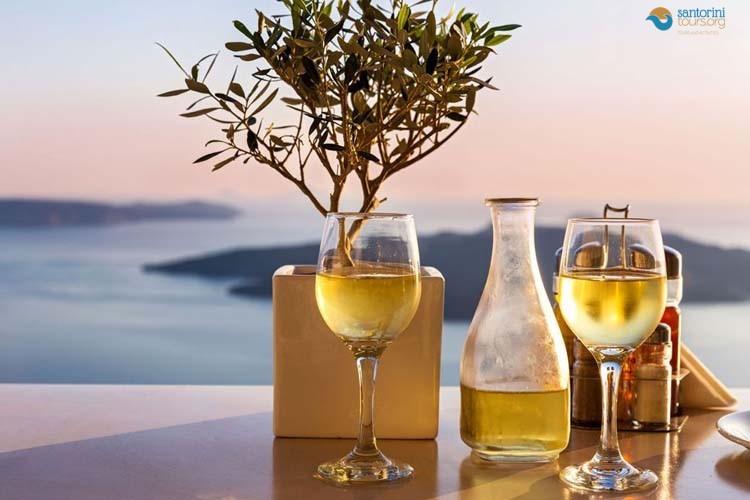
Santorini has a long tradition in viticulture, at least 3500 years. Its unique climate combined with the composition of soil has as a result some great wine varieties that are wide known around the world.
You can taste the famous Santorini island by booking a private tour in Santorini.
Split peas of Santorini:
The split peas of Santorini or fava is famous for its uniqueness to Santorini. Fava is one of the oldest products of Santorini along with the grape and ancient remains have been found in archaeological excavations. The size of the Fava is like a tall chalice in bright yellow color.
Cherry tomatoes of Santorini:
Santorini’s cherry tomato is a special agricultural product with a special history. Its variety comes from Egypt and found in Santorini the ideal anhydrous environment to grow. The way he first came to Santorini is lost in the legend. Some people want the Santorini tomato to be given to a monk and quickly spread among the growers of the island.
How Scarcity Shaped Santorini Gastronomy
The history above explains the rule behind everything on the plate here. Santorini gastronomy was built by people who had almost no water, very little firewood and a long way to the nearest market, and every traditional dish still carries that logic.
No water, the first rule of Santorini gastronomy. No rivers, no springs, and rain only in winter. Nothing could be irrigated, so everything grown was small, slow and concentrated, and the cooking was built around intense flavour rather than quantity.
No firewood. The island has almost no trees. Bread was baked once a month in shared ovens, which is why barley rusks rather than fresh loaves became the staple of Santorini gastronomy.
Preserving the summer, the craft of Santorini gastronomy. Tomatoes became paste and were dried in the sun. Capers were salted or kept in brine. Cheese was salted and aged. Fava was dried and stored. The winter table was the summer’s harvest, kept.
The barley rusk. Hard enough to last weeks, softened with water, tomato and oil. It is the ancestor of the salad visitors still eat in every taverna.
Salt and sun in Santorini gastronomy. The two preserving tools that cost nothing, and the reason so many island flavours are sharp, dry and concentrated.
Fish and birds in old Santorini gastronomy. Fishing from small boats, and migrating birds caught in autumn. Meat was for feast days, not for ordinary weeks.
Pigs and the winter. A household pig slaughtered before Christmas gave cured meat and fat for the whole winter, as it did across the Cyclades.
Wine as food. Wine was not a luxury but a daily calorie source and trade good, and Santorini gastronomy has always been built around it.
Feast and fast in Santorini gastronomy. The Orthodox calendar alternated long fasts with celebrations, which is why the island has so many dishes with no meat, dairy or eggs, and a few very rich ones for Easter and weddings.
What changed after the 1960s. Electricity, refrigeration and tourism arrived within a generation. Self-sufficiency ended, but the recipes stayed, and they are what now defines Santorini gastronomy for visitors.
Why Santorini gastronomy still tastes different. The same dry ash, the same lack of water and the same wind still grow the ingredients. The scarcity that forced the recipes is still the reason they taste the way they do.
More Dishes to Order, and What They Are
The list above names the island’s classic recipes. These are the other dishes that make up Santorini gastronomy on a taverna menu today, with a plain explanation of each so you know what arrives at the table.
Fava. A warm yellow purée of the island’s split pea, served with raw onion, capers and olive oil. The single dish most associated with Santorini gastronomy.
Fava pantremeni, a thrifty classic of Santorini gastronomy. “Married” fava: yesterday’s purée warmed with onions, tomato and capers. Leftovers that turned into a favourite.
Tomatokeftedes, the fritters of Santorini gastronomy. Made from the small island tomato with onion, mint and flour. Crisp outside, soft inside, and on every menu.
White aubergine in Santorini gastronomy. Sweeter and less bitter than the purple kind, usually fried, grilled, or made into a salad with garlic and oil.
Caper salad. Capers and caper leaves with tomato, onion and rusk, sharp and salty.
Chloro cheese, the fresh cheese of Santorini gastronomy. A fresh, soft, slightly sour goat cheese made in small quantities on the island. Order it wherever you see it.
The salad of Santorini gastronomy. The island version of the Greek salad: cherry tomatoes, capers, chloro, barley rusk and onion.
Grilled octopus and small fish. The daily catch at the harbour tavernas of Amoudi, Vlychada and the old port.
Sfougato. The baked omelette named in the list above, sometimes made with courgette rather than potato and pumpkin depending on the season.
Skordomakaronada, family Santorini gastronomy. Pasta with garlic and fresh tomato, the simplest and most loved of the family dishes.
Kopania. The barley and raisin sweet from the list above, still made in village houses.
Melitinia and koufeto. The Easter cheese pastries and the white almond wedding sweet, both tied to the calendar rather than the menu.
Vinsanto with dessert. The island’s sweet wine, made from sun-dried grapes, and the traditional end to a meal in Santorini gastronomy.
How to order Santorini gastronomy. Share. Tavernas bring small plates to the middle of the table, and the right way to eat is fava, tomatokeftedes, a salad and chloro for two before deciding on anything else.
Experiencing Santorini Gastronomy Today
The island that lived on barley rusks now has award-winning restaurants, cooking schools and wineries open to visitors. These are the ways to experience Santorini gastronomy properly rather than just eating well.
Village tavernas. The most authentic Santorini gastronomy is in Pyrgos, Megalochori, Emporio and Karterados, not on the caldera rim. Lower prices, local cooks and the traditional dishes done well.
The caldera restaurants of modern Santorini gastronomy. Where the island’s creative chefs work, often reinterpreting fava, tomato and chloro. Book ahead and expect to pay for the view as well as the food.
A cooking class in Santorini gastronomy. Two or three hours making fava, tomatokeftedes and a salad, then eating them with wine. The fastest way to understand why the recipes are the way they are.
A winery visit. Assyrtiko, Nykteri and Vinsanto at the estate, often with small plates. Wine and food have always been paired in Santorini gastronomy. Our page on wine tourism in Santorini covers the estates.
The wine museum. An underground tunnel explaining the working year of the vineyard, which is the backbone of the island’s food history.
The tomato museum and Santorini gastronomy. The old cannery at Vlychada, which shows how tomato paste once fed the island’s economy.
Taking Santorini gastronomy home. Fava, capers and Vinsanto travel well. Chloro and melitinia do not.
When to come for Santorini gastronomy. Summer for tomatoes and white aubergines, the late-summer harvest for wine, and Easter for melitinia and the feast table.
Santorini Gastronomy: Quick Answers
What is Santorini gastronomy known for? Fava, the cherry tomato, capers, white aubergine, chloro cheese and volcanic wine.
Where is the best traditional Santorini gastronomy? In the inland villages rather than on the caldera rim.
Is Santorini gastronomy vegetarian-friendly? Very. Centuries of fasting produced a large repertoire of dishes without meat.
Can we combine food and sightseeing? Yes. A private tour with a winery, a village lunch and a cooking class covers Santorini gastronomy and the island in one day, with somebody else driving.