

Why You Must Reconsider Before Riding a Donkey in Santorini
Residents of the island Santorini, Greece, make their best for visitors to have a great time. However, they are well asking all of us quit doing one point: Riding Santorini’s donkeys up 600-foot cliffs.
The island partnered with the cruise-line industry to release a new campaign entitled, “in their hooves” to enlighten travellers on the physical as well as mental stress put on the donkeys as they climb up the steep hillsides with human beings on their backs.
The campaign was initially introduced after locals observed the increasing number of donkeys suffering back injuries, saddle sores, as well as exhaustion. Instead of hiring donkeys, book a Santorini Private Guided Tour and relax in the comfort of an air-conditioned mini bus.
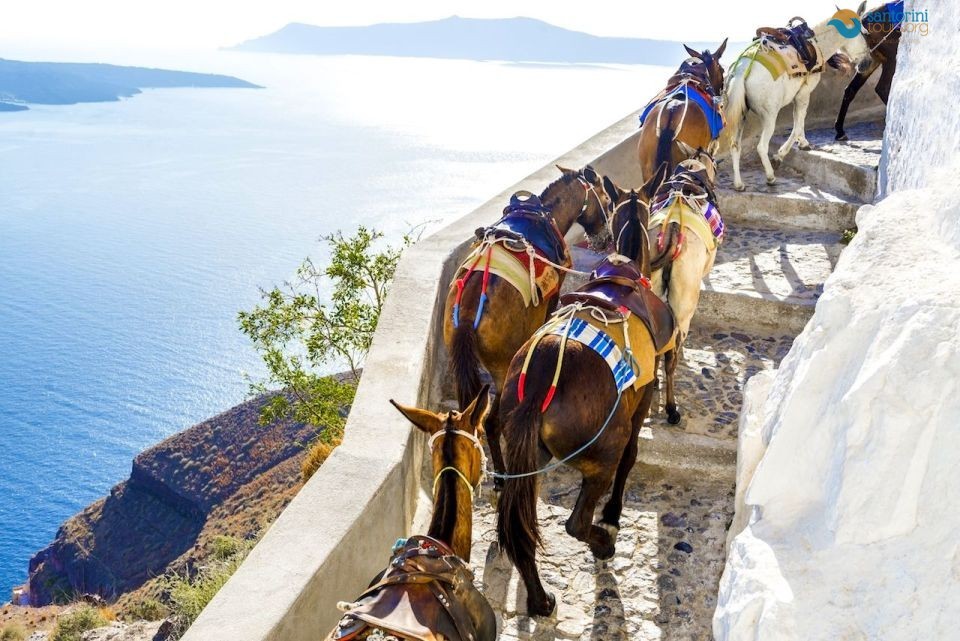
Useful initiative that have been taken in Santorini
Santorini also took the unprecedented step to make it prohibited for proprietors of the donkeys to allow animals to bring more than 220 pounds of either humans or freight. That weight restriction, is about one-fifth of the donkey’s weight.
You can take a tour of Santorini! Fortunately, the donkeys are not the only means up the steep hillsides of Santorini. There are also two other means of ascension. Travellers can walk the hill up on foot, or by cable auto.
Officials and also project supervisors are really hoping the brand-new “in their hooves” effort will certainly make visitors reconsider before riding donkeys. So, next time you’re in the gorgeous island of Santorini, possibly ensure to pack a comfortable set of footwear and hoof it up the mountainside on your own.
There is always another option to take. If you are not the kind of athletic person you can book a Santorini Impressive Caldera Private Tour.
See more about Santorini Private Tours:
- 5 reasons to go to Santorini in October
- Santorini Summer 2019
- Top 10 Restaurants in Santorini
- Santorini: A Great Gastronomic World
- Book a Santorini Private Tour to take the Most Memorable Photos in Instagram!
- Five magical shades of Santorini Tours
- The top Santorini Tours
- Santorini, the island that never rests
- How to spend a winter tasting weekend in Santorini!
Santorini Donkeys: The Short Answer
The animals on the cliff path below Fira are the most photographed working animals in Greece and the most argued about. They carried everything on this island for centuries, and they now carry cruise passengers up five hundred and eighty steps in forty-degree heat. We run tours here and we ask our guests not to ride them. This page explains why, what has changed in the law, and what to do instead.
Where the santorini donkeys are. The Karavolades stairs between the old port and Fira, and the three hundred steps from Ammoudi up to Oia.
What the santorini donkeys do. Carry visitors up and down, and carry goods to properties the road does not reach.
Are the santorini donkeys donkeys or mules. Both. Most of the animals working the steps are mules, a donkey and horse cross, and the word donkey is used for all of them.
Should you ride the santorini donkeys. We ask you not to. The load, the heat, the stone and the hours are the problem, not the existence of the animals.
Is riding the santorini donkeys illegal. No. It is regulated. Greece introduced a weight limit and welfare rules rather than a ban.
The santorini donkeys weight rule. Animals may not carry loads over one hundred kilos, roughly a fifth of their own body weight.
Is the rule enforced. Inconsistently, and enforcement has tightened since the campaigns.
What changed for the santorini donkeys. Fewer animals on the steps than a decade ago, shade and water at the stands, and far more visitors taking the cable car.
The alternatives to the santorini donkeys. The cable car at six euros, or the steps on foot. Both take you to the same place.
The santorini donkeys most people photograph. Standing at the top of the Karavolades in the morning, saddled and waiting, which is the image that started the debate.
Is photographing them fine. Yes. Nobody objects to a camera. The objection is to the weight on the back.
What the santorini donkeys owners say. That this is a living tradition and a livelihood, and that the animals are their property and their income.
What the welfare groups say. That heat, stone steps and repeated loads cause spinal injury, saddle sores and exhaustion.
The one-line answer. Take the cable car, photograph the santorini donkeys from the path, and give the ride money to a taverna instead.
The History: Why They Are Here At All
This is not a tourist invention. The animals predate every hotel on the island by centuries.
Before roads, the santorini donkeys carried everything. Santorini had no vehicle roads worth the name until the twentieth century. Everything moved on animals.
The cliff problem. The caldera villages sit three hundred metres above the water, and the only link to the sea was a stepped path.
The Karavolades. The zigzag stair from the old port to Fira, five hundred and eighty steps, built for exactly this traffic.
What the santorini donkeys carried. Water from cisterns, wine to the boats, building stone, pumice, flour, and people who could not walk it.
The wine trade. Barrels went down these steps on animals to be loaded onto ships for Russia and France through the nineteenth century.
The pumice mines. The island exported volcanic stone for decades, and the santorini donkeys moved much of it.
Farming. Vines, fava and tomatoes were worked with animal labour on terraces no cart could reach.
After 1956. The earthquake emptied the island and the animals stayed, because the roads still did not exist.
The cable car that replaced the santorini donkeys. Built in 1979, funded by the Nomikos family, and it changed the economics of the steps overnight.
What the ride became. With cargo gone and cruise tourism arriving, carrying passengers became the remaining income.
The number of santorini donkeys. Several hundred animals worked the island at the peak. Far fewer do now.
Why the tradition argument has weight. Because it is a real tradition, not a staged one, and the families involved have done this for generations.
Why it does not settle the question. A tradition of carrying cargo on a cool morning is not the same as carrying a hundred kilos of tourist at two in the afternoon in August.
The honest framing. The santorini donkeys are a genuine part of the island’s history and the modern ride is a modern use of them.
The Welfare Case, Stated Fairly
This is the part that needs to be accurate rather than emotive, because the owners are people with a livelihood and the animals cannot speak.
The load on the santorini donkeys. A mule can carry roughly a fifth of its body weight without harm. Many riders exceed that, and nobody is weighed at the bottom.
The surface under the santorini donkeys. Stone steps, worn smooth, often wet from the animals themselves. Poor footing causes slips and joint strain.
The heat on the santorini donkeys. Forty degrees in August, black stone, and no shade on most of the ascent.
The hours the santorini donkeys work. Cruise days run from early morning to late afternoon with the animals on their feet throughout.
Injuries documented in the santorini donkeys. Spinal problems, saddle sores, lameness and exhaustion, reported by welfare groups and by Greek vets.
The saddles on the santorini donkeys. Ill-fitting tack is the commonest specific cause of sores, and it is also the easiest thing to fix.
Water and shade. Improved at the stands after the campaigns, and still inconsistent along the route.
The santorini donkeys campaigns. “In Their Hooves”, run with the cruise industry, plus sustained pressure from PETA and the Donkey Sanctuary.
What the santorini donkeys campaigns achieved. The weight rule, better tack requirements, shade at the stands, and a large fall in ridership.
What they did not achieve. A ban, which the Greek state has not imposed and local owners oppose.
The santorini donkeys counter-argument. That well-kept animals working reasonable hours are not mistreated, and that removing the income removes the reason to keep them at all.
Where that argument holds. Some owners do keep their animals well, and they resent being grouped with those who do not.
Where it does not. You cannot tell from the queue which owner you are giving money to.
Our position. We ask guests not to ride the santorini donkeys, because the visitor cannot verify the animal’s condition and the cable car exists.
The Law and the Weight Rule
The core santorini donkeys rule. Working equines may not carry more than one hundred kilos, or a fifth of their body weight, whichever is lower.
Where it came from. Greek ministerial regulation following the welfare campaigns and international press coverage.
What else it covers. Shade, water, rest periods, veterinary checks and a ban on working animals that are unfit, pregnant or injured.
Tack requirements. Saddles must fit and must not cause sores, which was the specific abuse most often photographed.
Age and fitness. Animals must be sound. Lame or underweight animals are not permitted to work.
Enforcement of the santorini donkeys rules. By local authority and veterinary inspection, and enforcement has been criticised as inconsistent.
Penalties for santorini donkeys owners. Fines for owners, and removal of the licence to operate in serious cases.
Does anybody weigh riders. Not systematically. In practice operators judge by eye, which is the weakness of the whole scheme.
What visitors can do about that. Decline the ride. The rule depends on the rider’s honesty as much as the owner’s.
The cruise industry and the santorini donkeys. Several lines now discourage the ride in their port information and no longer sell it as an excursion.
The wider Greek picture. Similar rules apply on other islands with working animals, and Santorini has had the most attention because of the cruise volume.
Has the santorini donkeys rule worked. Partly. There are fewer animals, fewer riders and better conditions than a decade ago, and the practice has not stopped.
Reporting a problem. If you see an animal that is visibly injured, lame or overloaded, report it to the local police or the municipality rather than arguing at the stand.
The practical summary. Riding the santorini donkeys is legal, regulated, and declining, and the regulation relies on visitors choosing not to.
The Karavolades Steps in Detail
The stair itself is a piece of engineering worth knowing about, whether you ride, walk or take the cable car over it.
The name. Karavolades, from the Greek for snail, after the way the zigzag coils up the cliff.
The step count the santorini donkeys climb. Five hundred and eighty-eight steps, commonly rounded to five hundred and eighty.
The height. About two hundred and twenty metres of ascent from the quay to the Fira rim.
When it was built. Cut and paved in the nineteenth century, widened and repaired repeatedly since.
The surface the santorini donkeys work on. Rounded stone, polished by two centuries of hooves and feet, and slippery when wet.
Soiling from the santorini donkeys. The animals work it all day and it is cleaned, not continuously. This is the commonest complaint from walkers.
The width the santorini donkeys need. Narrow enough that a walker and a loaded animal cannot always pass comfortably. Stand on the inside and let them go by.
Walking etiquette. Give way to the santorini donkeys. They cannot stop easily on a descent with a load.
Time down. Twenty to twenty-five minutes at a careful pace.
Time up without the santorini donkeys. Forty to fifty minutes for a reasonably fit adult, and considerably more in August heat.
Shade. None. The stair faces west and takes full afternoon sun.
Water. Carry it. There is nothing on the stair itself.
The view. The best sightline in Fira, with the caldera opening up behind you as you climb.
The photograph. Taken from partway up, looking back down at the zigzag with the ships at anchor below.
Ammoudi and the Oia Steps
The stair the santorini donkeys work at Oia. About three hundred steps from Oia down to Ammoudi Bay, the harbour below the village.
The santorini donkeys at Ammoudi. Fewer than at Fira, and they work the same job.
Down. Twenty minutes, easy, with red cliffs on one side and the water below.
Up. Thirty-five minutes, and much harder after a long dinner in July.
The road that avoids the santorini donkeys. A narrow switchback with very little parking at the bottom, which is why so many people take the steps.
What we do. Drive guests down for dinner and collect them afterwards, which removes the climb entirely.
Why the climb matters here. Ammoudi dinners finish late, the stair is unlit in places, and the santorini donkeys have stopped for the day.
The swim. A path round the headland to a rock platform and the chapel islet of Agios Nikolaos.
The tavernas. Four or five on the water, serious about fish, and needing a booking from June to September.
Sunset here. The cliff turns orange and the harbour fills. It is the best hour and the busiest.
Ammoudi against the Fira santorini donkeys. Shorter, prettier, and the same welfare question applies to the animals working it.
The practical answer. Book a car both ways and use the steps once, downhill, in daylight, for the view.
The Animals Themselves
Worth knowing what you are actually looking at, because most visitors call every animal on the steps a donkey and most of them are not.
The donkey among the santorini donkeys. Equus asinus. Smaller, longer-eared, sure-footed, and the original working animal of the Cyclades.
The mule, most of the santorini donkeys. A donkey sire and a horse dam. Larger, stronger, and what most of the santorini donkeys on the steps actually are.
The hinny. The reverse cross, horse sire and donkey dam. Rarer and smaller.
Why mules work as santorini donkeys. More carrying capacity and more stamina than a donkey, with a donkey’s footing on stone.
The size of the santorini donkeys. A working mule here runs roughly four hundred to five hundred kilos, which is where the hundred-kilo load limit comes from.
The lifespan of the santorini donkeys. Thirty to forty years for a well-kept animal, and working life is a fraction of that.
Temperament. Calm, stubborn when they judge something unsafe, and that judgement is usually correct.
Sure-footedness. Genuine. A mule places each hoof deliberately, which is why they were used on stepped paths in the first place.
What they eat. Hay, barley and whatever grows. On a dry island that was always the constraint on how many could be kept.
Where the santorini donkeys live. Stables inland and below the villages, walked to the stands each morning.
Retirement for the santorini donkeys. The hard question. An animal that cannot work is an expense, which is why the sanctuaries exist.
The bells. Ornamental and practical. You hear a string of them coming before you see them on a blind turn.
The decoration on the santorini donkeys. Coloured tack and beads, a genuine Cycladic tradition rather than a tourist addition.
What to look for in the santorini donkeys. A calm animal, a well-fitted saddle, no sores at the girth or spine, sound movement, water and shade at the stand.
Why we still say no. Because you can assess one animal in a queue of many, and the cable car removes the need to assess anything.
How We Handle It on Tours
What we tell guests about the santorini donkeys. Plainly, before the day: take the cable car, and we will explain why if you want the detail.
Cruise days and the santorini donkeys. We meet you at the top of the cable car, so the question of the steps never arises.
Ammoudi evenings. A car down and a car back, which is the whole reason people take the animals there.
If you want to ride anyway. It is your decision and it is legal. We will not arrange it, and we will not lecture you about it either.
Photography. We stop where you can photograph the santorini donkeys safely and legally, which is most of the Fira caldera path.
Families. Children ask about them constantly. The honest answer, in an age-appropriate form, works better than avoiding it.
The santorini donkeys sanctuary. We can point you at the island’s rescue operation if you would like to donate or visit.
What to send us. Your dates and your ship or hotel, and we will build the day so the steps are never the only option.
What to Do Instead
Every reason to take the ride has a better answer, and all of them are cheaper or the same price.
The cable car instead of the santorini donkeys. Six euros each way, three minutes, from the old port to Fira. The direct replacement.
The queue. Twenty minutes on a quiet day, over an hour when several ships tender at once. Worst on the afternoon return.
How to beat the queue. Go up early, come down before three, and never leave it to the last hour before all-aboard.
The steps on foot instead of the santorini donkeys. Five hundred and eighty of them. Twenty-five minutes down, forty to fifty up for a reasonably fit adult.
The catch with walking. You share the path with the animals, and the surface reflects that. Closed shoes, and watch your footing.
Walking instead of riding the santorini donkeys. The sensible compromise. Cable car up, walk down, and you get the view without the climb.
Ammoudi and its santorini donkeys. Three hundred steps from Oia, the same choice, and a taxi or a transfer on the switchback road is the alternative.
The road. Both harbours have vehicle access. A pre-booked car removes the question entirely.
What we do instead of the santorini donkeys. We meet cruise guests at the top of the cable car and drive Ammoudi diners to and from the tavernas.
If you cannot manage steps. The cable car, or the road by car. Neither requires an animal.
If you want the experience of the path. Walk it early in the morning when the animals are not working and the light is on the cliff.
If you want to be near the santorini donkeys. Photograph them, talk to the owners, and give the money to a taverna at the bottom.
Sanctuaries for retired santorini donkeys. Santorini has a rescue operation caring for retired and injured working animals, and visiting or donating is the version of this that helps.
The cost of the santorini donkeys against the cable car. A ride costs roughly what the cable car costs. You are not saving money by taking it.
The honest conclusion. There is no practical reason left to ride the santorini donkeys, which is exactly why the numbers have fallen.
Santorini Donkeys: Questions People Ask
Can you still ride the santorini donkeys? Yes. It is legal and regulated rather than banned, and fewer animals and riders are on the steps than a decade ago.
Should I ride the santorini donkeys? We ask our guests not to. The cable car costs the same, takes three minutes and carries no welfare question.
Is there a santorini donkeys weight limit? Yes, one hundred kilos or a fifth of the animal’s body weight, whichever is lower. Riders are not systematically weighed, which is the rule’s weakness.
Are the santorini donkeys donkeys or mules? Mostly mules, a donkey and horse cross, though the word donkey is used for all of them.
Where are the santorini donkeys? The Karavolades stairs between the old port and Fira, and the steps from Ammoudi up to Oia.
How many steps do the santorini donkeys climb? Five hundred and eighty from the old port to Fira, and about three hundred from Ammoudi to Oia.
How much does a santorini donkeys ride cost? Roughly the price of a cable car ticket, which is why the cost argument does not hold.
Is the cable car better? For speed, price and welfare, yes. Six euros, three minutes, and the only cost is the queue.
Can I walk the steps instead? Yes. Twenty-five minutes down, forty to fifty up. Closed shoes, and the surface is soiled and slippery.
Is riding the santorini donkeys cruel? Welfare groups document spinal injury, saddle sores and exhaustion from heat, loads and hours. Owners argue well-kept animals are not harmed. A visitor cannot tell which animal they are getting.
What is the “In Their Hooves” campaign? A joint initiative with the cruise industry to inform passengers about the physical strain on the animals.
Can I photograph the santorini donkeys? Yes, and nobody objects. The objection is to the weight on the back, not the camera.
What if I see an injured animal? Report it to the local police or the municipality. Do not argue at the stand.
Is there a santorini donkeys sanctuary? Yes, a rescue operation on the island cares for retired and injured working animals, and it takes donations.







Leave a Reply