
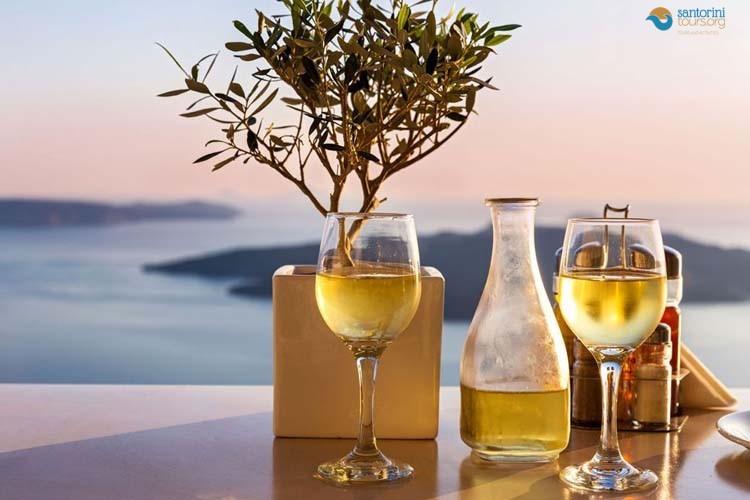
A Santorini cooking class is the shortest way to understand the island. In two or three hours you handle the ingredients that grow in volcanic ash with almost no rain, you learn why the tomatoes are so small and so sweet, and you sit down to eat what you have made, usually with a glass of Assyrtiko in front of a caldera view. This article explains what a Santorini cooking class involves, what you cook, where the classes happen, what to ask before booking and how to combine one with the rest of your stay. You can also explore the island with Santorini Tours and add a class to a private day.
What a Santorini Cooking Class Is
Most classes are small, hands-on and relaxed. A local cook, often a family running the kitchen for generations, shows you three to five island dishes, explains the ingredients and walks you through each step. Nothing is pre-cooked for show; you chop, mix, fry and taste.
Group size. Usually between four and twelve people. Private classes for couples and families are common.
Length. A typical Santorini cooking class runs three to four hours, including the meal at the end.
Language. Classes for visitors are normally held in English.
The meal. You eat everything you cook, seated at a long table, usually with local wine or water included.
Who it suits. Couples, families, solo travellers and small groups of friends. No cooking experience is needed.
What You Cook in a Santorini Cooking Class
The menu changes with the season and the host, but a Santorini cooking class almost always covers the island’s own products.
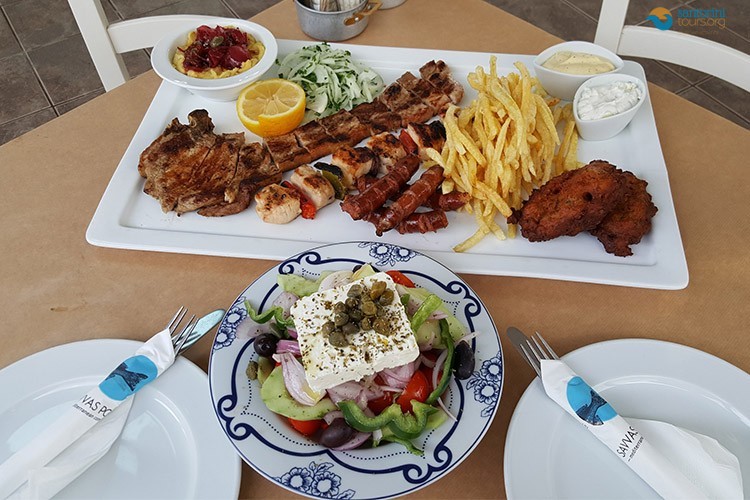
Tomatokeftedes. Fritters made with the small Santorini tomato, onion, herbs and flour, fried until crisp. They are the dish most visitors ask to learn.
Fava. A purée of the island’s yellow split peas, simmered slowly and served with raw onion, capers and olive oil. The trick is the slow cooking and the amount of water.
White eggplant. The sweet local variety, with few seeds, grilled or baked into a salad or a dip.
Capers and caper leaves. Gathered wild and preserved in salt or vinegar, they season almost everything on the table.
Chloro cheese. A fresh, soft goat’s cheese made on the island, eaten young and used in salads and pies.
Greek salad. Simple, but the tomatoes, capers and cheese make the island version different from any other.
A sweet. Many hosts finish with a local sweet or a spoon dessert, served with coffee.
In a Santorini cooking class the ingredients lead. Because the soil is volcanic and rain is rare, the crops are small, concentrated and intense, which is why the recipes are so short.
Where the Classes Happen
The setting changes the experience as much as the menu, so choose the location of your Santorini cooking class with care.
Caldera terraces. Kitchens in Fira, Firostefani and Imerovigli with a view over the volcano. The most spectacular option, and the one that fills first in summer.
Village houses. Traditional homes in Megalochori, Pyrgos, Emporio and Exo Gonia, where you cook in a family kitchen or a shaded courtyard.
Farms and gardens. In the south, around Akrotiri and Megalochori, some hosts start with a walk through the garden to pick what you will cook.
Wineries. A few wineries run classes that finish with a tasting of Assyrtiko, Nykteri and Vinsanto alongside the food.
By the sea. Classes near Vlychada or Kamari, with fish and seafood on the menu.
A Santorini cooking class with a view. If the caldera matters to you, say so when booking; not every kitchen faces west.
A Santorini cooking class in a village. If you prefer the food and the conversation to the view, a village kitchen is usually better value and more personal.
Class Formats
There is no single format, so match the Santorini cooking class to the day you want.
The classic class. Three to four hours, three to five dishes, a shared meal at the end. The most common option.
With a market or garden visit. The class starts with shopping or picking, which shows you how the produce is grown and sold.
With a wine tasting. The meal is paired with island wines, and the host explains why Assyrtiko works with fava and fish.
Sunset classes. Timed so that you eat as the sun goes down. Popular in summer; book well ahead.
Private classes. Just your group, with the menu adapted to what you want to learn.
Family classes. Shorter, simpler dishes and a pace that suits children.
A Santorini cooking class as part of a tour day. A morning of sightseeing, a class in the afternoon and the sunset afterwards is a full but comfortable day.
What Is Usually Included
Inclusions vary, so check the details before you pay for a Santorini cooking class.
Ingredients and equipment. Always included, along with aprons.
The meal. Everything you cook, eaten together at the end.
Drinks. Water is standard; wine is often included, sometimes as a separate tasting.
Recipes. Many hosts send the recipes by email afterwards, so you can cook them at home.
Transport. Some classes include hotel pick-up; others expect you to arrive on your own. This matters if you are staying far from the kitchen.
Not usually included. Extra bottles of wine, tips and anything you buy to take home.
A Santorini cooking class and prices. Costs vary widely with the setting, the menu and the group size, so compare what is included rather than the headline figure.
When to Book and When to Go
Timing decides both availability and comfort.
Summer. July and August are the busiest months, and the most popular classes are booked weeks ahead. Kitchens are hot at midday, so a late-afternoon class is more pleasant.
Spring. April and May bring mild weather, wild greens and the first tomatoes, and classes are small.
Autumn. September and October are ideal: warm, calm and full of produce, with the wine harvest just finished.
Winter. Fewer classes run, often by appointment only, but the ones that do are intimate and local.
A Santorini cooking class on a cruise day. Possible if your ship is in port for at least seven hours and the kitchen is close to Fira; confirm the timing before booking.
A Santorini cooking class on your first day. It is a good opening to a trip, because everything you taste afterwards makes more sense.
With Children and With Special Diets
Most hosts are flexible, as long as they know in advance.
Children. Many classes welcome children, and shaping tomato fritters is exactly the kind of job they enjoy. Ask about minimum ages and whether knives and hot oil are part of the session.
Vegetarians. Easy. Most island dishes are vegetable-based, and the Lenten tradition means every cook knows a long list of meat-free recipes.
Vegans. Also straightforward: fava, tomatokeftedes without egg, salads, stews and wild greens.
Allergies. Tell the host when you book, especially for gluten, nuts and dairy.
Non-drinkers. Wine can be swapped for juice or water; nobody minds.
A Santorini cooking class for a celebration. Birthdays and anniversaries work well in a private class, and some hosts will add a cake or a toast if you ask.
The Ingredients and Why They Taste Different
Half of a good Santorini cooking class is the explanation of the produce.
Volcanic soil. Layers of ash and pumice drain fast and hold almost no organic matter, so plants grow slowly and produce small, concentrated fruit.
Very little rain. Crops survive largely on night humidity and sea mist, which intensifies the flavours.
The tomato. Small, firm and sweet, grown without irrigation. It is the backbone of the island’s best-known dish.
The fava. Yellow split peas grown on the island for centuries, cooked into a purée that tastes nothing like imported versions.
The white eggplant. Sweeter and less bitter than the purple kind, with fewer seeds.
Capers. Gathered wild from the stone walls and preserved; the leaves are used as much as the buds.
A Santorini cooking class explains the wine too. Assyrtiko grows in low basket-shaped vines that protect the grapes from the wind, which is why the wine is so mineral and fresh.
How to Choose a Class
A few questions separate a memorable Santorini cooking class from an average one.
How many dishes will we cook? Three to five is normal; fewer can feel thin, more can feel rushed.
Is it hands-on or a demonstration? Both exist. If you want to cook rather than watch, say so.
How big is the group? Small groups mean more attention and a better meal.
Where exactly is the kitchen? Village, caldera or farm changes the whole afternoon.
Is transport included? If not, plan a taxi or a driver, as buses are slow between villages.
What happens in bad weather? Outdoor courtyards need a plan for wind and rain.
A Santorini cooking class worth the money. The best ones combine real cooking, a proper meal and a host who explains the island through the food.
Combining a Class With the Rest of the Island
A class fits neatly into a wider day, and the island is small enough to make that easy.
With a wine tour. Two wineries in the late morning, then a Santorini cooking class in the afternoon with the wines you tasted on the table.
With the villages. Pyrgos, Megalochori and Emporio in the morning, a class nearby afterwards.
With the south. Akrotiri and the Red Beach viewpoint first, then a farm kitchen near Megalochori.
With the sunset. A late class that ends as the sun goes down, followed by a walk along the caldera.
With a boat day. Keep them on separate days; a volcano trip plus a class is too much for one afternoon.
A Santorini cooking class with a private tour. Our private tour and food experience builds the day around the food, with a driver handling the roads and the timing.
Practical Tips
Come hungry. The meal at the end is a full lunch or dinner, not a tasting.
Dress simply. Aprons are provided, but kitchens are warm and oil splashes.
Wear closed shoes. Useful in any kitchen, and essential if the class includes a garden walk.
Bring a hat. For classes that start outdoors in summer.
Arrive on time. Everything is prepared for the start, and a late arrival shortens the cooking, not the eating.
Take notes or photos. Even when recipes are emailed afterwards, the small tips are the valuable part.
A Santorini cooking class and the heat. In July and August, choose a late-afternoon slot or a kitchen with shade and air conditioning.
A Santorini cooking class and transport. Do not plan to drive back after several glasses of wine; book a driver or a transfer.
Cooking the Island at Home
The point of a Santorini cooking class is that the dishes travel with you.
What to buy before you leave. Dried fava, capers and caper leaves, sun-dried tomatoes and tomato paste, and a bottle of Assyrtiko or Vinsanto.
What to substitute. If you cannot find the island’s tomatoes, use the sweetest, firmest small tomatoes you can, and drain them well for fritters.
What not to skip. Good olive oil, fresh onion and the patience to cook fava slowly.
Packing. Put jars and bottles in the middle of your checked luggage, wrapped in clothes.
A Santorini cooking class as a souvenir. Long after the photographs, the fritters you can make at home are what keeps the trip alive.
Share it. Cook the menu for friends at home and you will explain the island better than any postcard.
Frequently Asked Questions
How long does a Santorini cooking class last?
Usually three to four hours, including the meal you cook at the end.
Do I need cooking experience?
No. A Santorini cooking class is built for beginners, and the recipes are short and forgiving.
Is a Santorini cooking class suitable for children?
Many hosts welcome children and give them simple jobs. Ask about the minimum age when you book.
Can vegetarians and vegans join?
Yes. Most island dishes are vegetable-based, so the menu adapts easily.
When should I book?
For July and August, weeks ahead. In spring and autumn, a few days is usually enough.
Is wine included?
Often, but not always. Check whether the class includes a tasting or just a glass with the meal.
Can I do a Santorini cooking class on a cruise day?
Yes, if your ship is in port long enough and the kitchen is near Fira. Confirm the timings first.
Plan your Santorini cooking class with Santorini Tours. We can build the day around it, with a driver, a winery stop and a sunset viewpoint afterwards. Contact us and tell us what you would like to cook, and we will match you with a kitchen that suits your group, your dates and the dishes you want to learn.
A Class Hour by Hour
Every host works differently, but a typical afternoon looks like this.
First fifteen minutes. Welcome, a glass of water or wine, and a short introduction to the island’s produce on the table in front of you.
The first hour. The slow dish goes on first, usually fava, so it can simmer while you work on everything else.
The second hour. Tomatokeftedes, salads and whatever vegetable dish is in season, with everyone at their own station.
The last half hour of cooking. Frying, plating and setting the table, often outside.
The meal. An hour or more at the table, with wine, conversation and second helpings.
A Santorini cooking class does not feel like a lesson. It feels like being invited to lunch by a family who happen to explain what they are doing.
Afterwards. Most hosts send the recipes, and many will suggest where to buy the ingredients before you fly home.
The Menu Through the Year
Island cooking follows the season closely, so the month you visit changes what you make.
Spring. Wild greens, broad beans, artichokes and Lenten dishes without meat, followed by Easter baking in April or May.
Early summer. The first tomatoes arrive, and the classic fritters return to every menu.
High summer. Tomatoes, white eggplant, capers and cucumber at their peak, with plenty of salads and light dishes.
Autumn. The harvest is over, the wineries are calm, and the kitchen turns to slower dishes and pulses.
Winter. Fava, pulses, preserved capers and simple stews, cooked in family kitchens rather than terraces.
A Santorini cooking class in spring. Expect greens and vegetables; the tomatoes are not ready yet, so hosts often use sun-dried ones.
A Santorini cooking class in summer. Expect the full tomato menu, and a kitchen that is coolest late in the afternoon.
Class or Food Tour?
Both exist on the island, and they answer different questions.
A cooking class. You make the dishes yourself, learn the technique and eat one long meal in one place.
A food tour. You taste many things in several places, meet producers and cover more ground, but you do not cook.
Time. A class takes three to four hours in one kitchen; a food tour usually runs four to five hours with driving in between.
Best for cooks. If you want to repeat the food at home, choose a Santorini cooking class.
Best for tasters. If you want variety, a food and wine route through the villages suits you better.
Both in one trip. Many visitors do a tasting route early in the stay and a Santorini cooking class later, once they know what they like.
With a driver. Either option is easier when someone else handles the roads and the parking.
For Couples and Small Groups
Cooking together is one of the most relaxed things two people can do on the island.
Private for two. A private Santorini cooking class means your own menu, your own pace and a table set for two at the end.
Honeymoons. Many couples add a class to a honeymoon week, usually on a day between a boat trip and a beach day.
Anniversaries. Tell the host in advance and they will often add a sweet or a toast.
Small groups of friends. A class works better than a restaurant for a group that wants to talk, because everyone shares the work.
Families. Grandparents, parents and children can all take part, each with a job that fits.
A Santorini cooking class as the evening plan. A late class replaces dinner, so keep the rest of the day light.
Booking. Private classes are the first to fill in summer; two to three weeks ahead is sensible.
Why the Island’s Kitchen Is Different
Greek food is regional, and Santorini sits at one extreme of it.
Water. With almost no rain and little spring water, the island never developed a cuisine of long-boiled, watery dishes. Everything is concentrated.
Preserving. Sun-drying, salting and preserving in oil were necessary, which is why capers, dried tomatoes and pulses are everywhere.
Pulses. Fava fed the island for centuries and still anchors the table.
Fish. Fresh fish appears at the harbours, but the island’s daily cooking is mostly vegetable-based.
Wine. The vineyards shaped both the economy and the table, from Nykteri with fish to Vinsanto with a sweet.
A Santorini cooking class explains all of this. Once you know how little water the crops get, the recipes stop looking simple and start looking clever.
Ask about family history. Most hosts learned these dishes from a grandmother, and that story is half the class.
Where to Taste the Same Dishes Afterwards
Once you have cooked them, you start noticing the same plates all over the island.
Village tavernas. Pyrgos, Megalochori, Emporio and Exo Gonia serve the island’s classics at fair prices, usually cooked the way you have just learned.
Harbour tavernas. Ammoudi below Oia, the marina at Vlychada and the Old Port below Fira for grilled fish and octopus.
Caldera terraces. More expensive and more polished, with modern versions of fava and tomato fritters.
Bakeries. Good for local sweets, cheese pies and the bread you will want with fava.
Wineries. Many serve small plates with the tastings, which is the easiest way to try a pairing.
A Santorini cooking class makes eating out better. You know what the dish should taste like, so you order with more confidence.
Ask your host. Every cook has an opinion about who does the best fava on the island; that recommendation is worth more than any list.
Getting There and Back
The island is small, but the roads are winding and the villages are spread out.
From Fira. Most kitchens are within 10 to 20 minutes by car.
From Oia. Allow 25 to 35 minutes to reach the southern villages, more in summer traffic.
From Kamari and Perissa. The inland wine villages are close, around 10 to 15 minutes.
By bus. Possible to Pyrgos, Megalochori, Fira and the beach resorts, but timetables thin out in the evening, which is exactly when a class ends.
By taxi. Few cars on the island, so book the return in advance.
A Santorini cooking class with hotel pick-up. Worth paying for if the kitchen is far from your base or the class finishes after dark.
A Santorini cooking class with a private driver. The simplest option when you want wine with the meal and no one wants to drive.
Two Days That Include a Class
If you want the class to sit inside a full day rather than eat it whole, these two plans work well.
The food and wine day. Start late in the morning in Megalochori, walk its lanes and visit a winery for a tasting of Assyrtiko and Vinsanto. Have a light lunch in the square, then go to a Santorini cooking class in the afternoon, cook four dishes and eat them as an early dinner. Finish with the sunset at Pyrgos, twenty minutes away.
The south and the kitchen. Visit the archaeological site of Akrotiri at opening time, see the Red Beach from the viewpoint and swim at a quiet cove near Mesa Pigadia. Rest in the early afternoon, then join a class in a farm kitchen nearby, where the garden supplies half the menu. End at the Akrotiri lighthouse for the sunset.
For cruise passengers. A Santorini cooking class near Fira, booked for the start of your time ashore, leaves the afternoon for Oia and the cable car queue.
For families. Keep the morning free for a beach, do the class in the late afternoon and let dinner take care of itself.
What to avoid. Do not put a boat trip and a Santorini cooking class on the same day; the timings are tight and the sea leaves you tired.
For a rainy day. A class is the one plan that works whatever the weather, so keep it in reserve for the day the wind cancels a boat trip or a shower spoils the beach.
With a driver. Both plans are easier with a private tour, because the driving between the south, the wine villages and the caldera is the only awkward part.








Leave a Reply